Murcia in Antiquity
From Iberian Societies to the Roman World
During Antiquity, the territory of present-day Murcia became a strategic crossroads of the western Mediterranean. Its privileged coastal position, fertile inland valleys and rich mining districts attracted successive cultures that profoundly transformed the landscape, economy and settlement patterns. From indigenous Iberian societies to Roman provincial organisation, this period shaped the foundations of urban life and cultural identity in the region.
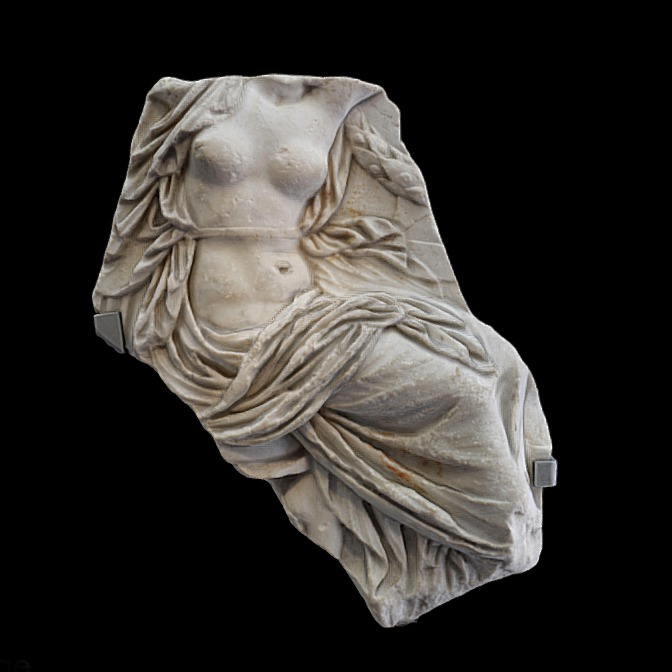
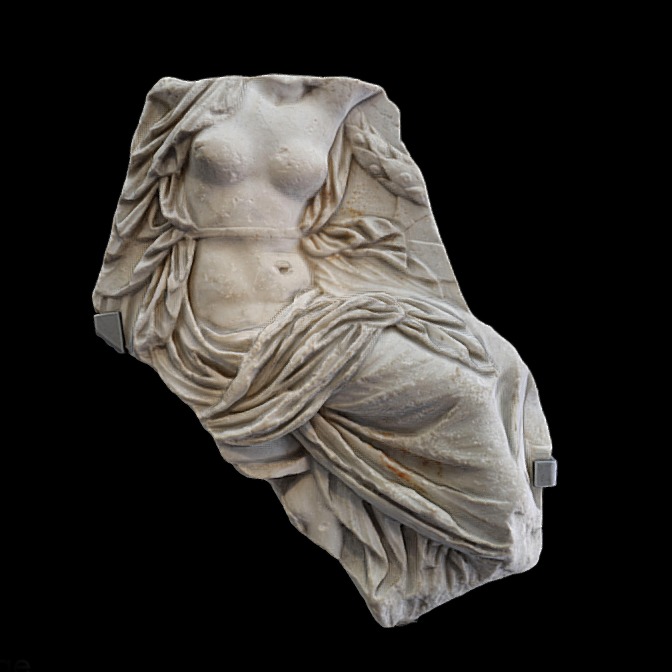
First-century relief depicting Rhea Silvia, mother of Romulus and Remus. Museum of the Roman Theatre of Cartagena. Photo from globaldigitalheritage.org.
The Iberians
Before the arrival of Mediterranean colonisers, much of the Region of Murcia was inhabited by Iberian peoples, organised into tribal communities that occupied fortified hilltop settlements (oppida), rural villages, sanctuaries and necropolises. These societies practiced agriculture, livestock farming and metallurgy, and developed a distinctive artistic language visible in pottery, sculpture and ritual objects.
Among the most important Iberian sites preserved today are El Cigarralejo, with its exceptional necropolis and museum, Coimbra del Barranco Ancho, one of the largest Iberian settlements in the region, and Los Molinicos, an Iberian sanctuary located in the northwest highlands.
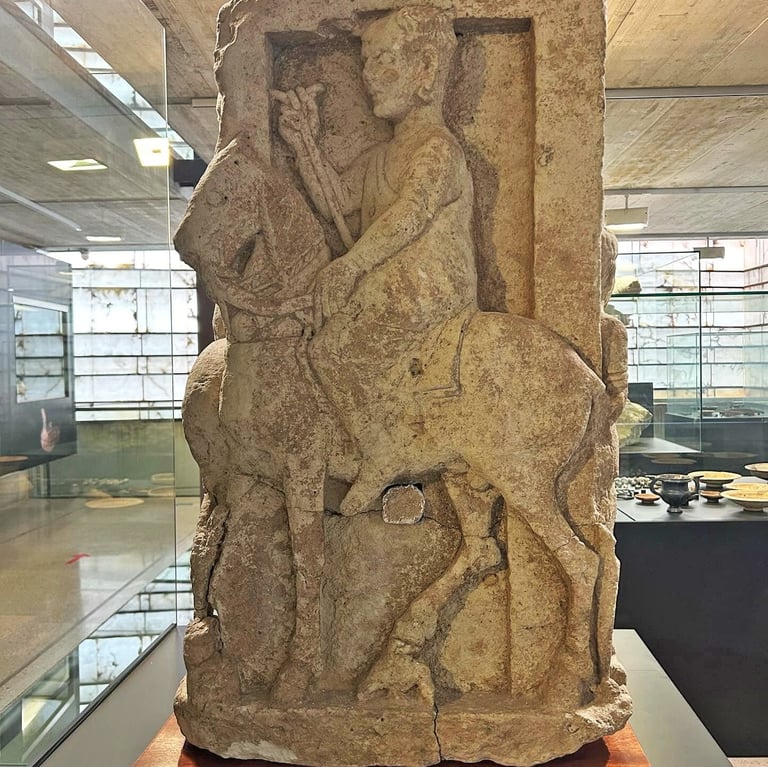
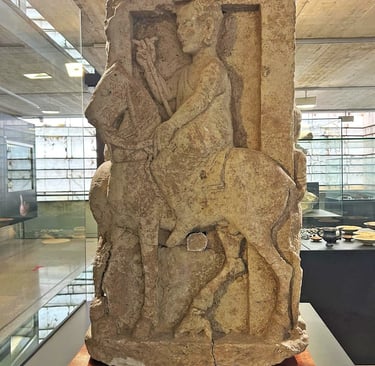
Funerary stele with a horseman found in Coimbra del Barranco Ancho and displayed in the Archaeological Museum of Jumilla.
Phoenician Presence on the Murcian Coast
From the 8th century BC, Phoenician traders established coastal enclaves along the Murcian shoreline, attracted by mineral wealth and safe natural harbours. These settlements formed part of extensive trade networks linking the western Mediterranean with the Near East.
Evidence of this presence includes the Phoenician settlement of Punta de los Gavilanes and, above all, the extraordinary Phoenician Ships of Mazarrón, dated to around 650 BC. These shipwrecks are among the best preserved in the ancient Mediterranean and provide invaluable information on Phoenician shipbuilding and maritime trade.
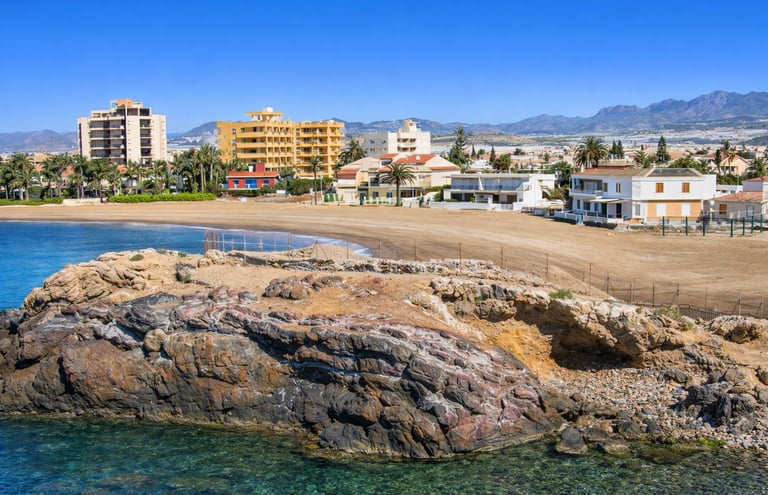
Promontory by the sea where the Punta de Gavilanes site is located, in Mazarrón.
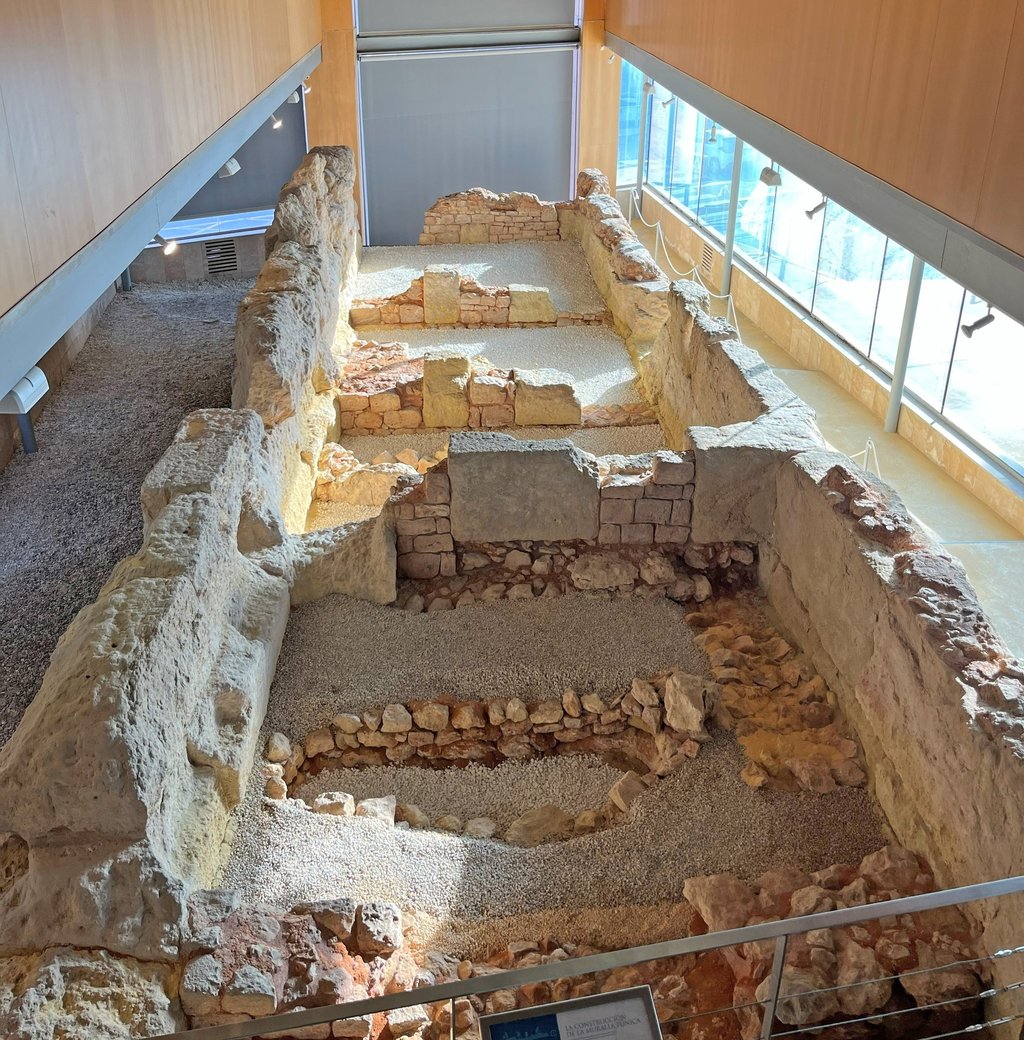
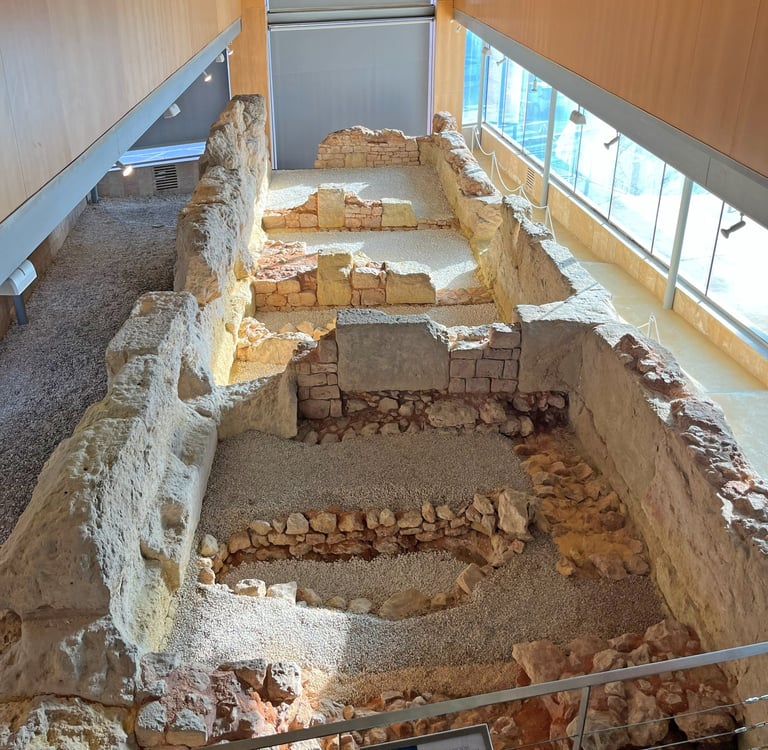
The Punic Wall Museum in Cartagena preserves the remains of the colossal wall that the Carthaginians built after founding the city in 227 BC with the name Qart Hadasht.
Carthaginian Conquest and the Foundation of Qart Hadasht
In 227 BC, the Carthaginian general Hasdrubal the Fair, of the Barcid family, founded the city of Qart Hadasht in a privileged bay on the southeastern Iberian coast, near rich mining districts. The city, whose name meant "new city", was conceived as a major military, political and economic centre and played a crucial role in the struggle between Carthage and Rome.
From Qart Hadasht departed the famous expedition of Hannibal against Rome, making the city a key objective during the Second Punic War. In 209 BC, after fierce fighting, the city was conquered by Scipio Africanus and passed into Roman hands, being renamed Carthago Nova (New Carthage).
Roman Conquest and Romanisation
Following its conquest, Carthago Nova became one of the most important Roman cities in the western Mediterranean. From here, Roman control and cultural influence rapidly spread throughout the surrounding territory, including mining areas, agricultural lands and inland settlements such as Begastri and the early settlement of Eliocroca (modern Lorca).
Romanisation brought new urban models, infrastructure, legal systems and economic organisation. Numerous Roman villas dedicated to agricultural and livestock production flourished across the region, with remains preserved at sites such as Los Villaricos (Mula), Los Torrejones (Yecla), La Quintilla (Lorca), Los Cipreses (Jumilla) and Los Cantos (Bullas). Along the coast, fish-salting factories and garum production centres developed in places like Mazarrón and Águilas.
From the 1st century BC, Carthago Nova experienced a period of great monumental expansion under Augustus and his successors, with the construction of a forum, temples, baths, a large theatre and an amphitheatre. The Cartagena Roman Theatre remains the most iconic symbol of this period.
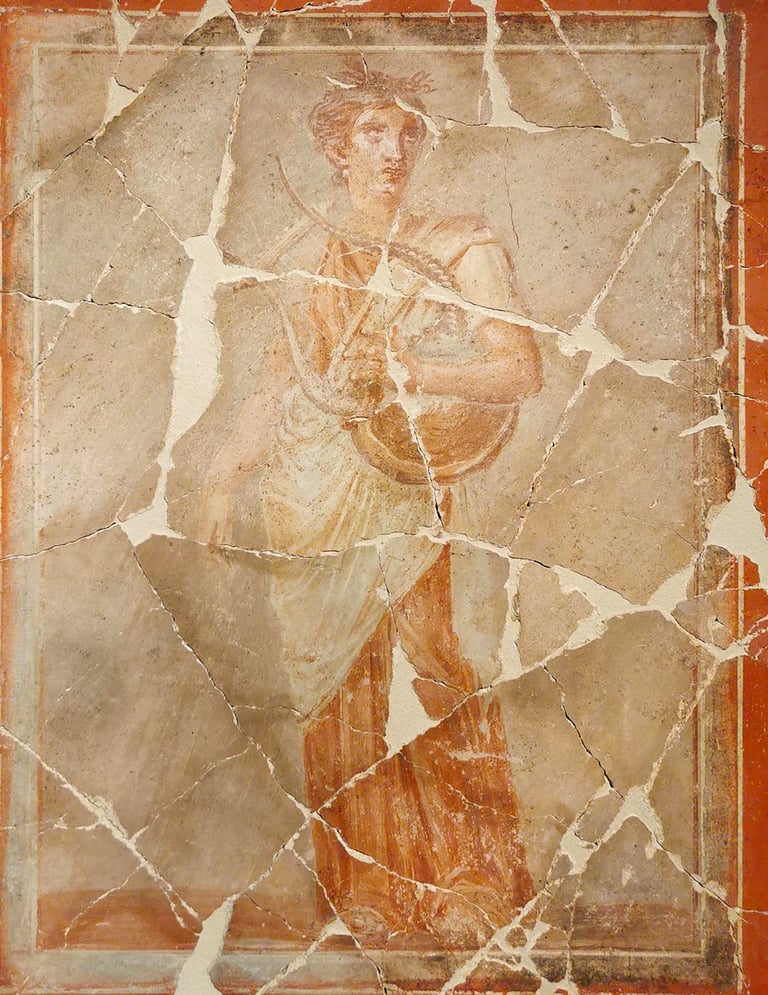
Painting with a representation of the muse Terpsichore dating from the 1st century AD, exhibited in the Museum of the Roman Forum of Cartagena.
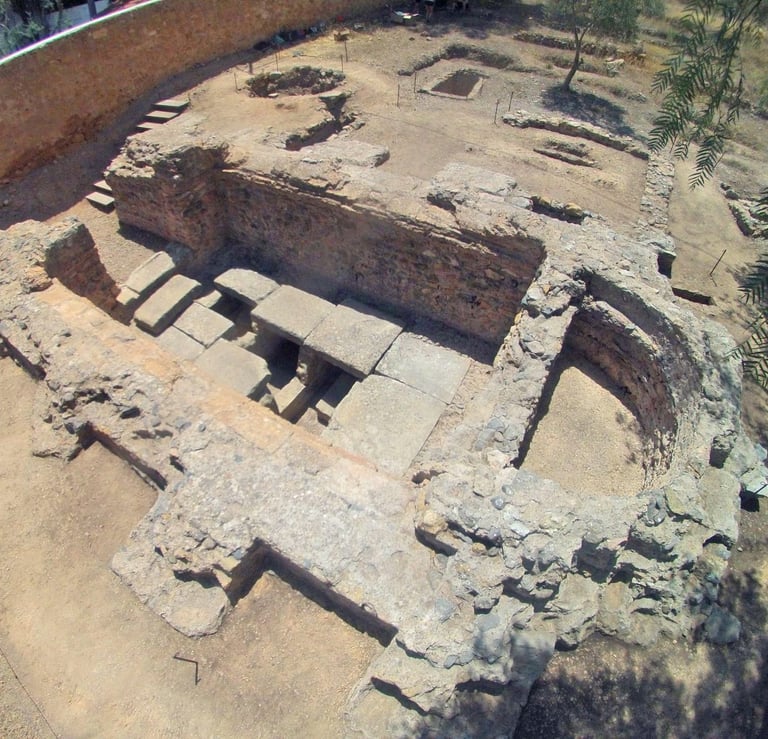
The Martyrium of La Alberca, a district of the city of Murcia, is a Roman mausoleum that has been dated to the 4th century.
Late Roman Period and Transition to the Middle Ages
By the late 3rd century AD, the Western Roman Empire entered a phase of political instability and gradual decline. Administrative reforms under Diocletian led to the creation of the province of Cartaginensis in 298 AD, with Carthago Nova as its capital. This province included the present-day Region of Murcia and large parts of eastern and central Spain.
During the 4th century, Christianity spread rapidly through the region, largely via the port of Cartagena. The presence of Christian communities is confirmed by early episcopal seats, including Lorca, and by remains such as the Martyrium of La Alberca and the Basilica of Algezares. As Roman authority weakened in the 5th century, local aristocracies and ecclesiastical structures played an increasingly important role in maintaining social order.
This gradual transformation culminated in the Visigothic period, with cities such as Begastri acting as key centres linking the classical world with the early Middle Ages.