Prehistoric Murcia
From the First Humans to the Dawn of History
The Region of Murcia preserves one of the richest and most continuous prehistoric records in southeastern Spain. Its caves, rock shelters, river valleys, plateaus and coastal areas were occupied by human communities for hundreds of thousands of years, creating an extraordinary archaeological landscape. From the earliest human species to complex proto-urban societies, Murcia offers a privileged setting to understand long-term human evolution, adaptation and social development.
The archaeological heritage of the region is extremely extensive, and it would be impossible to mention or describe all known prehistoric sites in detail. For this reason, the following overview focuses on some of the most significant and representative sites, those that best illustrate each prehistoric period and have played a key role in archaeological research.
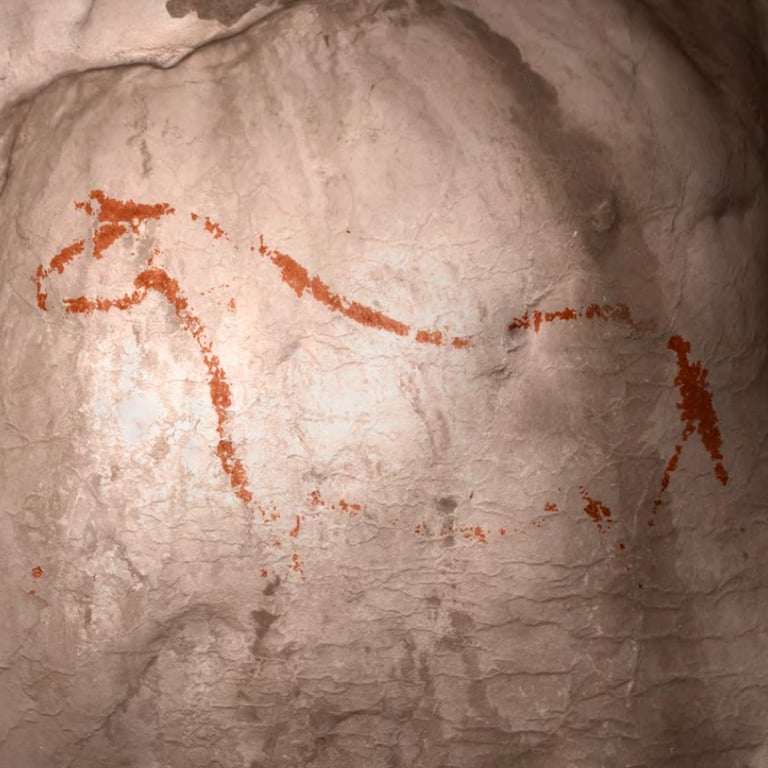
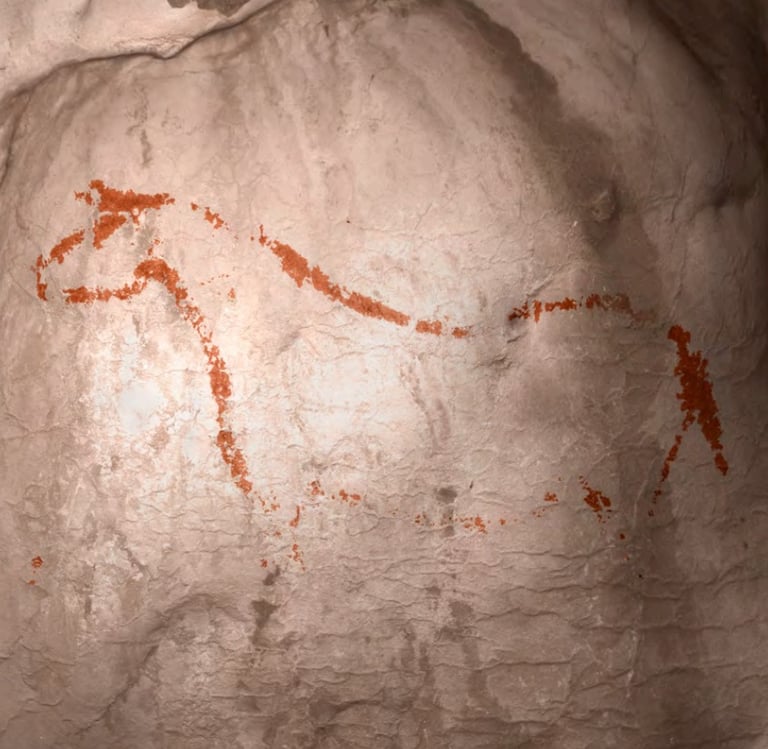
Representation of a horse found in the Cave of Jorge, in Cieza, dating from the Upper Paleolithic. Photo from cieza.es.
Lower Paleolithic
The Lower Paleolithic represents the earliest phase of human presence in the Region of Murcia. During this long period, early human species lived as nomadic hunter-gatherers, producing simple stone tools and gradually adapting to diverse environments. Murcia’s river valleys and sheltered areas offered water, raw materials and favorable conditions for survival, making the region an early corridor of human settlement in southeastern Iberia.
Cueva Negra
Located near the River Quípar, on the outskirts of Caravaca de la Cruz, Cueva Negra is one of the oldest prehistoric sites in Murcia. Dated to approximately 900,000–500,000 years ago, it has yielded stone tools, animal remains and evidence of controlled fire. The site is associated with Homo heidelbergensis and is fundamental for understanding the earliest human occupation of the region.
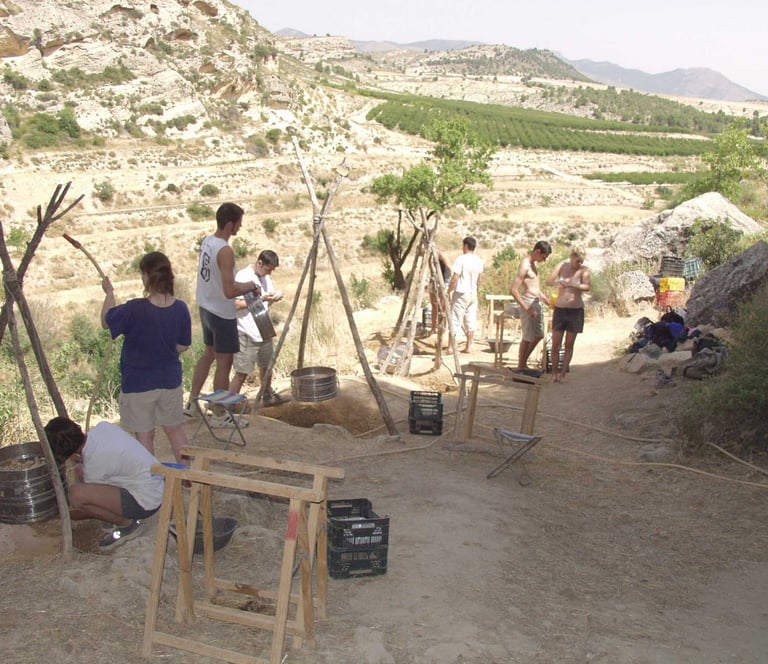
Excavation campaign by the University of Murcia at the Cueva Negra site, in the Quípar River gorge. Photo by Universidad de Murcia.
Middle Paleolithic
The Middle Paleolithic in Murcia is closely linked to the presence of Neanderthal populations, highly specialised hunter-gatherers capable of complex social behaviour. These groups exploited a wide range of environments, from coastal plains to mountainous areas, and produced advanced stone tool industries adapted to hunting and daily tasks.
Sima de las Palomas
Situated in the Cabezo Gordo hill near Torre Pacheco, this site dates between 150,000 and 45,000 BC. It has produced one of the most important collections of Neanderthal human remains in southern Europe, along with tools and evidence of funerary practices. Sima de las Palomas has significantly reshaped scientific understanding of Neanderthal biology and culture.
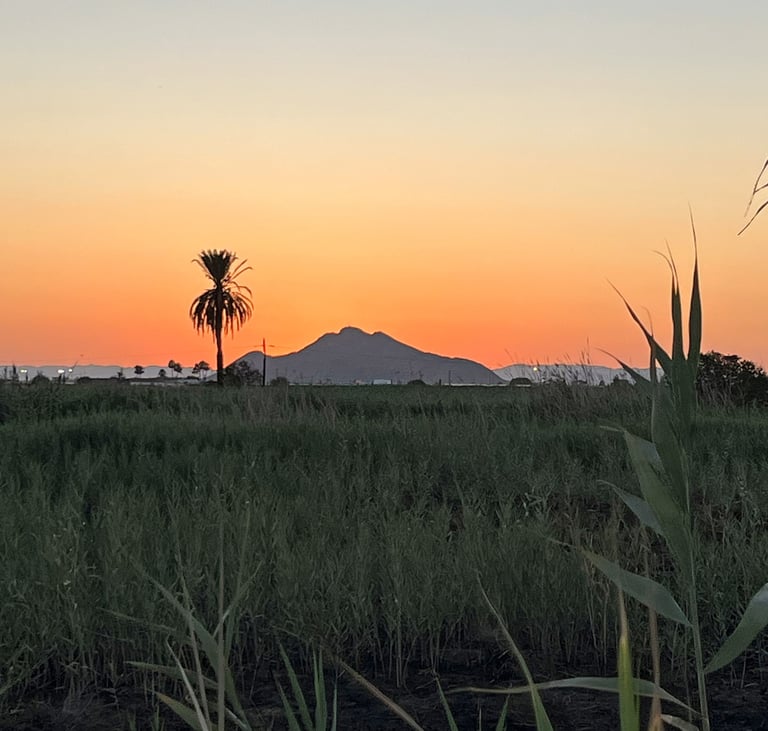
View of Cabezo Gordo from Playa Hita, on the Mar Menor. This hill, where the Sima de las Palomas (Pigeon Sinkhole) is located, is a prominent landmark in the Campo de Cartagena landscape.
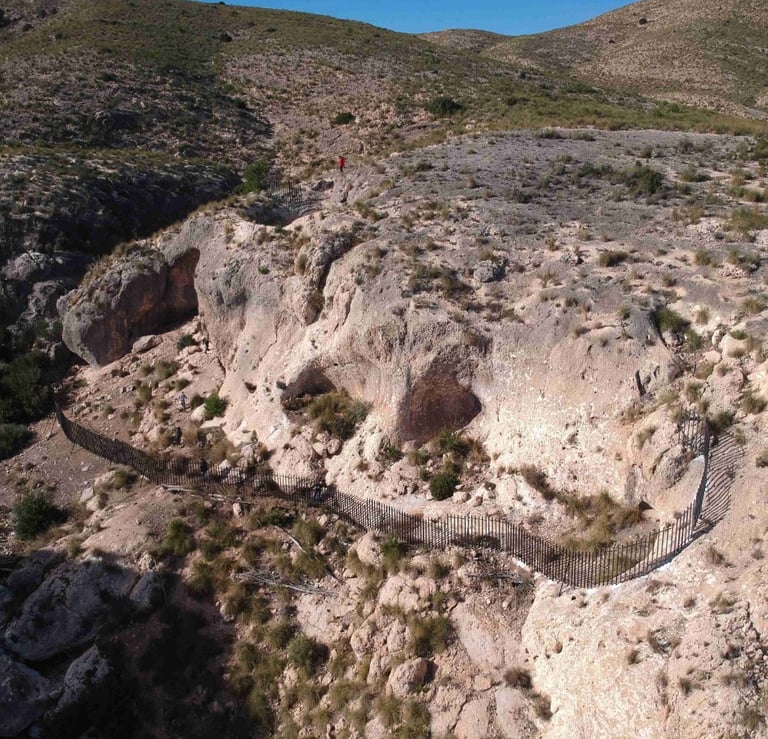

A group of caves known as the Arco Caves, in the Almadenes Canyon. Photo by cieza.es.
Upper Paleolithic
The Upper Paleolithic marks the arrival of anatomically modern humans and a significant increase in symbolic behaviour, artistic expression and technological diversity. Although communities continued to live as hunter-gatherers, this period saw the development of more complex social structures and the earliest forms of artistic and ritual expression preserved in the region.
Upper Paleolithic sites in Cieza
Located in inland mountainous areas of Cieza, we find several rock art sites that date back to the Upper Paleolithic, such as the caves called “del Arco”, “de Jorge” or “de las Cabras”. They preserve engravings and paintings of animals and symbolic motifs, offering valuable insight into the artistic and ritual world of prehistoric hunter-gatherer societies. Also in Cieza there are several shelters in the so-called Barranco de los Grajos, with interesting schematic paintings that represent numerous individuals practicing dances, some of them with a clear sexual component.
Rock Art of the Iberian Mediterranean Basin
UNESCO World Heritage
One of the most extraordinary prehistoric legacies of the Region of Murcia is the Rock Art of the Iberian Mediterranean Basin, a cultural expression recognised as UNESCO World Heritage. This artistic tradition developed between the late Upper Paleolithic and the early Neolithic (approximately 8,000–5,000 BC) and is preserved in rock shelters and shallow caves across eastern Spain.
Its most distinctive feature is the presence of dynamic, naturalistic human figures, often shown in movement, hunting, dancing or ritual scenes, alongside animals such as deer, goats and wild boar. Painted using mineral pigments in red, black and ochre tones, these images reflect complex symbolic systems, social organisation and belief structures among prehistoric hunter-gatherer and early farming communities.
The Region of Murcia preserves several outstanding examples of this artistic heritage, like the Cueva de la Higuera in Isla Plana (Cartagena) or or the caves of Monte Arabí or Cantos de la Visera, in Yecla. Together, these sites place the Region of Murcia among the key territories for understanding the symbolic, artistic and spiritual world of prehistoric Mediterranean societies, underlining the universal value of this heritage.
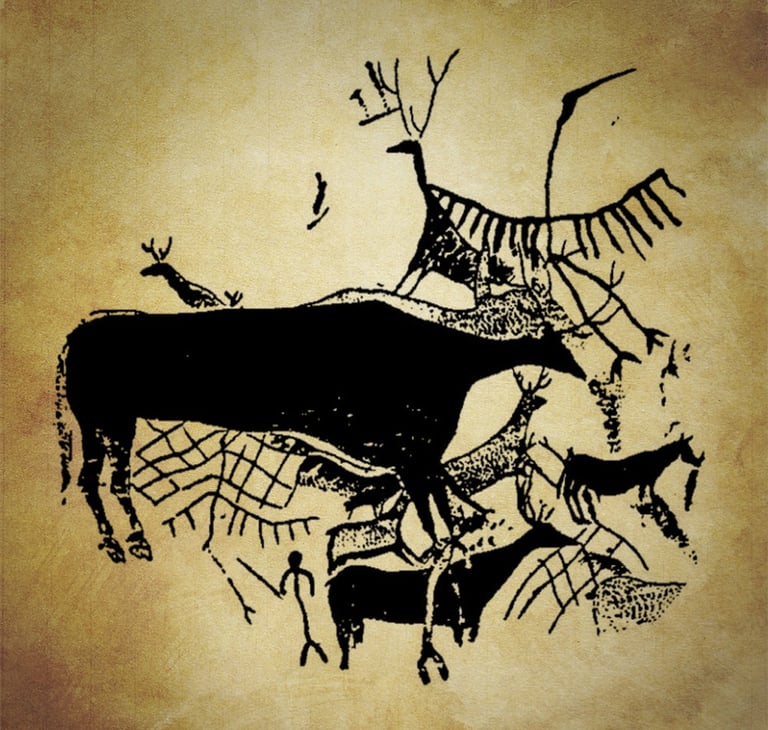

Tracing made by Juan Cabré of some of the paintings found in Cantos de la Visera II (Yecla).


Some of the dancing human figures that appeared in the Barranco de los Grajos, Cieza. Photo of Barranco de los Grajos.


Figure of an archer found in the Sima de la Serreta, in the Almadenes canyon. Photo from cieza.es.
Neolithic
The Neolithic period brought with it one of the most profound transformations in human history: the shift from a hunter-gatherer lifestyle to one based on agriculture and livestock farming. In Murcia, the first Neolithic settlements appeared around the 5th millennium BC, and it seems that some 1,000 years later, agriculture and livestock farming were already widespread throughout the region. This change led to more permanent settlements, pottery production, and closer ties between communities, as well as fertile landscapes, especially along the river valleys.
Sima de la Serreta
Located near Cieza in the Segura valley, this site dates to the early Neolithic. Archaeological remains include pottery, stone tools and domestic evidence, illustrating the emergence of farming communities and the importance of water resources for early settlement.
Chalcolithic / Copper Age
The Chalcolithic, or Copper Age, represents a transitional phase marked by the first use of metal alongside stone tools. Societies became more complex, with fortified settlements, collective burial practices and early social differentiation. Long-distance exchange networks began to develop during this period.
Cabezo del Plomo
This fortified settlement near the coast of Mazarrón dates to the late 3rd millennium BC. Its strategic position and evidence of copper metallurgy reflect increasing concerns with defence and resource control.
Megalithic Necropolis of El Bajil
Located in the highlands of Moratalla, this Copper Age necropolis consists of collective megalithic tombs. It reveals complex funerary rituals and the growing importance of communal identity and social structure.
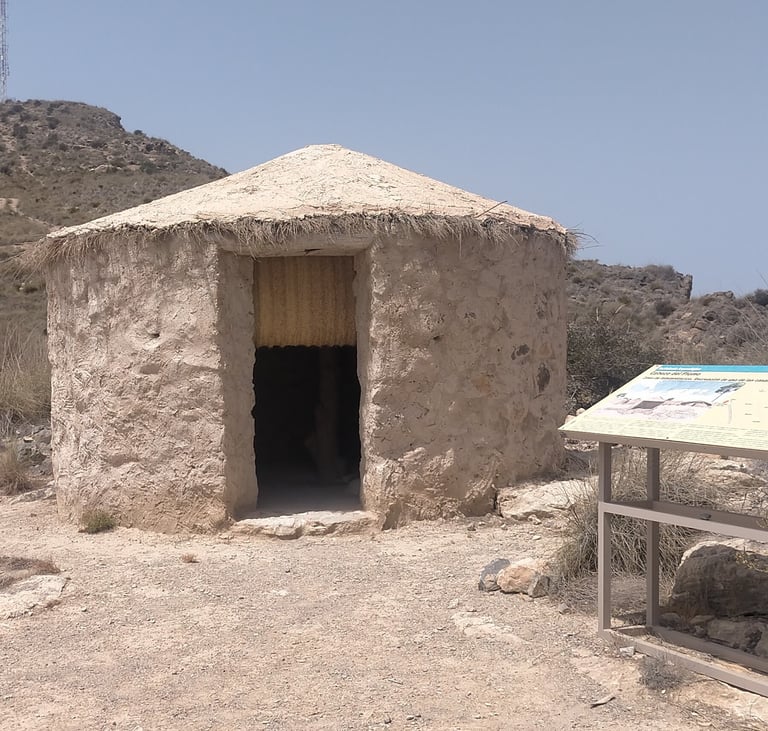
Educational reconstruction of one of the huts at the Cabezo del Plomo archaeological site in Mazarrón. The occupation of this settlement has been dated to the Neolithic and Chalcolithic periods. Photo by Bertobarca90.

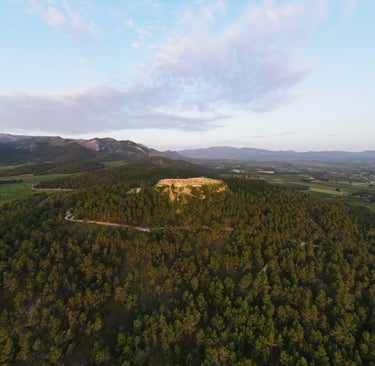
Location of the Argaric settlement of La Almoloya, in Sierra Espuña. Photo from turismo.pliego.org.
Bronze Age — The Argaric Culture
(c. 2,200 – 1,200 BC)
The Bronze Age marks the peak of prehistoric development in Murcia and is dominated by the Argaric culture, one of the most advanced societies of prehistoric Europe. Argaric communities established fortified settlements, developed sophisticated metallurgy and created highly stratified social systems with strong political control.
La Almoloya
Located near Pliego, La Almoloya dates to the early Bronze Age and stands out for its monumental architecture and evidence of political organisation.
Cerro de las Viñas
A hilltop Argaric settlement near Coy (Lorca), strategically placed to control surrounding territory and agricultural land.
Archaeological Park of Los Cipreses
This site preserves domestic and funerary structures that illustrate everyday life within Bronze Age communities.
La Bastida, the Troy of the West
The archaeological site of La Bastida, located near Totana on a steep hill overlooking the Guadalentín valley, is one of the most important Bronze Age settlements in Western Europe. Occupied between approximately 2200 and 1600 BC, La Bastida was a central place of the Argaric culture, which developed in southeastern Iberia during the Early and Middle Bronze Age.
The site stands out for its impressive fortification system, including massive stone walls, towers and controlled access points, reflecting an unprecedented level of military and political organisation for the period. Excavations have revealed a carefully planned settlement with streets, houses, storage areas and hydraulic structures, as well as evidence of advanced metallurgy and specialised production.
La Bastida has transformed our understanding of Argaric society, demonstrating the existence of strong social hierarchy, centralised power and territorial control. Its scale, complexity and defensive architecture make it a key reference for the study of early complex societies in prehistoric Europe.
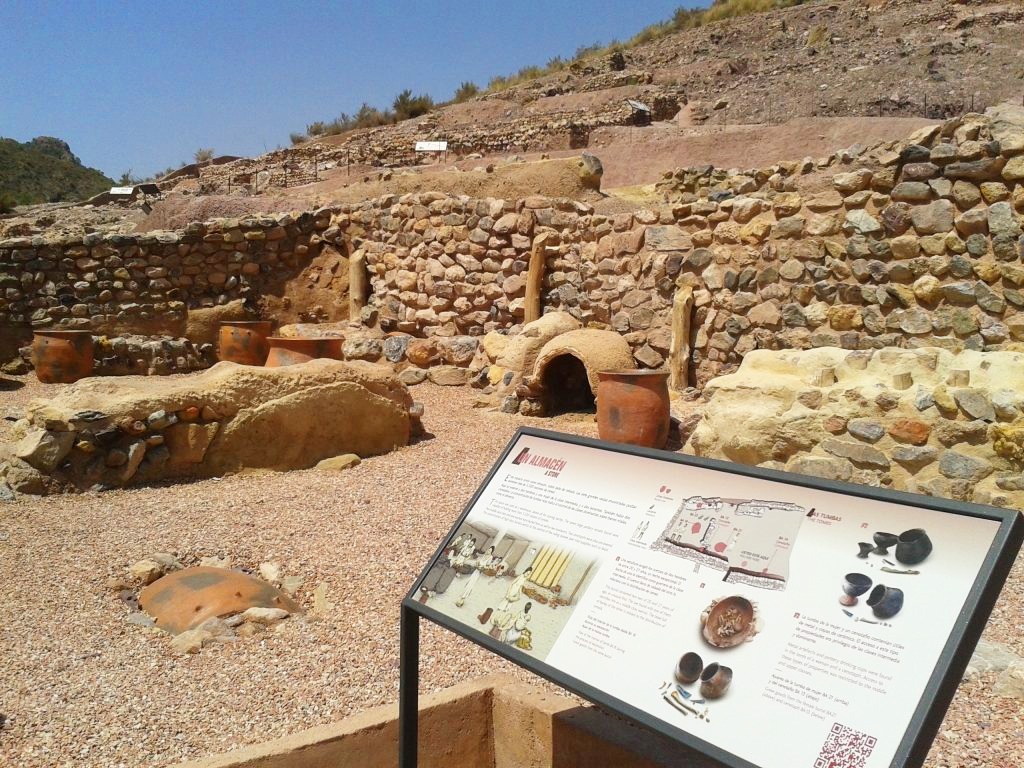
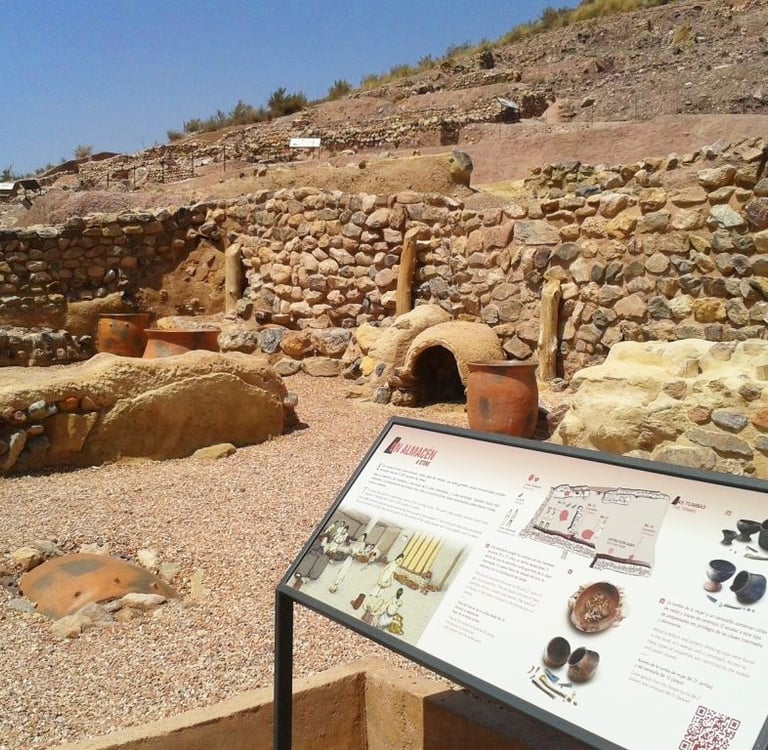
Partially reconstructed area for visitors at the La Bastida archaeological site. Photo from la-bastida.com.
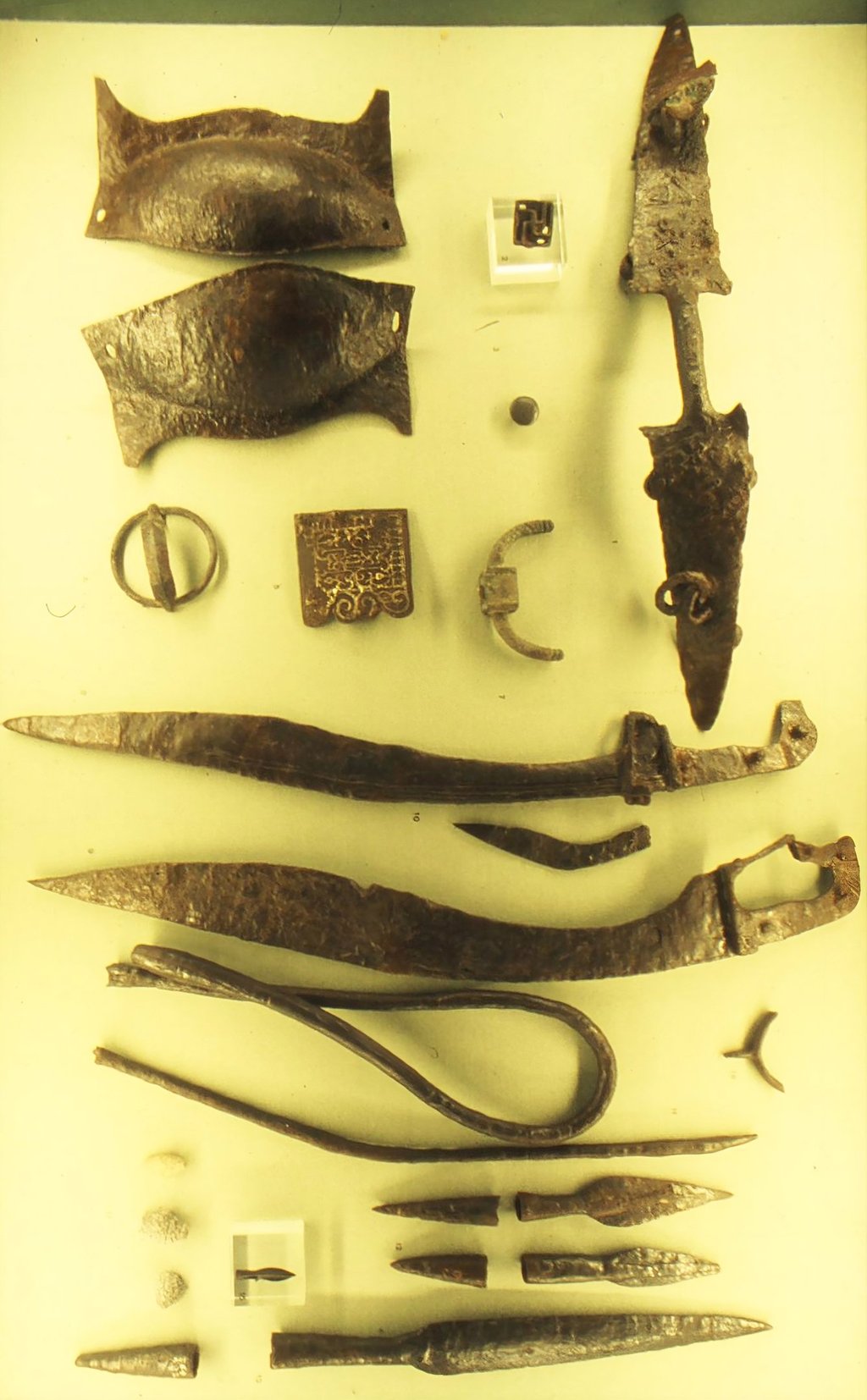
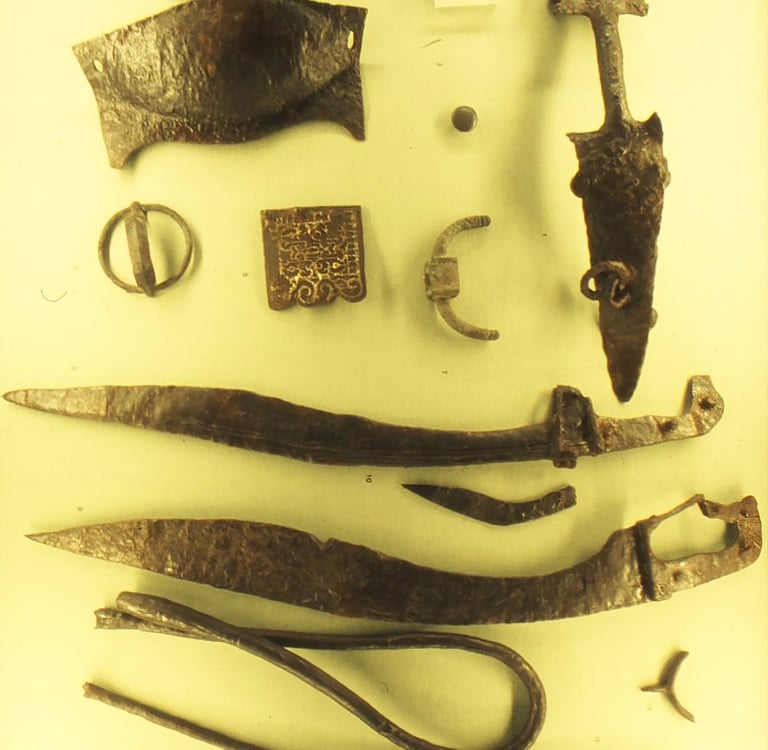
Some of the iron objects on display at the El Gigarralejo Museum of Iberian Art in Mula, such as the famous swords known as falcatas, which originated in pre-Roman Iberia. Photo from the museum's website.
Iron Age (c. 900 – 200 BC):
Phoenicians and Iberians
During the Iron Age, the Region of Murcia became part of the cultural world of the Iberians, while coastal areas experienced strong Phoenician influence through trade and colonisation. This period saw the emergence of urban centres, sanctuaries, specialised crafts and intense Mediterranean contact shortly before Roman conquest.
Punta de los Gavilanes
A Phoenician coastal settlement dating to the 7th–6th centuries BC, linked to maritime trade.
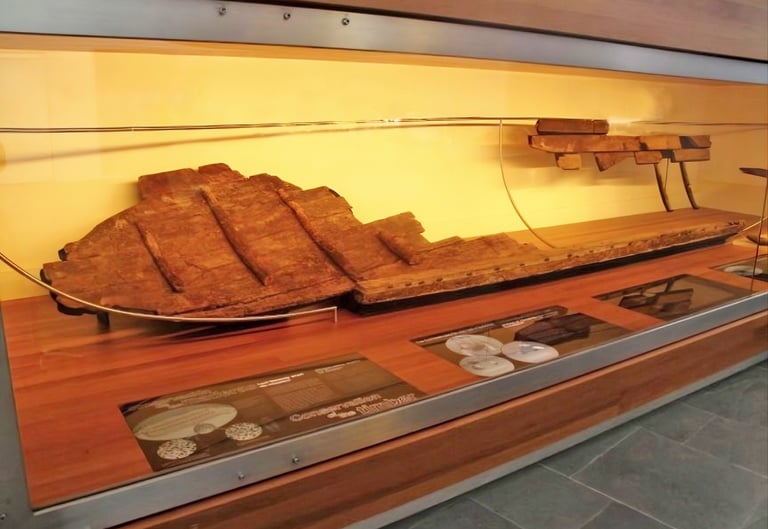
Phoenician Ships of Mazarrón
Two shipwrecks dated to around 650 BC, among the best-preserved Phoenician vessels in the Mediterranean.
Los Molinicos
An Iberian sanctuary in the northwest highlands, dating to the 4th–2nd centuries BC.
Coimbra del Barranco Ancho
One of the largest Iberian settlements in Murcia, occupied between the 5th and 2nd centuries BC.
El Cigarralejo
A major Iberian settlement and necropolis dated to the 5th–3rd centuries BC, with exceptional archaeological remains.
El Verdolay
Located near present-day Murcia, this Iberian site controlled key routes along the Segura valley in the late Iron Age.