
Río Mula District
History and Hidden Landscapes

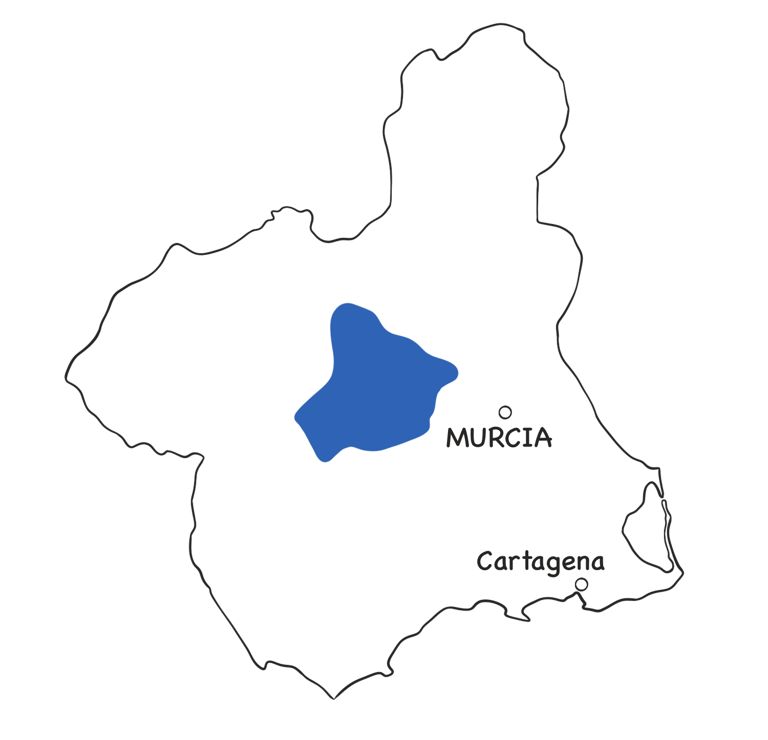
The Río Mula District is one of the most authentic and lesser-known areas of the Region of Murcia. Shaped by the course of the Mula River, this inland comarca includes the municipalities of Mula, Pliego, Campos del Río and Albudeite, and offers a remarkable blend of rugged landscapes, fertile valleys, archaeological heritage and living traditions.
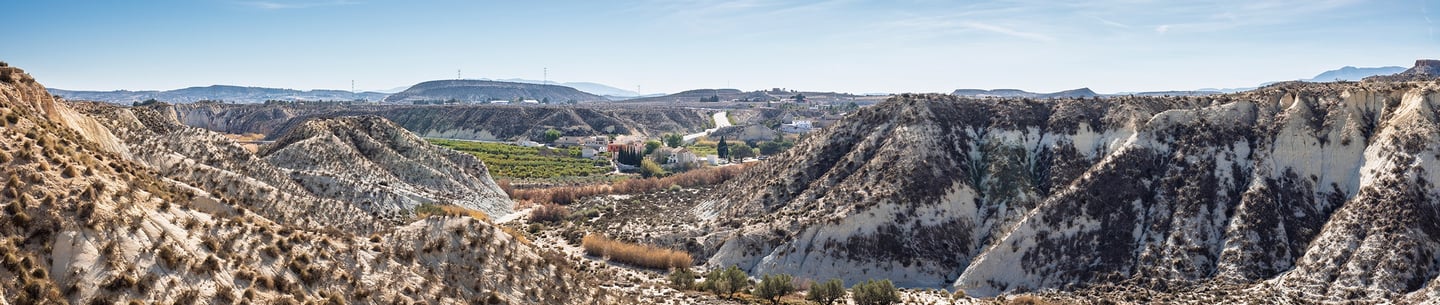
Geographically, the area is characterised by rolling hills, limestone mountains, dry ravines and irrigated riverbanks. The climate is Mediterranean with continental influences, meaning hot summers, mild winters and strong seasonal contrasts that shape both the natural scenery and agricultural life.
Historically, the Río Mula valley has been inhabited since prehistoric times. Iberians, Romans, Islamic communities and later Christian settlers all left their mark, making this area a crossroads of cultures where water management, agriculture and strategic control were essential for survival.
View of the hamlet of Baños de Mula and its surroundings from the stone bridge that crosses the Perea ravine. Photo by Ximonic.
Mula — History, Tradition and Thermal Waters
Located in the heart of the district, Mula is the largest and most culturally significant town in the area, with around 17,000 inhabitants. Nestled between hills and fertile land, it has long been an important agricultural, administrative and religious centre.
Mula’s history stretches back thousands of years, with Iberian and Roman settlements preceding a flourishing Islamic medina. After the Christian conquest, the town grew around its castle and religious institutions, developing a rich urban fabric that survives today.
Mula's historic center is dominated by the Castle of Los Vélez, built in the 16th century by this noble family. Perched atop a rocky hill, its walls offer visitors panoramic views of the town and the surrounding countryside. Below, the old town reveals churches, stately houses and quiet squares. Highlights include the Church of Santo Domingo, the Convent of San Francisco, and the Museum of El Cigarralejo, one of the most important Iberian archaeology museums in Spain.
Mula is also famous for its Semana Santa, particularly the unique Tamborada, when thousands of drums fill the streets with sound — an experience declared of International Tourist Interest. Adding to its appeal are the Baños de Mula, historic thermal baths located just outside the town.
View of Caño de Mula street, with the tower of the Church of San Miguel on the right and the Vélez Castle in the background. Photo by Espunia.


Towns and Villages of the Río Mula District
Pliego — Mountain Village and Gateway to Nature
Nestled at the foot of the Sierra Espuña mountain range, Pliego is a charming village of around 4,000 inhabitants, surrounded by spectacular limestone formations and fertile fields. Its compact size and natural surroundings make it especially attractive for those seeking tranquility and outdoor activities.
Pliego's origins date back to prehistoric times, with Roman and Islamic occupations shaping its development. During the Middle Ages, it served as a defensive settlement, and vestiges of this past can still be seen today.
The town center retains a traditional atmosphere, with narrow streets and a relaxed pace of local life. Points of interest include the Church of Santiago Apóstol, historic houses, and small squares. Pliego is also the main access point to natural attractions such as Alto de Espuña, Sima de la Higuera, and the La Almoyona archaeological site, making it an ideal starting point for hikers, cavers, and nature lovers.
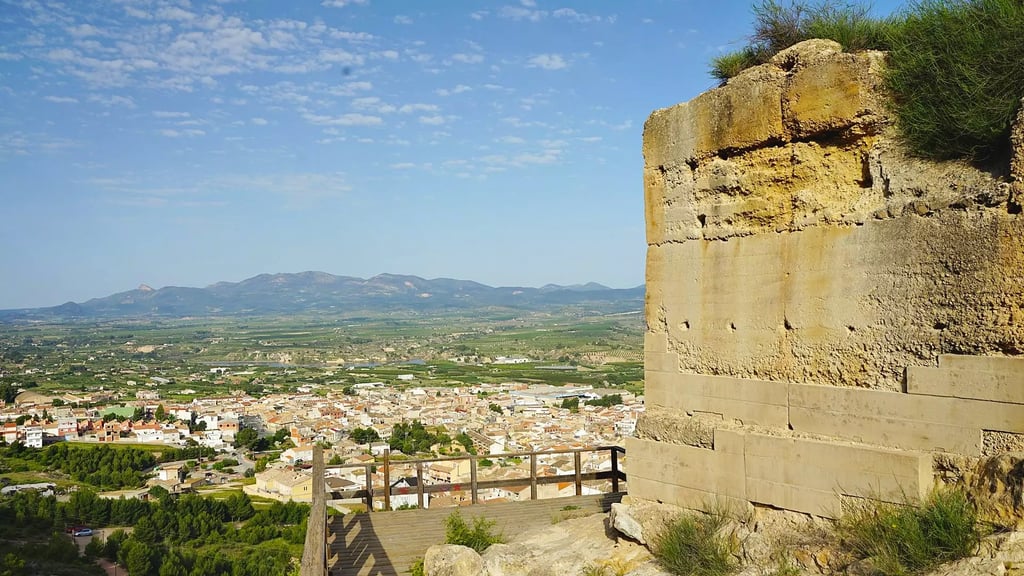
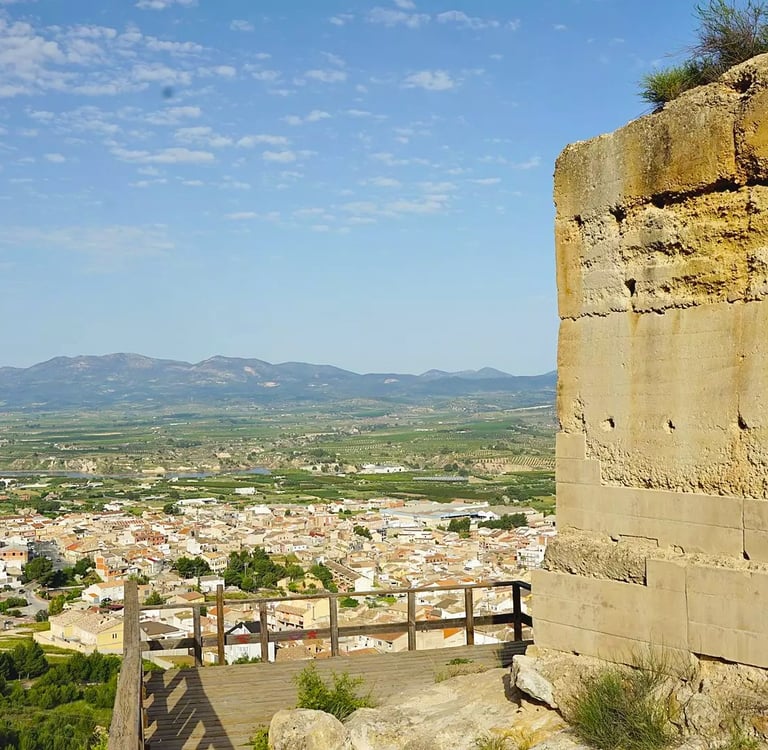
View of the town of Pliego from the hill on which its medieval castle stands. Photo from turismo.pliego.org.
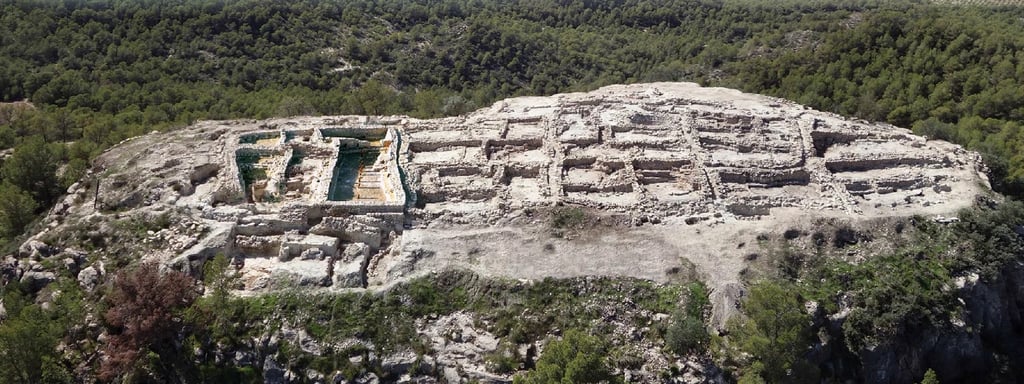
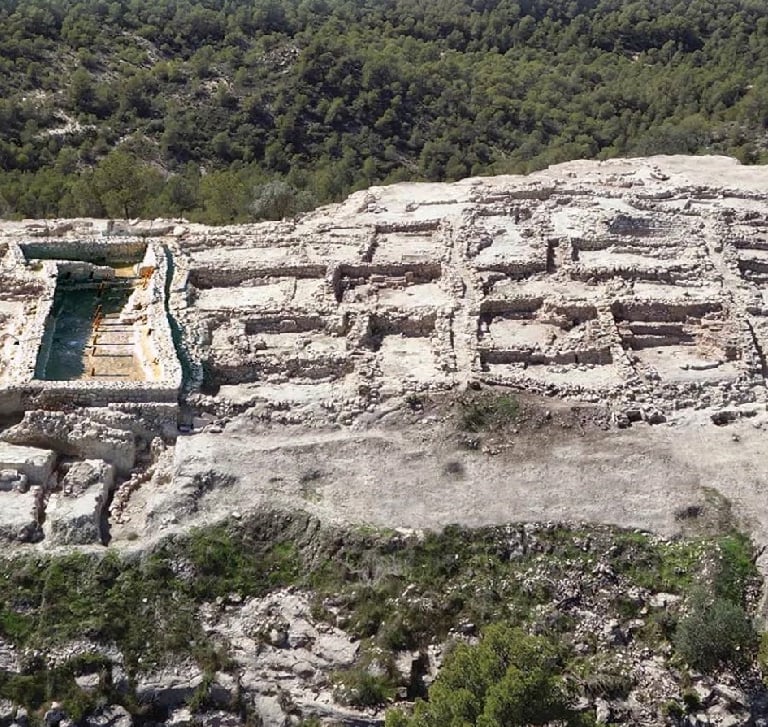
The La Almoyona archaeological site is located a few kilometers from the town of Pliego. It is a Bronze Age settlement belonging to the Argaric culture and was inhabited between approximately 2200 and 1550 BC. Photo by ASOME-UAB.
Campos del Río
Located in the western part of the region, Campos del Río is a small agricultural town of about 2,000 inhabitants. Its history is closely linked to agriculture along the banks of the Mula River.
The town offers a peaceful rural atmosphere, traditional architecture, and proximity to the countryside. Although modest in size, it offers a glimpse into daily life in inland Murcia and serves as a starting point for pleasant walks and cycling routes.
Albudeite
With fewer than 1,500 inhabitants, Albudeite is the smallest municipality in the region. Nestled among orchards and hills, it retains a distinct agricultural character and a close relationship with the river.
Its compact town center and surrounding landscapes invite leisurely exploration, making Albudeite an ideal destination for visitors interested in rural tranquility, local traditions, and photography.
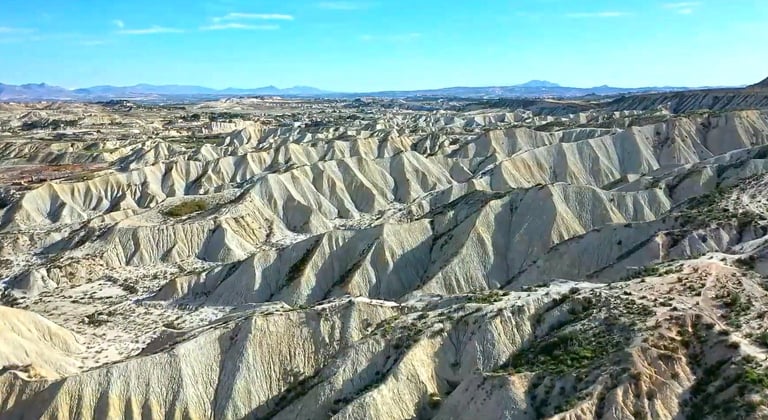
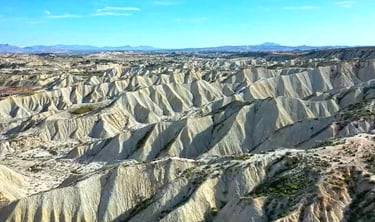
The landscape of Campos del Río and Albudeite is dominated by what are known as "badlands" or "lunar landscapes." The course of the Mula River creates a small green corridor that has historically been used by farmers in both municipalities. Images from camposdelrio.es.
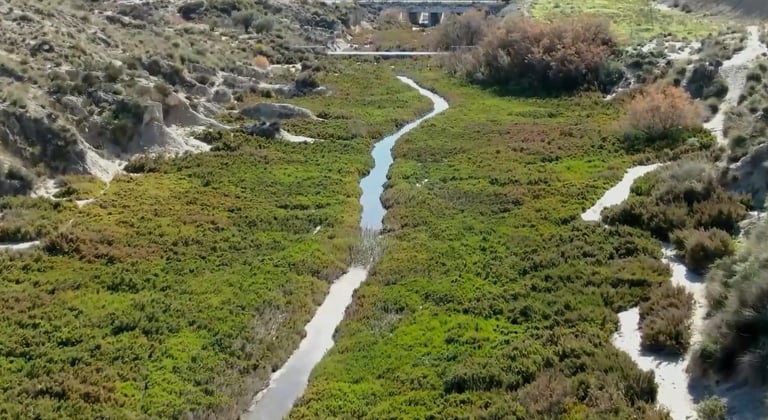
The Río Mula District offers a rich concentration of natural spaces and archaeological sites that reflect the long interaction between humans and their environment.
La Cierva Reservoir (Embalse de la Cierva)
Built in the 20th century, this reservoir supplies water to surrounding farmland and has become a scenic natural area. Visitors enjoy walking, birdwatching and photography, especially during sunset when reflections transform the landscape.
Fuente Caputa Natural Area
One of the most beautiful natural spots in the district, Fuente Caputa is a lush oasis formed by springs and small waterfalls. Walkways and shaded paths make it ideal for family walks and nature observation.
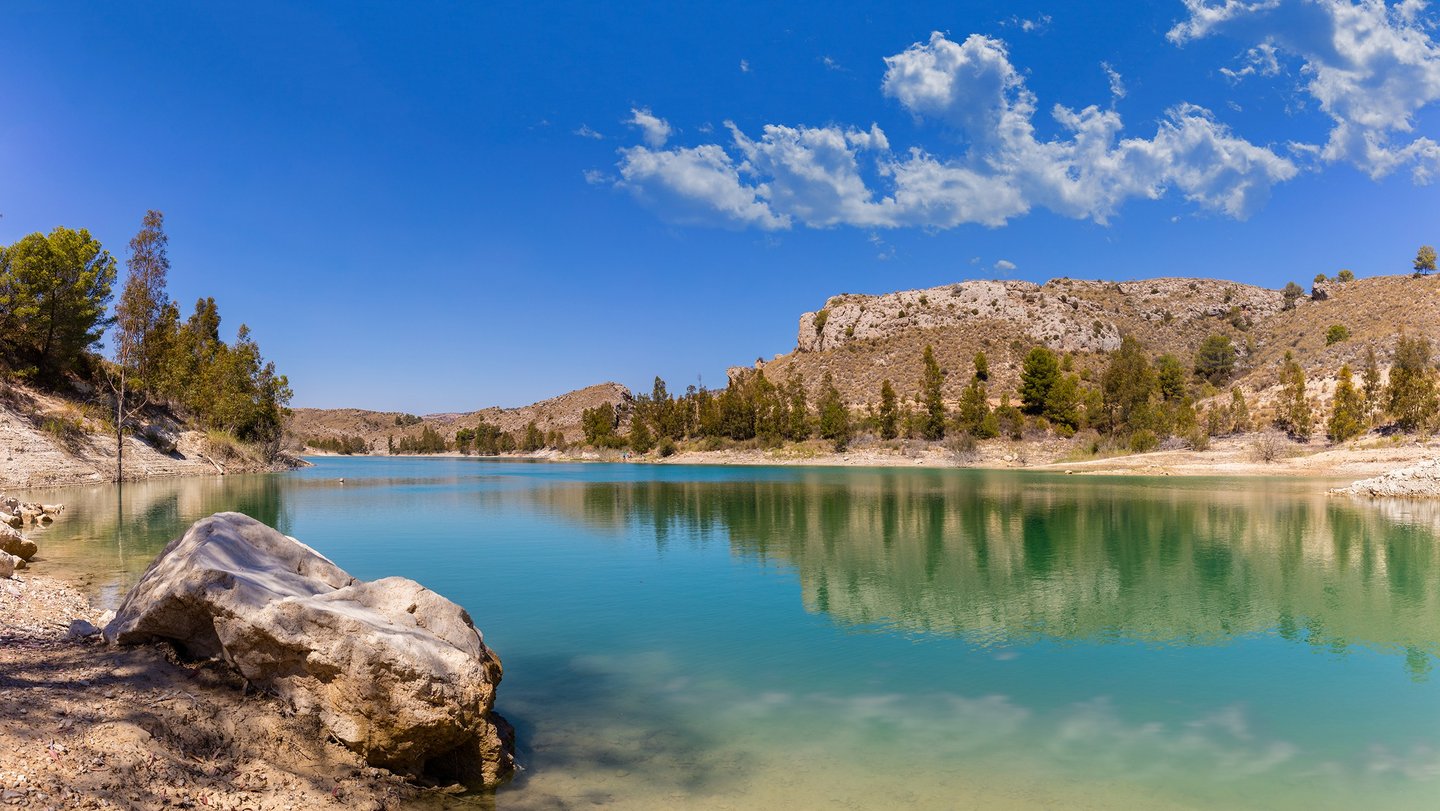
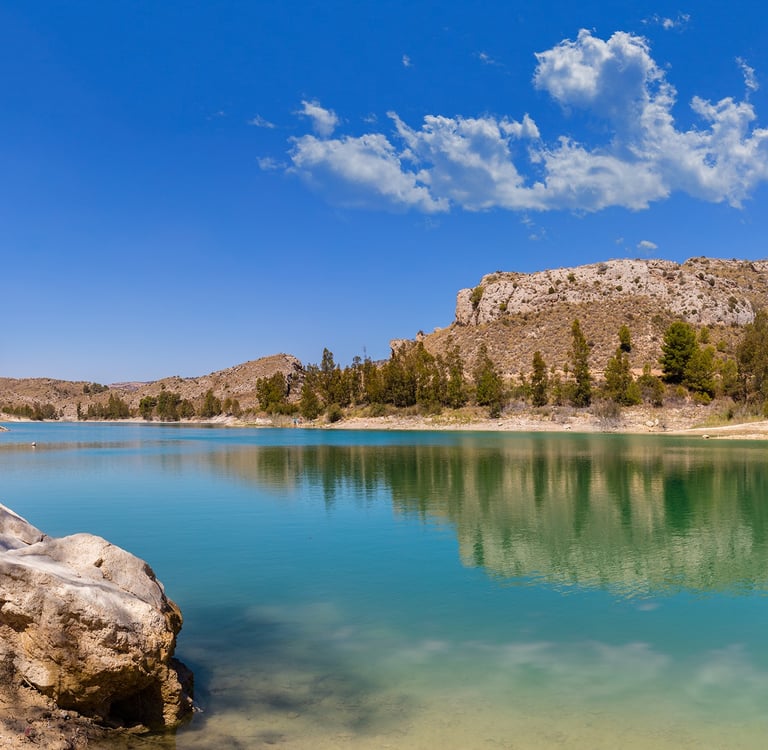
View of the Cierva reservoir, in the municipality of Mula. Photo by Werner Wilmes.
Natural and Monumental Highlights Beyond the Towns
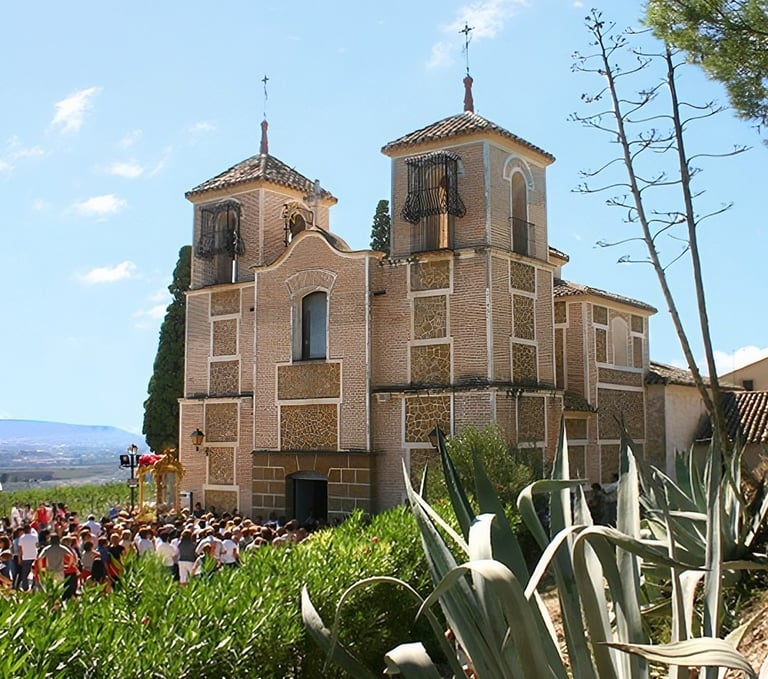
Sanctuary of Niño Jesús de Balate
This rural sanctuary, surrounded by fields and hills, is an important pilgrimage site with deep local devotion. The peaceful setting and simple architecture invite reflection and quiet visits.
El Cigarralejo Archaeological Site & Museum
A key Iberian settlement dating from the 5th–3rd centuries BC, El Cigarralejo provides exceptional insight into Iberian funerary practices and daily life. The associated museum in Mula is internationally recognised for its collection.
Roman Villa of Los Villaricos
Located near Mula, this Roman rural complex reveals mosaics, agricultural structures and remains of a wealthy estate. It highlights the importance of farming and river resources during Roman times.
Sanctuary of the Child Jesus of Balate, on the outskirts of Mula, on the day of the pilgrimage. Photo by turismoregiondemurcia.es.

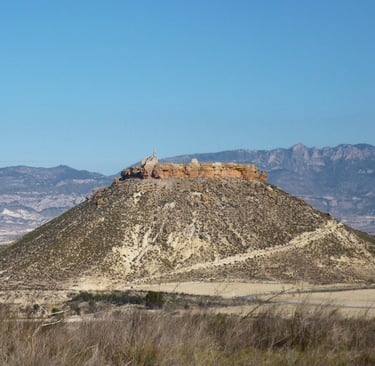
Alcalá Castle / La Puebla de Mula Castle
Dominating the valley, this medieval fortress is one of the most impressive inland fortresses in Murcia. Its origins date back to the beginning of Islamic rule in the 8th century. The climb to the castle, while not easy, is rewarded with sweeping views and a strong sense of historical continuity.
Baños de Mula
These natural hot springs have been used since Roman times and were especially prized during the Islamic period. Their mineral-rich waters can still be enjoyed today, offering relaxation and well-being in a historic setting.
Sima de la Higuera
The Higuera Cave, one of the deepest vertical caves in Europe, is a site of international speleological importance. While access is restricted to specialists, interpretive panels explain its geological and scientific significance.
Hill on which stand the remains of the castle of Alcalá, also called the castle of Puebla de Mula, due to the small town located next to the hill.
Why Visit the Río Mula District?
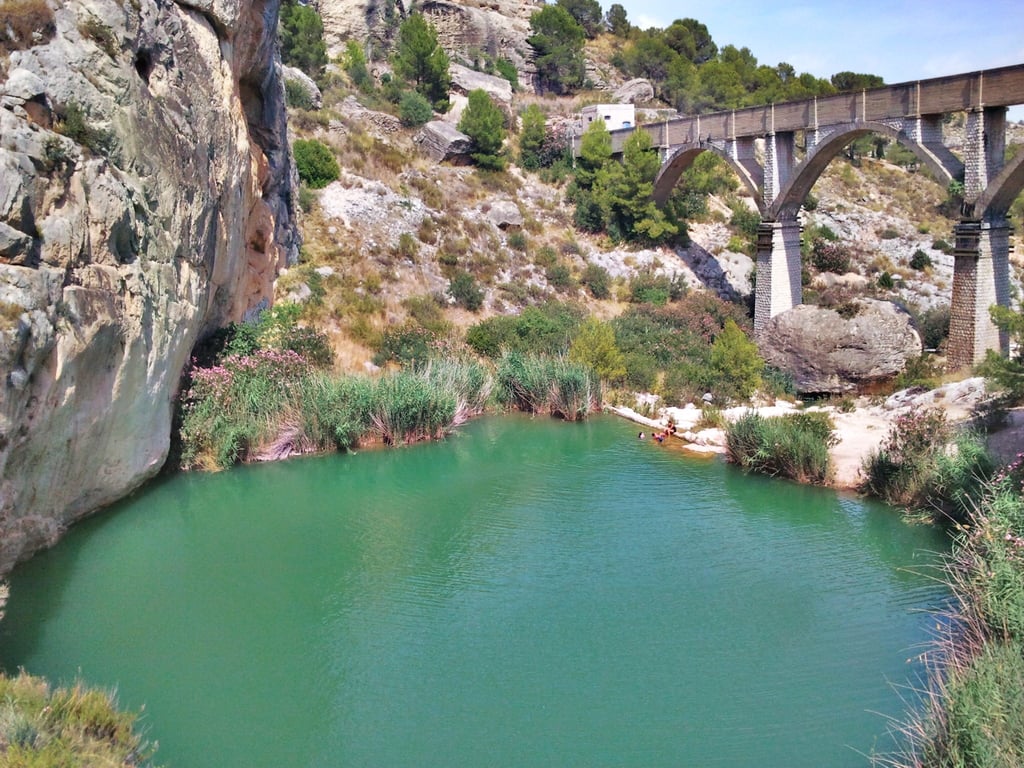
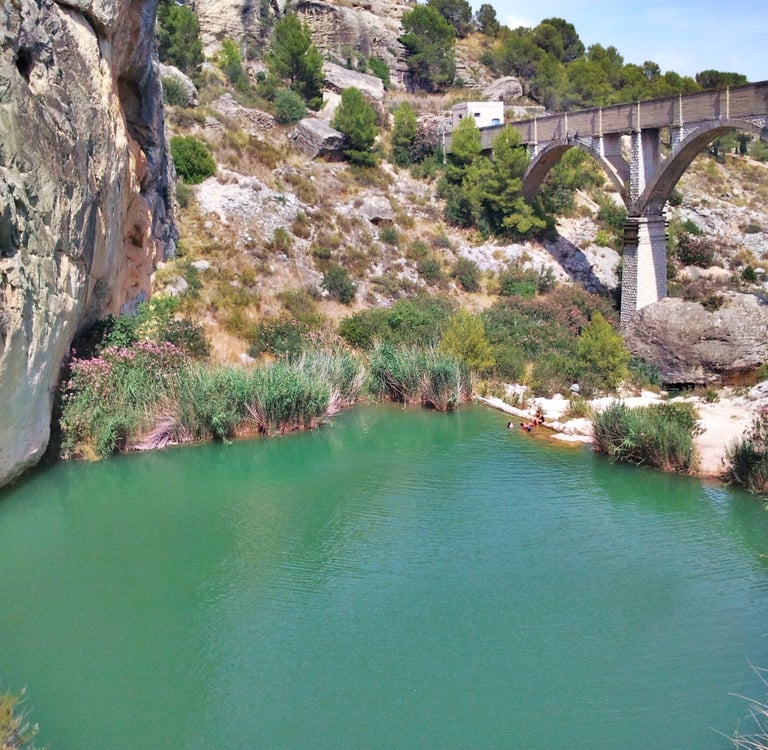
One of the pools of water that follow one another in the area known as Fuente Caputa.
The Río Mula District offers a quiet, authentic and deeply historical Murcia, far from crowded routes and mass tourism. Here, ancient cultures, water landscapes and rural traditions coexist in harmony.
From Iberian archaeology and medieval castles to hidden springs and thermal waters, this comarca rewards travellers who seek depth, tranquillity and genuine local character — especially when explored slowly or with knowledgeable local guides.


