
Ricote Valley and Cieza
Water, Memory and Landscape Along the Segura River

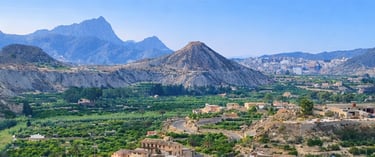


The Ricote Valley and Cieza form one of the most distinctive cultural landscapes in the Region of Murcia. Carved by the Segura River, this narrow green corridor runs between dry limestone mountains, creating a striking contrast between orchards, palm trees and rocky slopes. Few places in southeastern Spain express so clearly the intimate relationship between water, history and human settlement.
The climate is Mediterranean with continental influences: hot summers, mild winters and low rainfall, softened by the river and the dense vegetation of the valley floor. Historically, this area was one of the last strongholds of the Morisco population after the Christian conquest, which gives the valley a unique identity shaped by continuity, resilience and deep agricultural knowledge. Walking through the Ricote Valley today means reading the landscape as a historical document, where irrigation channels, terraces and villages still follow patterns established centuries ago.
Cieza
Cieza stands at the northern entrance to the valley and acts as its main urban centre. With a population of around 35,000 inhabitants, it combines modern life with a deep historical background that stretches from prehistory to the Islamic and Christian periods. The town is internationally known for its spring blossom, when thousands of peach trees transform the surrounding countryside into a sea of colour. Its historic centre preserves churches, museums and viewpoints overlooking the Segura, while nearby hills host some of the most important archaeological sites in the region.
Abarán
Abarán is inseparable from water. Located in a wide meander of the river, it developed around agriculture and hydraulic engineering. The presence of monumental waterwheels and irrigation structures reveals a long tradition of collective water management.
Towns and Villages of the Ricote Valley
The peach blossom in the municipality of Cieza creates an amazing spectacle of color and aromas every year. Photo from turismoregiondemurcia.com.


Blanca
Blanca rises on a hill above the river, offering one of the most picturesque silhouettes in the valley. Its whitewashed houses and compact urban layout reflect its Islamic origins. Also of great interest is a visit to the Pedro Cano Foundation, a place for cultural dissemination focused on the work of this painter from Blanca, who is considered one of the best contemporary painters born in the Region of Murcia.
Ojós
Ojós is the smallest municipality in the Region of Murcia, but also one of the most beautifully situated, surrounded by the fertile farmland of the Ricote Valley. Nestled between steep slopes and the river, it is a key location for understanding traditional irrigation systems, hydroelectric power generation, and the close relationship between the landscape and survival. In fact, its beautiful surroundings, a delight to explore on foot, are known as the Living Water Museum.
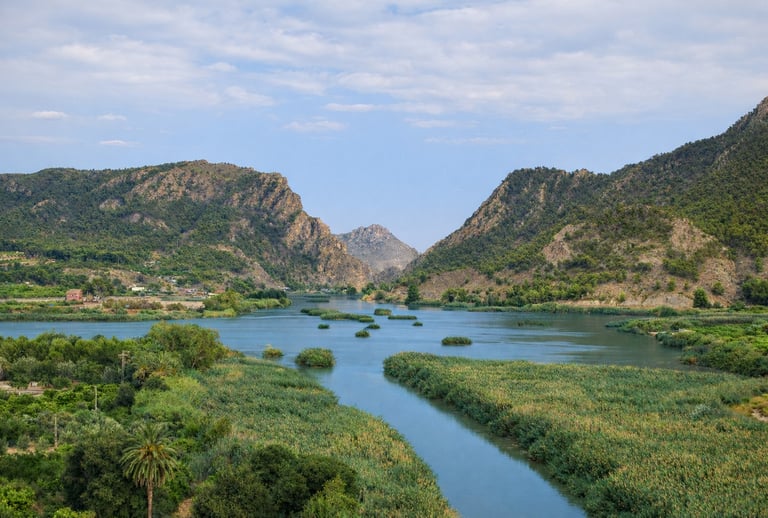

The Ojós reservoir, seen from the Alto de Bayna viewpoint in Blanca. It is one of the most beautiful areas in the Region of Murcia.
Ricote
Ricote gives its name to the valley and embodies its historical memory. Small and deeply rural, the village is closely linked to the Morisco past, being the last place in Spain where this community remained after the general expulsion at the beginning of the 17th century. Its streets, houses and agricultural surroundings preserve a sense of continuity that makes Ricote one of the most evocative villages in the region.
Ulea
Ulea sits quietly between mountains and orchards, maintaining a strong rural identity. Its location offers privileged views over the valley and access to scenic routes that reveal the geometry of terraces, canals and fields shaped over centuries. In the town hall square stands a curious modernist style from the beginning of the 20th century, whose design is traditionally attributed to the famous French engineer Gustave Eiffel.
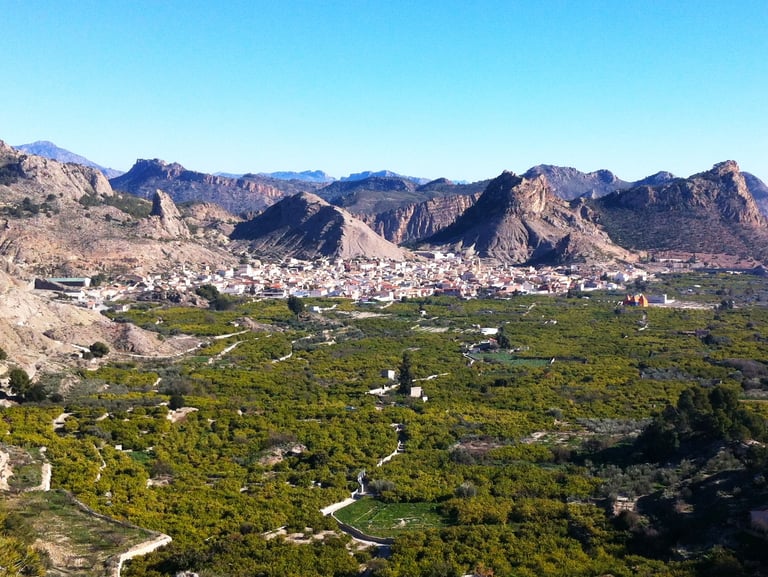
View of the town of Ricote and its fertile surroundings. Photo by Gregorico.
Villanueva del Río Segura
Villanueva is a small riverside settlement where time seems to slow down. Surrounded by orchards and gentle hills, it offers a peaceful atmosphere and a strong connection to agricultural life. Its most outstanding monument is the imposing neoclassical church of the Assumption, built at the beginning of the 19th century, following the plans of the architect Juan de Villanueva, who also designed the Prado Museum in Madrid.
Archena
At the southern end of the valley, Archena marks the transition between the Ricote Valley and the wider Segura basin. Known since Roman times for its thermal waters, the town combines spa tradition with riverside landscapes and historical heritage, making it one of the most visited places in the area. It is worth visiting its thermal complex, the Balneario de Archena, a group of buildings, mostly from the 19th century, in a beautiful setting next to the river.
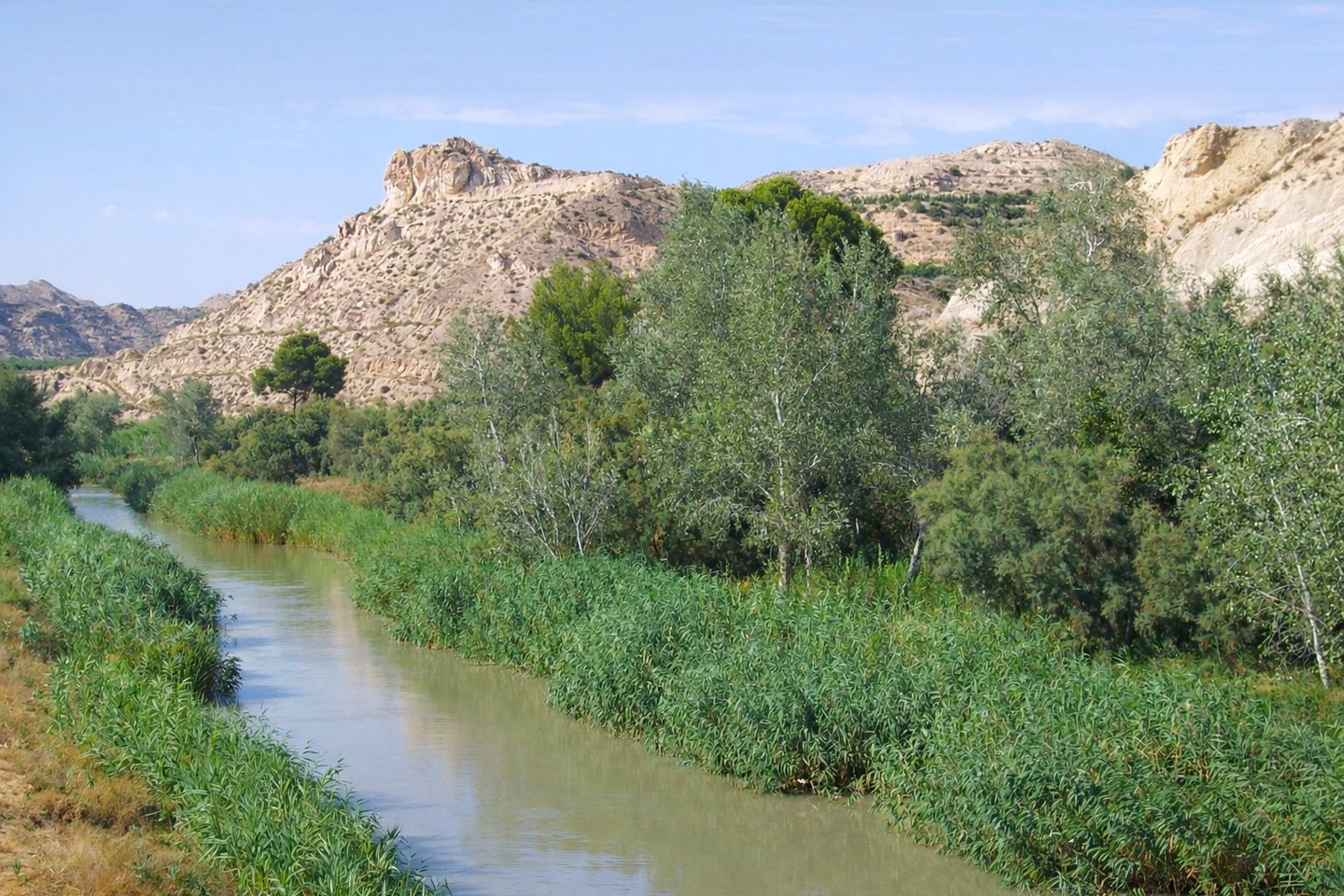
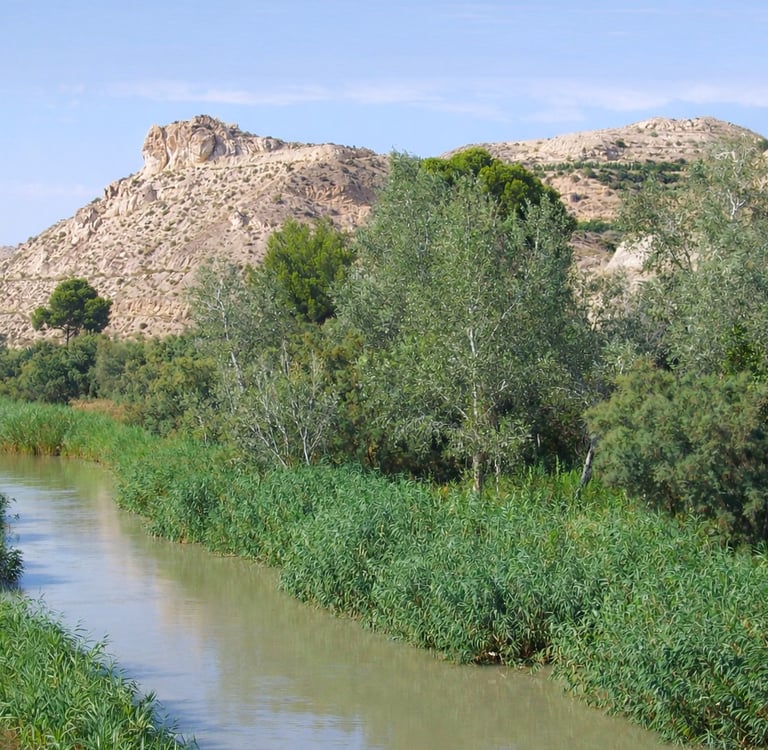
The Segura River as it passes through Archena.
Natural and Cultural Highlights Beyond the Towns
Beyond its villages, the Ricote Valley and Cieza unfolds as a rich cultural landscape where prehistoric caves, medieval fortresses, hydraulic engineering works, and sacred sites coexist within a spectacular natural environment shaped by the Segura River.
Starting in the North, specifically in Cieza, the Sima de la Serreta, perched above the Almadenes Canyon. It is one of the region's most exceptional archaeological sites. Occupied from the Neolithic period through the Roman and Islamic eras, it preserves more than fifty schematic rock art figures, some with semi-naturalistic features. Its almost inaccessible location overlooking the river reinforces its character as a refuge and symbolic space, while archaeological finds such as cereal seeds point to the earliest evidence of agriculture in Murcia.
On the other side of the river, the nearby Cuevas del Arco form a complex of caves and rock shelters, two of which contain Paleolithic paintings. Small red horse heads, quadrupeds, and abstract symbols appear alongside unusual airbrush techniques, offering a glimpse into early artistic experimentation and symbolic communication.
The setting where these caves were found, the Almadenes Canyon, stands as one of the most impressive natural areas in the Region of Murcia. Carved by the Segura River, its vertical limestone walls are home to rich riparian forests and fauna such as otters and birds of prey.

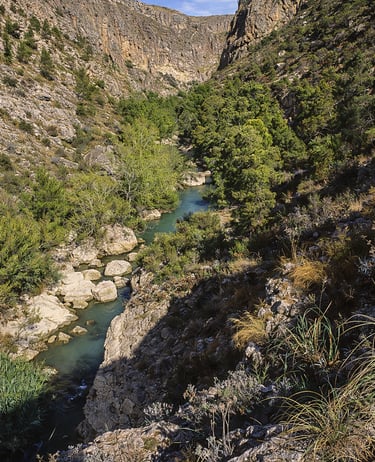
The Segura River as it passes through the Almadenes canyon, between Calasparra and Cieza.
Closer to the town of Cieza, there are several sites that connect these landscapes with water and the river. One such example is the Molino de Teodoro -Teodoro's Mill-, a flour mill dating back to 1507. Carefully preserved, it allows visitors to understand traditional milling processes and the role of water power in the local economy. Nearby, the "Acequia de la Andelma" (Andelma Irrigation Channel), of Islamic origin, survives as one of the last traditional earthen irrigation canals in the area, now a valuable ecological corridor lined with riparian vegetation.
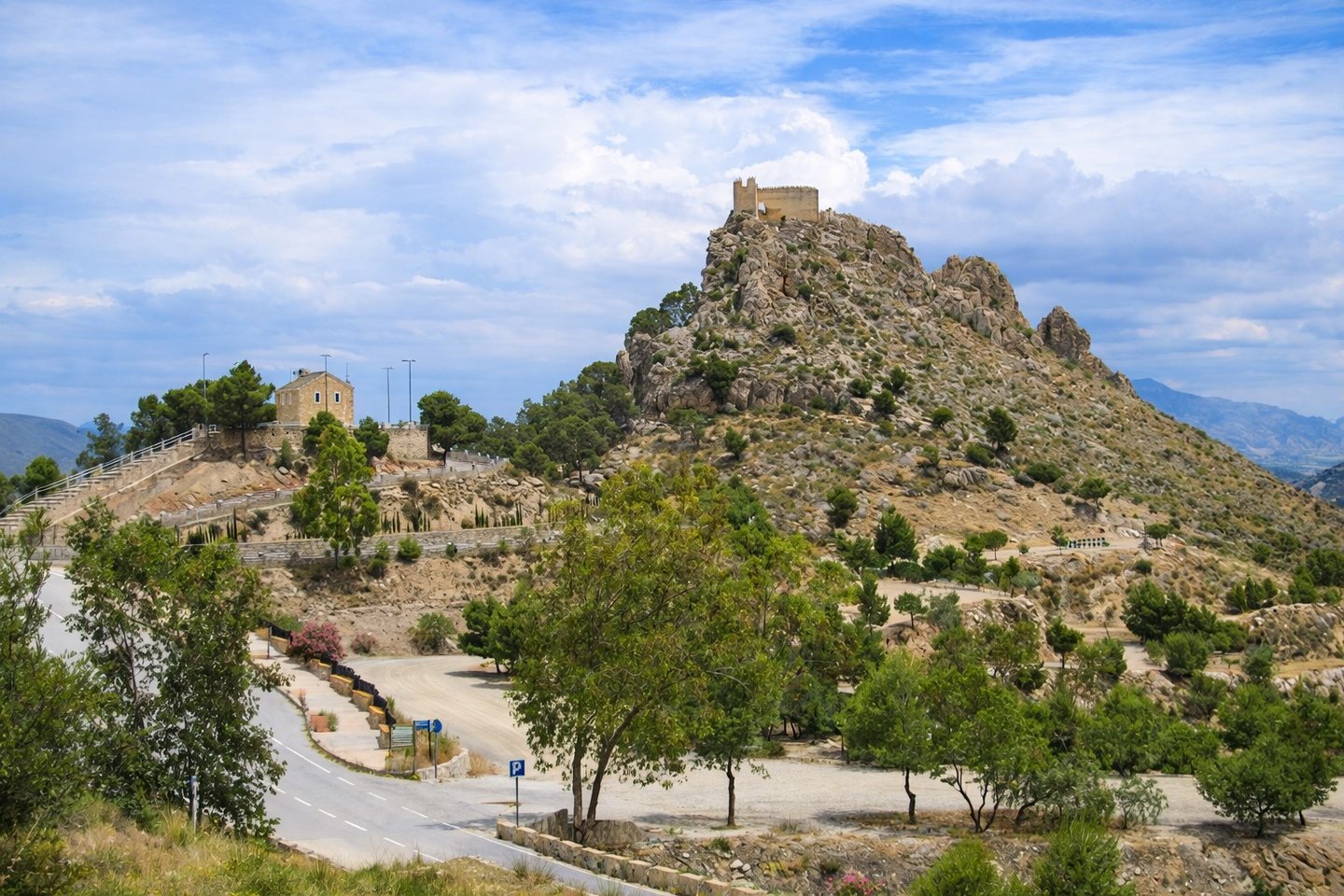
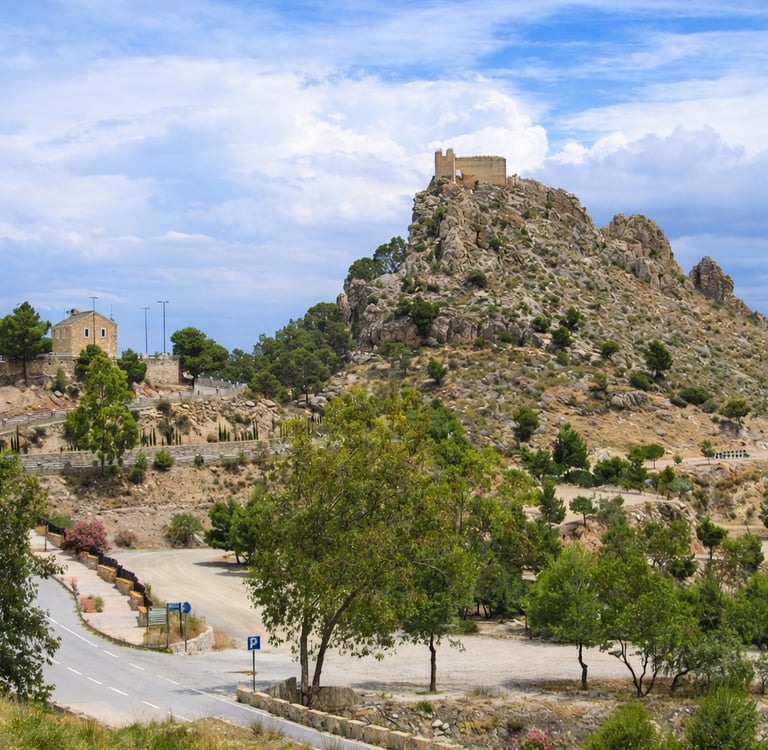
Religious monuments such as the Sanctuary of "Nuestra Señora del Buen Suceso", perched atop Atalaya Hill, offer panoramic views of the city and the Cieza Valley. The sanctuary is the spiritual heart of the city, closely linked to local festivals and pilgrimages. Equally rooted in popular devotion is the Emita del Cristo del Consuelo -Hermitage of Christ of Consolation-, associated with legends of rain and agricultural prosperity, and deeply connected to Cieza's religious calendar.
View of the Sanctuary of Our Lady of Good Success and the Castle of Cieza, on the outskirts of this town.
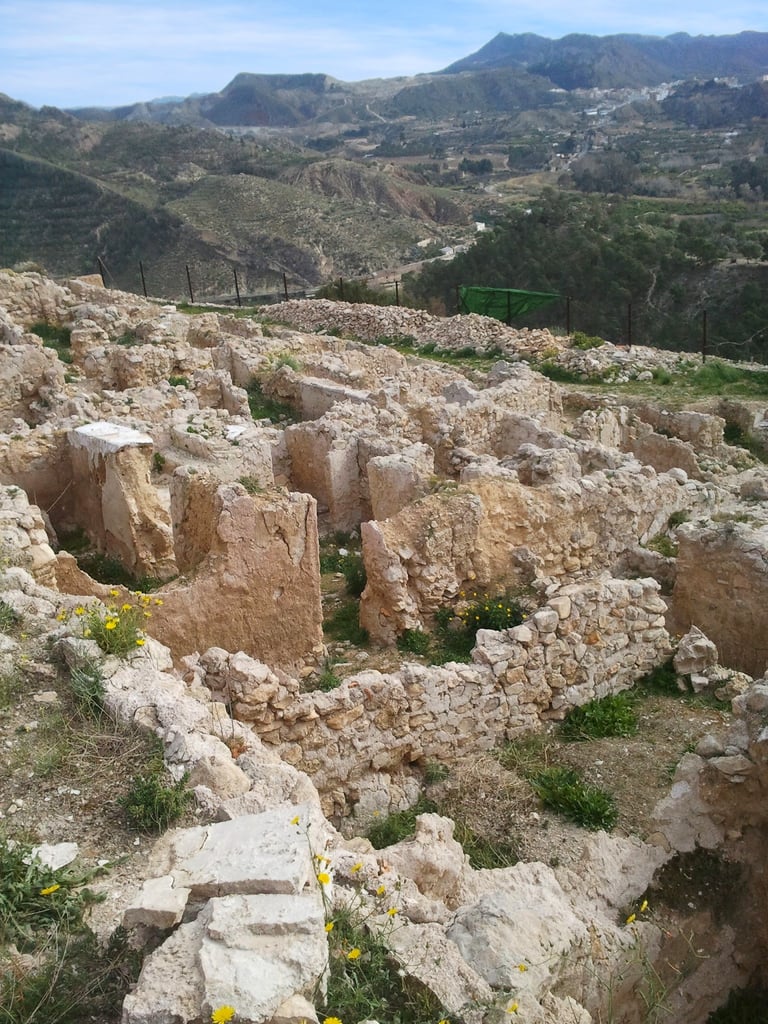
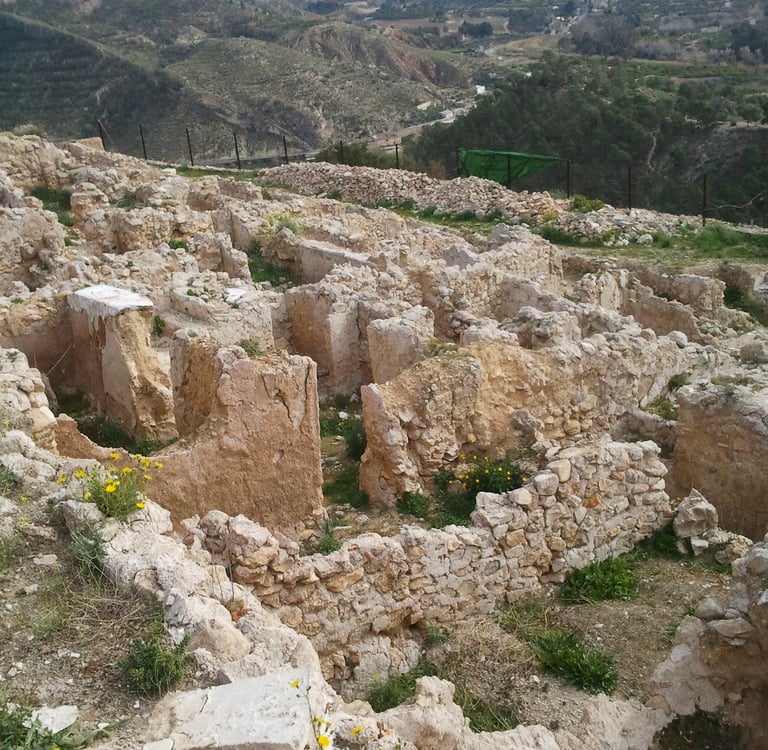
Dominating the valley from the Atalaya Mountains, Medina Siyasa is one of the best-preserved Andalusian settlements in Europe. Founded in the 11th century and abandoned in the 13th, its terraced houses, narrow streets, and walls reveal the daily life of a medieval Islamic town, while the refined plasterwork displayed in the Siyasa Museum highlights its artistic sophistication.
Further south, in Abarán, the Sanctuary of the “Virgen del Oro” -Virgin of the Gold- crowns the Sierra del Oro mountain range. This isolated religious complex, surrounded by mountains, combines devotion, landscape, and artistic heritage, with a richly decorated interior centered on the patron saint of Abarán.
Ruins of the Islamic-era village known as Medina Siyasa.
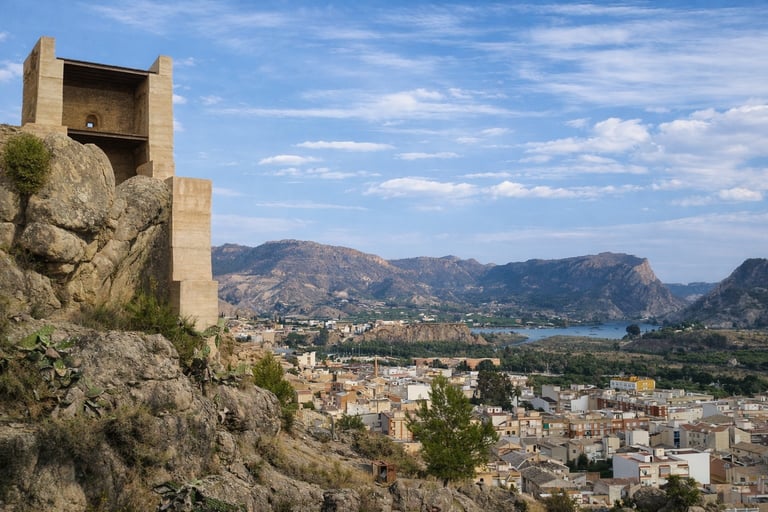
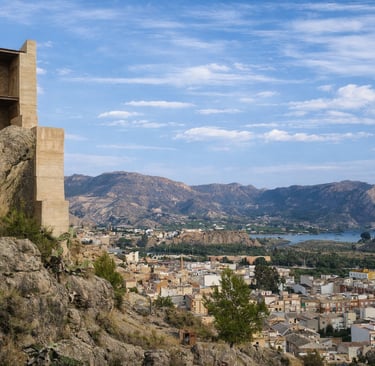
In Blanca, Casa La Favorita reflects the 19th-century leisure architecture of noble families, rising above the river with eclectic decor and panoramic views. Above the town, the Castle of Blanca, of Islamic origin, dominates the valley from Peña Negra. Built in the 12th century and later reused by the Order of Santiago, it played a key role in medieval conflicts and border defenses.
One of the most spectacular viewpoints in the valley is the Mirador Alto de Bayna, a modern platform suspended over the river, offering unforgettable views of Blanca, the orchards, and the Ojós Weir. Nearby, the Miguelico Núñez Waterwheel, reconstructed for educational purposes, serves as a reminder of the ingenuity of the traditional water-lifting systems that sustained agriculture for centuries.
View of Blanca and the Ojós reservoir from the hill of Blanca Castle.
In Ricote, Ricote Castle rises above the valley as a symbol of resistance and power. First mentioned in the 9th century, it played a central role in the Islamic rebellions and later became a stronghold of the Order of Santiago after the Castilian conquest.
Finally, in Ulea, the Pila de la Reina Mora (Moorish Queen's Fountain) and the Salto de la Novia (Bride's Leap) form a unique archaeological complex. The site combines a late Roman terraced settlement with a medieval Islamic watchtower, strategically located to control the valley's routes. Legends, archaeology, and landscape converge in one of the most evocative corners of the Ricote Valley.


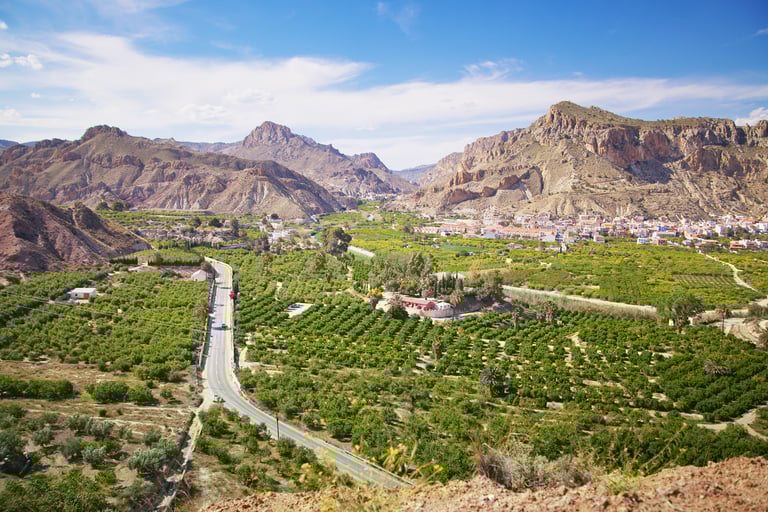
View of the Ricote valley to the south from the place known as Salto de la Novia (Ulea).
Why Visit the Ricote Valley and Cieza?
Visiting the Ricote Valley and Cieza means discovering a different Murcia, one shaped by water rather than by dryness, by continuity rather than rupture. This is a landscape where history is not confined to monuments, but written into terraces, canals, villages and everyday life.
The valley offers tranquillity, cultural depth and a powerful sense of place, far from mass tourism. For travellers interested in authentic rural landscapes, Islamic heritage, archaeology and the slow rhythm of Mediterranean life, the Ricote Valley is one of the most rewarding destinations in the Region of Murcia.


