Northwest District

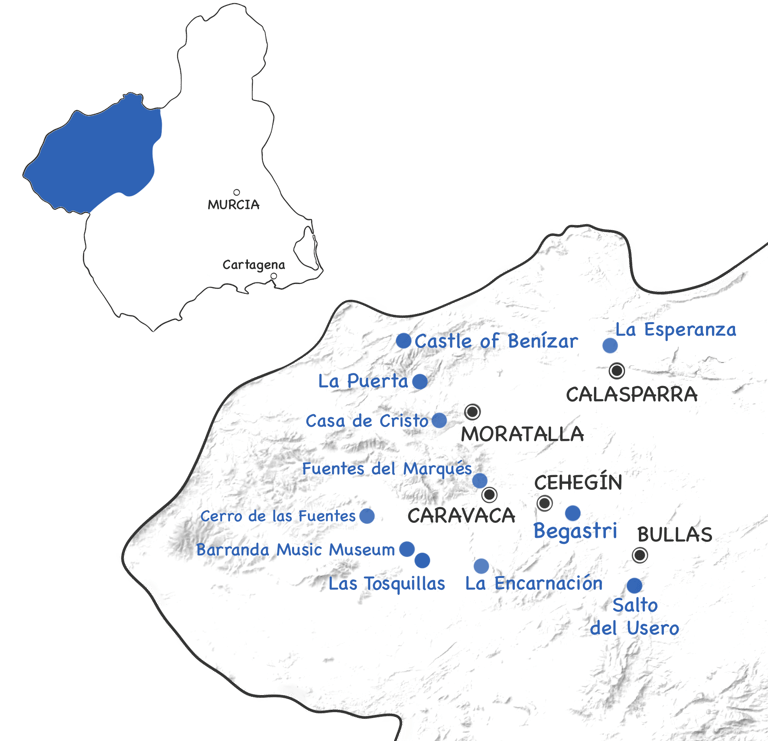
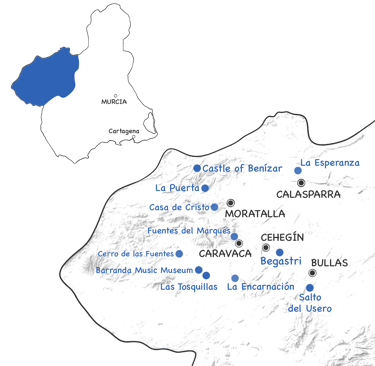
The Northwest Region of Murcia is one of the most beautiful, unspoiled, and surprising areas in southeastern Spain. Formed by the municipalities of Bullas, Calasparra, Cehegín, Moratalla and Caravaca de la Cruz, this inland comarca offers a radically different face of Murcia: greener, cooler, more mountainous, and deeply connected to nature, tradition, and history.
Geographically, the Northwest lies between river valleys, limestone mountains, forests, and fertile plains shaped by the Segura and Quípar rivers. Its altitude and interior location give it a milder climate than the coast, with cooler summers, crisp winters, and dramatic seasonal contrasts that make it ideal for outdoor activities all year round. This is a region for travelers who enjoy slow tourism, landscapes, heritage villages, and meaningful cultural experiences.
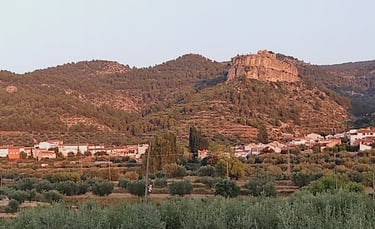
Panoramic view of the village of Benízar, belonging to the municipality of Moratalla.
Nature, History and Authentic Spain
Each municipality in the Northwest Region has its own personality, history, and rhythm, making the comarca especially rich and varied.
Located in the western heart of the comarca, Caravaca de la Cruz is the spiritual and symbolic capital of the Northwest. With around 25,000 inhabitants, it is internationally known as one of the five Holy Cities of Christianity. Its historic centre is crowned by the Sanctuary of the Vera Cruz, a pilgrimage destination of global importance. Beyond its religious role, Caravaca offers a charming old town, Baroque churches, museums, and a vibrant cultural calendar that blends faith, tradition, and local life.
The Main Towns of the Northwest Region
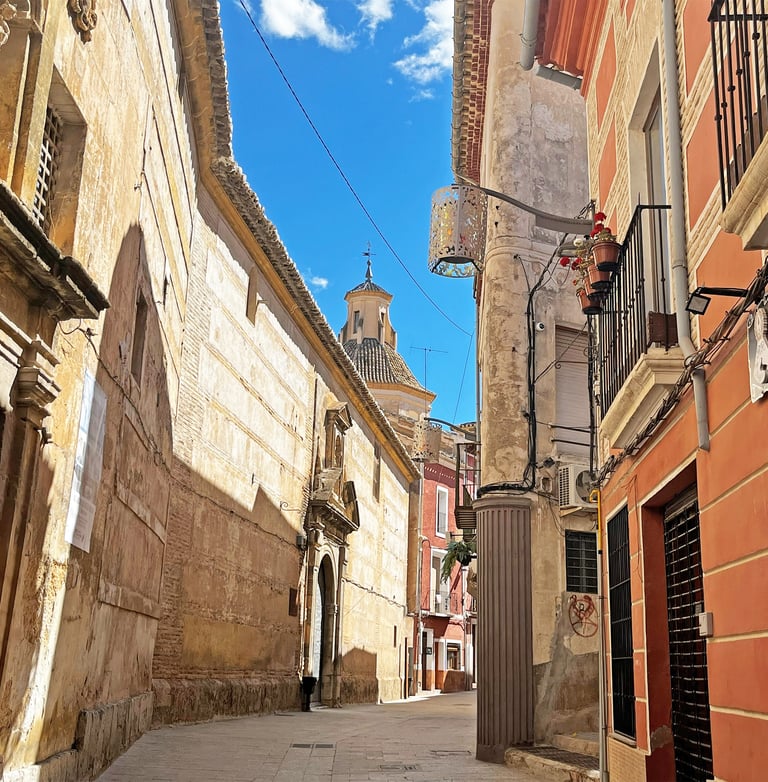
One of the streets in the historic center of Caravaca.
Cehegín — One of the Most Beautiful Historic Towns in Murcia
Perched on a rocky hill overlooking fertile orchards and river valleys, Cehegín is widely regarded as one of the most charming historic towns in the Region of Murcia. With a population of around 15,000 inhabitants, it combines monumental heritage, quiet streets, and spectacular viewpoints in a compact and very walkable historic centre.
Cehegín’s history stretches back to Iberian and Roman times, though much of its present character was shaped during the Islamic period and the later Christian Middle Ages. Its strategic position made it an important settlement, and many noble families left their mark during the Early Modern period, giving rise to the elegant urban fabric visitors see today.
The Old Town of Cehegín, declared a Historic-Artistic Site, is its greatest attraction. Wandering through its narrow streets reveals stately houses with coats of arms, hidden squares, and centuries-old churches. Highlights include the Church of Santa María Magdalena, which dominates the skyline with its imposing presence; the Convent of San Esteban, a beautiful example of religious architecture; and the Palace of the Fajardo family, reflecting the town’s noble past. From viewpoints such as the Cerro de las Fuentes, visitors can enjoy panoramic views over the surrounding countryside.
Cehegín is ideal for travellers who enjoy photography, architecture, and discovering authentic towns at a relaxed pace.
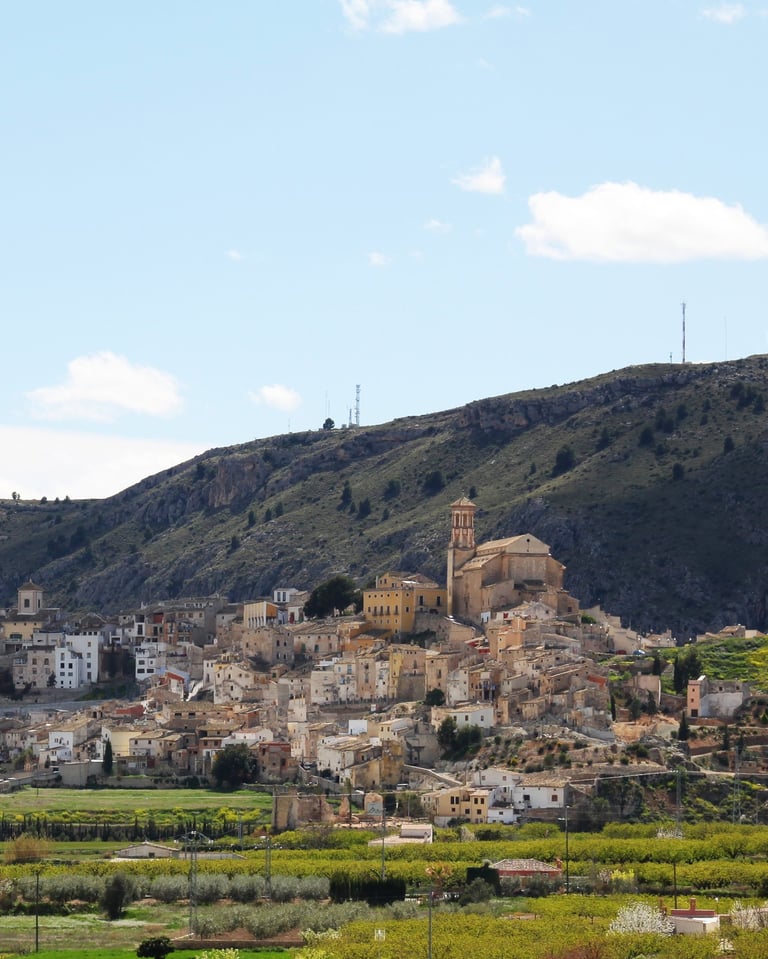
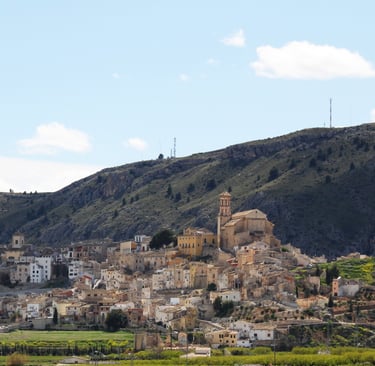
Cehegín with the hill known as Peña Rubia in the background. Photo by Juanjocehegin1998.
Bullas — Land of Wine and Rural Tradition
Located in a fertile basin surrounded by gentle hills and vineyards, Bullas is a welcoming town of around 12,000 inhabitants, deeply connected to agriculture and wine production. Its landscape, culture, and identity are inseparable from viticulture, making Bullas a key destination for wine tourism in inland Murcia.
Bullas has ancient roots, with Roman and medieval remains found throughout the area, but it flourished especially during the modern period thanks to farming and wine trade. Today, tradition and innovation coexist, offering visitors a blend of heritage, gastronomy, and nature.
One of the town’s highlights is the Wine Museum of Bullas, housed in a former winery and offering an excellent introduction to the history and culture of local winemaking. Nearby, visitors can explore traditional wine cellars (bodegas), some still in use today. The Church of Nuestra Señora del Rosario, with its striking façade, anchors the historic centre, while small squares and streets reveal everyday local life.
Bullas is also an excellent base for visiting natural landmarks such as the Salto del Usero, making it a perfect stop for combining culture, wine, and outdoor experiences.


One of the many vineyards located on the outskirts of Bullas, a town with its own wine designation of origin.
Calasparra — Water, Rice and Sacred Landscapes
Set at the meeting point of the Segura and Quípar rivers, Calasparra is a town shaped by water, rock, and centuries of spiritual devotion. With around 10,000 inhabitants, it is internationally known for its Denomination of Origin Calasparra rice, cultivated using traditional methods unique in Europe.
Calasparra’s origins go back to Iberian and Roman times, with a strong Islamic presence during the Middle Ages. Its strategic location along river routes made it an important settlement, and this layered history is still visible in its urban landscape.
In the historic centre, visitors can explore the Church of San Pedro Apóstol, the town’s main religious building, as well as the Clock Tower (Torre del Reloj), a local landmark. The streets preserve a traditional character, reflecting a town closely tied to agriculture and river life.
Just outside the town lies one of the district's most beautiful monuments, the Sanctuary of Our Lady of Hope (Santuario de Nuestra Señora de la Esperanza). Nestled in a gorge of the Segura River, its church is carved directly into the rock, forming a cave temple. There, an image of the Virgin Mary known as Our Lady of Hope is venerated, making it one of the most important devotional centers in the entire Region of Murcia.


Sanctuary of Our Lady of Hope (Nuestra Señora de la Esperanza). This is a cave church, as it is carved directly into the mountain. Photo from santuariovirgenesperanza.com.
Moratalla — Mountains, Castles and Prehistoric Art
Moratalla is the most mountainous and least populated municipality in the Northwest Region, with fewer than 8,000 residents spread across villages, hamlets, and wide rural areas. Its dramatic landscapes, forests, and high plateaus give it a wild, almost timeless character.
The town itself rises beneath the imposing Castle of Moratalla, a medieval fortress that dominates the skyline and offers panoramic views over the surrounding mountains. Moratalla’s historic centre is a maze of steep streets, traditional houses, and quiet squares that invite unhurried exploration.
Historically, Moratalla was a frontier territory, shaped by defensive needs and rural life. Its most extraordinary heritage, however, lies beyond the medieval period: the municipality contains one of the largest concentrations of prehistoric rock art in the Iberian Peninsula, recognised as UNESCO World Heritage.
Within the town, visitors can also see the Church of Nuestra Señora de la Asunción, while nearby sites such as the Casa de Cristo hermitage and interpretation centre connect Moratalla’s spiritual traditions with its prehistoric past. Moratalla is ideal for travellers seeking silence, nature, archaeology, and deep historical continuity.


The town of Moratalla, with the Church of the Assumption in the center. Photo by Werner Wilmes.
Natural and Cultural Highlights Beyond the Towns


One of the greatest attractions of the Northwest Region of Murcia lies beyond its historic town centres. Scattered across valleys, mountains and river gorges, visitors will find a remarkable concentration of natural monuments, archaeological sites and sacred landscapes, all deeply connected to the history and identity of the region. Exploring these places allows travellers to understand how nature, belief and human settlement have shaped this territory over thousands of years.
Landscapes Shaped by Water
Water is a defining element of the Northwest Region, carving spectacular landscapes and sustaining life for centuries.
Salto del Usero (Bullas)
Perhaps the most iconic natural landmark in the comarca, the Salto del Usero is a waterfall and natural rock pool sculpted by erosion over millennia. Its smooth stone formations, crystal-clear waters and surrounding greenery make it a favourite spot for nature lovers, photographers and summer visitors. The site also reflects the importance of water in shaping local agriculture and settlement.
Paraje de las Tosquillas (Barranda, Caravaca)
A quieter but equally evocative natural area, Las Tosquillas combines springs, traditional irrigation channels and lush vegetation. It is ideal for gentle walks and for understanding the rural water culture that has sustained local communities since antiquity.
Fuentes del Marqués Natural Area (Caravaca de la Cruz)
This green oasis, just outside Caravaca, is formed by a series of natural springs surrounded by woodland. Well-maintained paths and picnic areas make it perfect for relaxed walks, family visits and nature interpretation.
La Puerta Natural Area (Moratalla)
A dramatic mountain pass where river, forest and rock converge. This area is ideal for hiking, nature observation and photography, and represents the wildest side of the comarca.
A spot known as Fuentes del Marqués, just two kilometers from the center of Caravaca. Photo from lasfuentesdelmarques.com.


The small waterfall known as "Salto del Usero", very close to the town of Bullas. Photo by Ricardo Arévalo.
Sacred Landscapes and Places of Devotion
Religion and spirituality have long been intertwined with the natural environment of the Northwest Region, resulting in sanctuaries and hermitages set in dramatic surroundings.
Sanctuary of the Virgen de la Esperanza (Calasparra)
One of the most striking religious sites in the Region of Murcia, this sanctuary is embedded within a narrow river gorge carved by the Segura River. The combination of rock, water and devotion creates a powerful atmosphere that appeals to both pilgrims and cultural travellers.
Sanctuary and archaeological site of La Encarnación (Caravaca)
Located in a spectacular natural setting, this site brings together archaeology, religion and landscape. The sanctuary stands near the remains of Roman and earlier settlements, offering visitors a unique glimpse into centuries of continuous spiritual significance.
Casa de Cristo Sanctuary (Moratalla)
This remote hermitage, surrounded by rugged countryside, is closely linked to prehistoric rock art sites nearby. An interpretation centre helps visitors understand the connection between ancient belief systems and later Christian devotion, making this area especially meaningful from a cultural perspective.
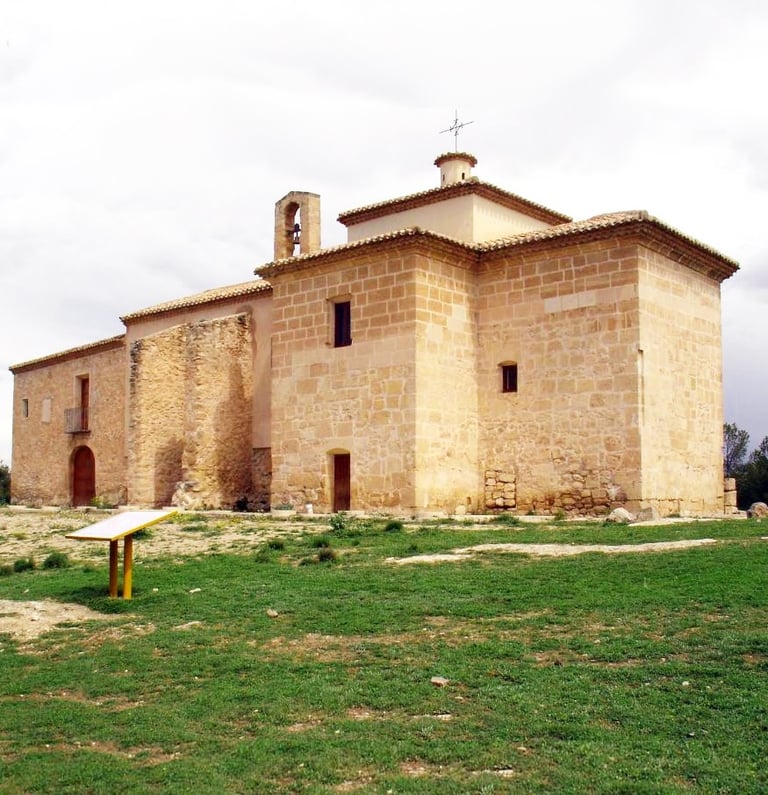
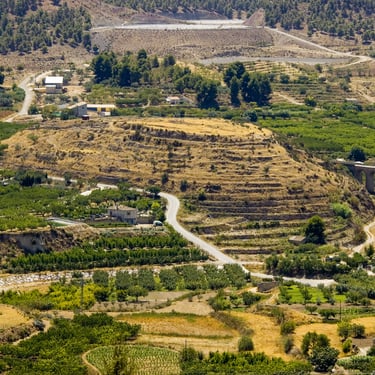
The Hermitage and Sanctuary of the Incarnation, built in the 16th century, stands in a fascinating archaeological setting. The church is built upon a Roman temple, which in turn rests upon a pre-Roman temple. The entire area is rich in archaeological remains spanning from Prehistory to the Middle Ages.
Archaeological and historical places
The Northwest of the Region is full of sites of archaeological and historical interest, especially castles and fortifications, linked to the mountainous and strategic nature of this territory.
Begastri Archaeological Site (Cehegín)
Just outside Cehegín lies Begastri, a key site for understanding the late Roman and Visigothic periods in the Region of Murcia. Flourishing particularly between the 6th and 7th centuries AD, Begastri became an episcopal centre during the Visigothic era. Excavations have uncovered churches, baptisteries, walls and urban structures that make it one of the most significant sites for studying early Christianity and Visigothic Hispania in the region. Visiting Begastri adds an essential historical dimension to any cultural itinerary through the Northwest.
Cerro de las Fuentes (Archivel, Caravaca)
An elevated area that combines archaeological interest and panoramic views, offering insight into ancient settlement patterns and strategic location decisions in Prehistory, as the origin of the village dates back to the third millennium BC.
Castle of Benízar (Moratalla)
Located in one of the most remote areas of the municipality, this medieval fortress stands as a silent witness to frontier life and territorial defence. The journey itself, through sparsely populated landscapes, is part of the experience.
Ethnic Music Museum of Barranda (Caravaca)
Although not archaeological in the strict sense, this unique museum preserves intangible cultural heritage through one of Spain’s most important collections of traditional musical instruments from around the world. It highlights the universal human impulse to create culture and ritual through sound.
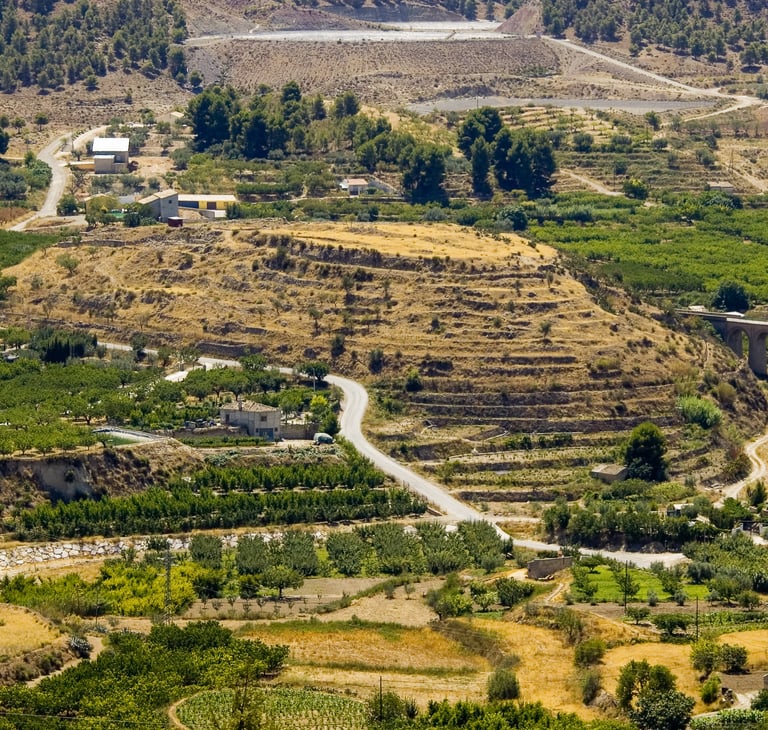
Small hill on the outskirts of Cehegín on which the archaeological site of Begastri is located. Photo by Antonio Sánchez Corbalán.
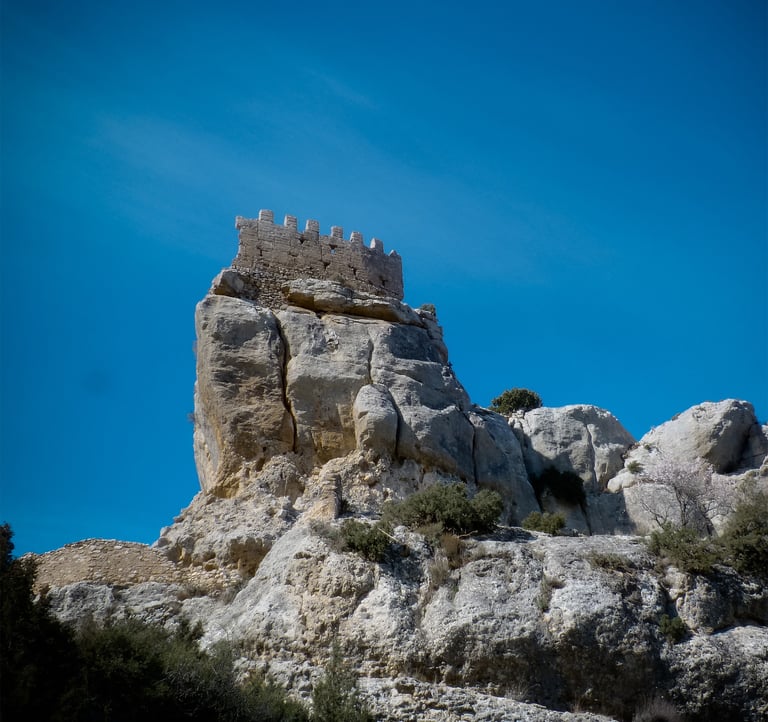
Remains of Benízar Castle, built in the 12th century, during the Islamic period. Photo by Jglbnz.
Why Visit the Northwest District?
The Northwest Region of Murcia offers one of the most authentic and unspoilt experiences in southeastern Spain. This is a land of mountains, forests and fertile valleys, where nature and history blend seamlessly. Medieval towns, ancient sanctuaries and archaeological sites coexist with rivers, springs and protected natural areas, making the region ideal for slow travel, hiking and cultural discovery.
Far from mass tourism, visitors can enjoy traditional villages, local gastronomy and a deep-rooted rural identity that has shaped the landscape for centuries. Whether exploring historic towns like Caravaca de la Cruz and Cehegín, walking through river gorges and pine forests, or discovering religious and archaeological heritage, the Northwest Region rewards travellers seeking genuine experiences and meaningful connections with Spain’s past and present.