Mining Mountains
The Sierra Minera of Cartagena and La Unión
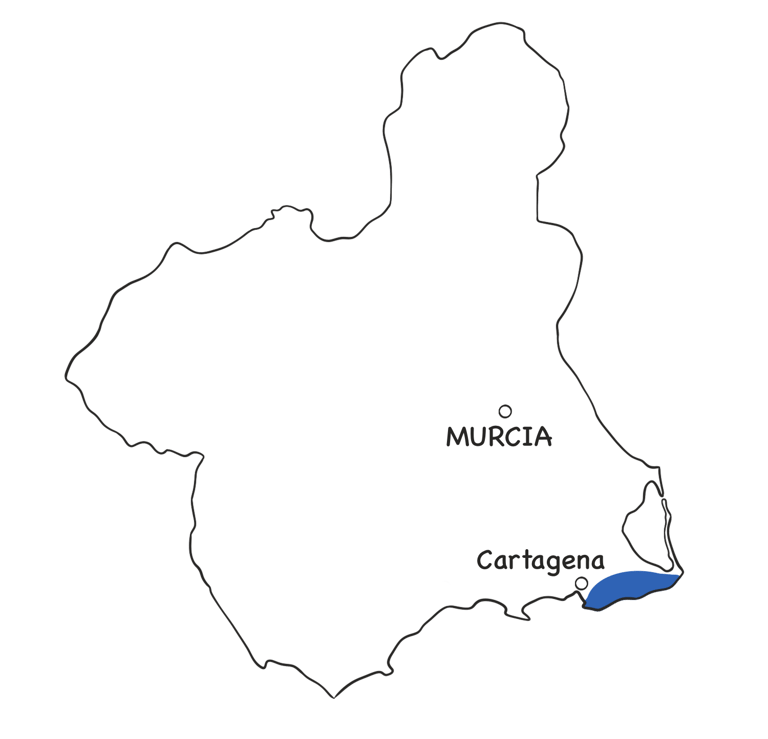
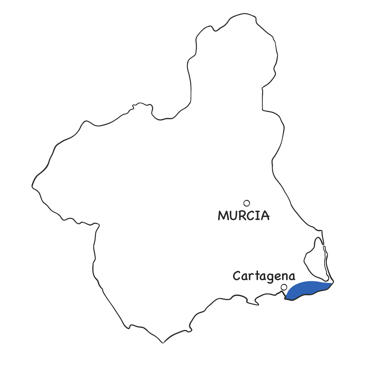
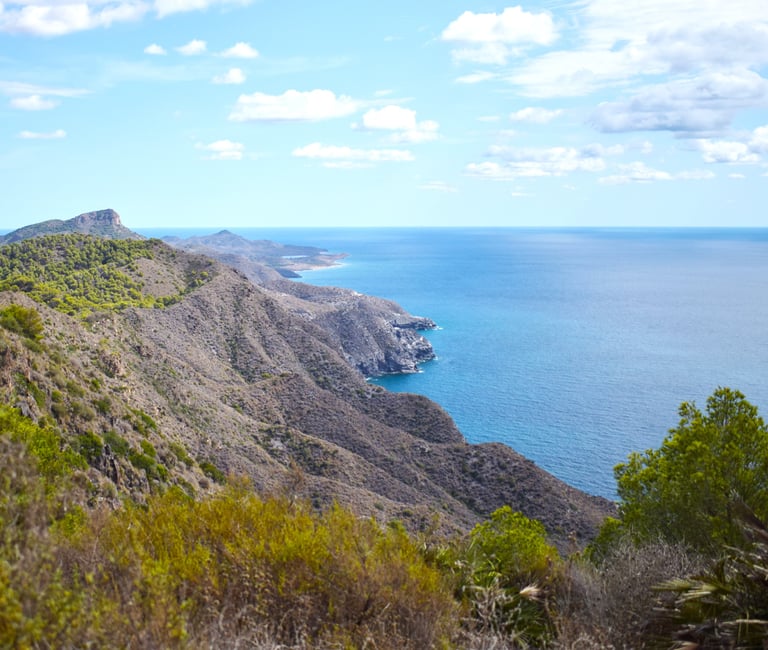
The Mining Mountains, known locally as the Sierra Minera, form one of the most striking and historically charged landscapes in the Region of Murcia. Stretching between the municipalities of Cartagena and La Unión, this narrow mountain range runs parallel to the Mediterranean coast, creating a dramatic contrast between barren mineral-rich hills and pristine beaches.
Geographically, the area is defined by low mountains, ravines and cliffs descending towards the sea. Environmentally, it is a unique territory where nature and human activity have been deeply intertwined for over two thousand years. The Mediterranean coastal climate brings mild winters, hot summers and abundant sunlight, making the area ideal for year-round exploration.
What truly sets the Sierra Minera apart is its mining legacy. From Roman times through the 19th and 20th centuries, intensive extraction of silver, lead and zinc transformed the landscape. Spoil heaps, shafts, chimneys and abandoned structures still dot the hillsides, creating a powerful open-air museum of industrial archaeology — raw, evocative and deeply moving.
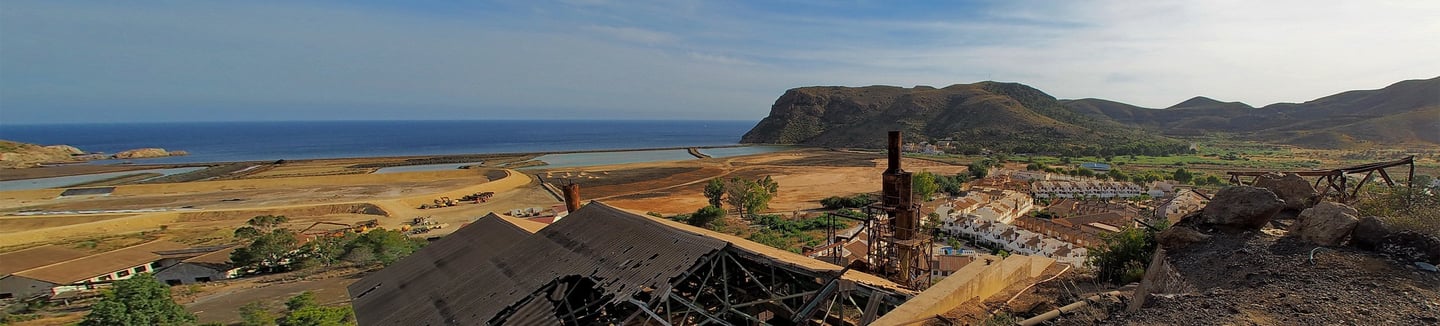
Image of the former Portmán bay, filled with waste generated over decades by mining in the area. Original photo by Enrique Freire.
La Unión — A Town Shaped by Mining
Located inland from the coast, La Unión is the historic heart of the Sierra Minera and home to around 18,000 inhabitants. The city took shape rapidly during the mining boom of the late 19th century, attracting workers from all over Spain and giving rise to a vibrant and hardworking community.
La Unión’s identity is inseparable from mining. Its urban fabric reflects this industrial past, with modernist buildings funded by mining wealth and humble workers’ neighbourhoods built around the pits. The town is also famous for hosting the International Festival of Cante de las Minas, one of the most important flamenco events in the world.
Key places to visit include the Mining Museum of La Unión, which offers essential context for understanding the region’s history; the Old Public Market, a striking modernist building; such as the so-called Casa del Piñón, originally a residential building for the local bourgeoisie and currently the seat of the town hall. Walking through La Unión is to walk through the social history of industrial Spain.
Modernist building that served as a kind of cultural center (Liceo Minero) and that today houses the Mining Museum.


Main Population Centres

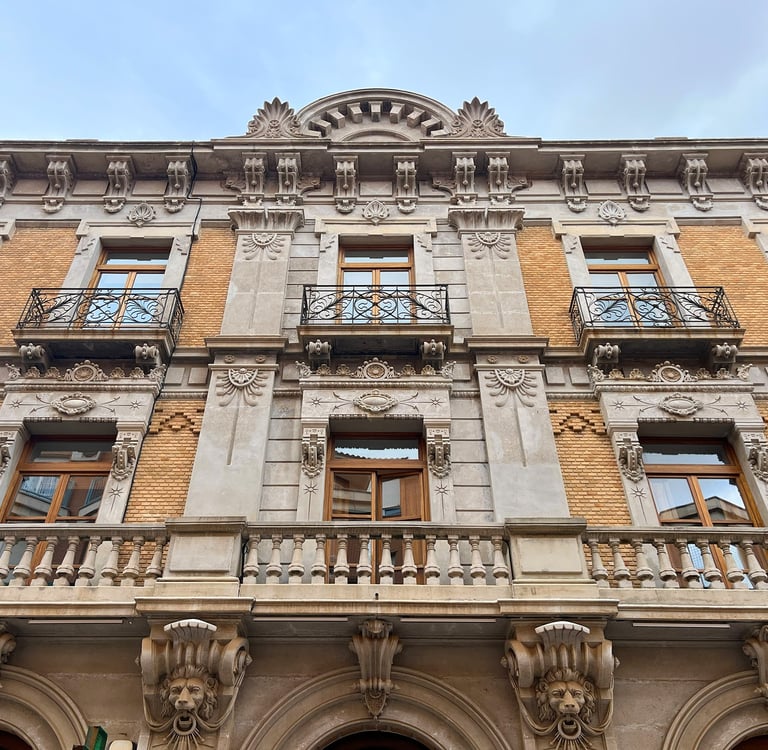
Detail of the so-called Casa del Piñón, a work by the architect Pedro Cerdán from 1899, considered one of the best examples of modernist-eclectic architecture in the Region of Murcia.
Portmán — Memory, Sea and Environmental Recovery
The coastal village of Portmán, administratively part of La Unión, lies in a natural bay just a few kilometres from the open Mediterranean. Today it has a small population, but historically it played a crucial role as a mining port, exporting minerals extracted from the Sierra Minera.
Portmán’s history goes back to Roman times, when it was known as Portus Magnus. However, its modern identity is inseparable from the environmental disaster of Portmán Bay. Between the 1950s and 1990, mining waste was dumped directly into the sea, filling the bay with millions of tonnes of tailings. The original bay disappeared beneath sludge and debris, becoming one of the most severe environmental disasters in the Mediterranean.
Mining discharges officially stopped in 1991. Since then, the area has been the focus of environmental studies, restoration projects and public debate. While full recovery is still ongoing, Portmán today represents a powerful example of environmental awareness and resilience. Visitors can walk along the altered coastline, visit interpretation panels, and understand the complex relationship between industry, nature and responsibility.
Within the village, points of interest include the Portmán Harbour, coastal paths, and viewpoints overlooking the former bay — a place for reflection as much as sightseeing.

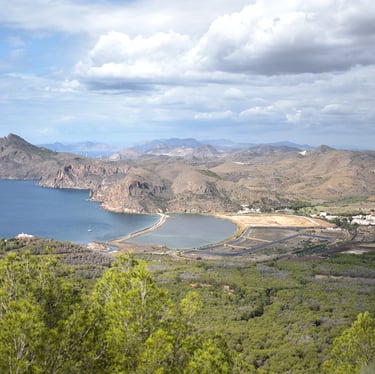
View of Portmán and its old bay from Monte de las Cenizas. You can see the progress of the bay regeneration work.


Old fishing pier of Portmán, which after the ecological disaster of the siltation of the bay was surrounded by land and vegetation.
Natural and Cultural Highlights
Calblanque, Monte de las Cenizas & Peña del Águila Regional Park
This protected coastal park is an exceptional mosaic of fossil dunes, scrubland, cliffs and small coves. Monte de las Cenizas and Peña del Águila offer short climbs with broad views over Cartagena’s coastline, dunes and the Sierra Minera — a landscape of high ecological value where hiking, birdwatching and horseback riding are popular.
Calblanque beaches
A chain of largely undeveloped beaches and coves—fine golden sands, crystal water and fossil dune systems—Calblanque’s shorelines feel wild and remote. They are ideal for swimming, snorkelling, quiet sunbathing and coastal walks; their protection status keeps visitor numbers lower than in more urban beaches, preserving a genuine Mediterranean seascape.
Playa del Lastre (Portmán)
Set at the mouth of Portmán Bay, Playa del Lastre is a compact beach framed by cliffs and mining vestiges. Its sands and nearby viewpoints offer strong visual contrasts between sea and the industrial archaeology around the bay — a powerful place for photography, reflection and short coastal walks.

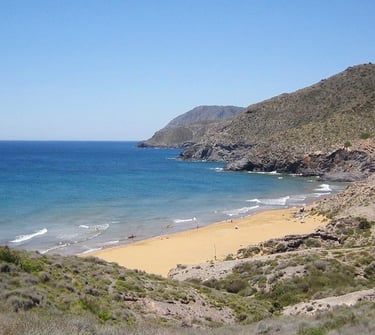
One of the many coves with fine sand and transparent waters that follow one another on the coast of the Calplanque natural park.
Playa Cola de Caballo
This secluded cove near Portmán is characteristic for its dark sand and dramatic cliffs. Reached by footpaths, Cola de Caballo rewards the walker with privacy, impressive geological walls and a very local atmosphere; ideal for visitors who enjoy off-the-beaten-track beaches and geological scenery.
Playa del Gorguel
Gorguel is a remote, wild beach tucked into a narrow valley where a seasonal ravine meets the sea. Its isolation, darker sands and surrounding vegetation make it a peaceful spot for nature lovers; access is typically by hiking track, which helps keep visitor numbers low and the site pristine.
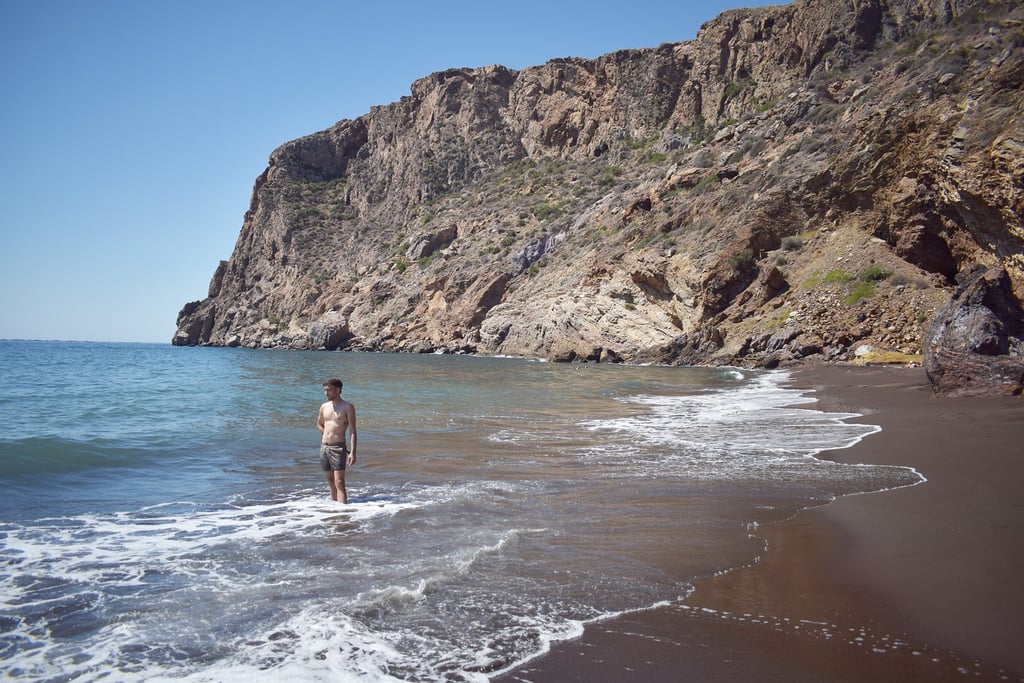
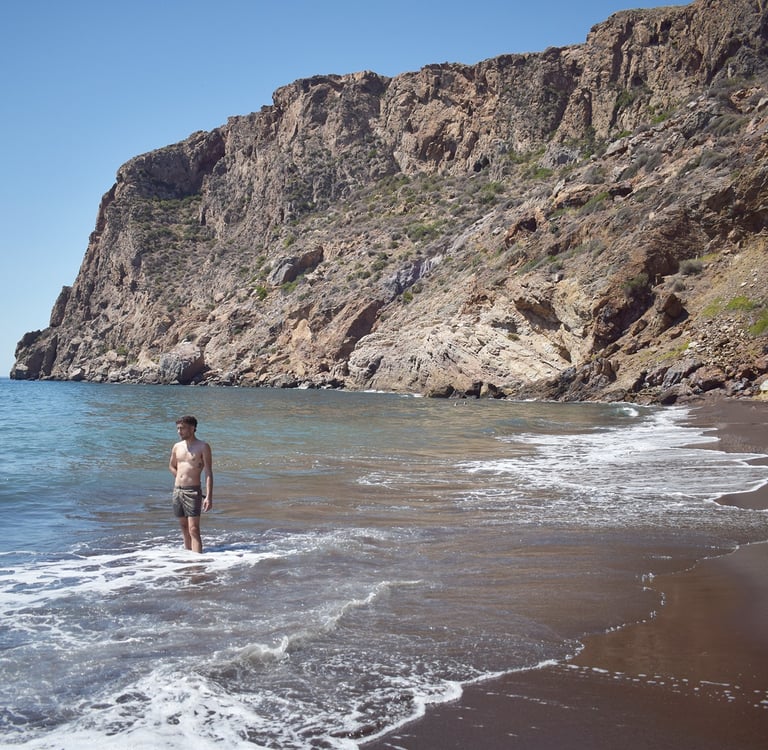
Cola de Caballo Beach, very close to the town of Portmán.

Abandoned mines & industrial archaeology
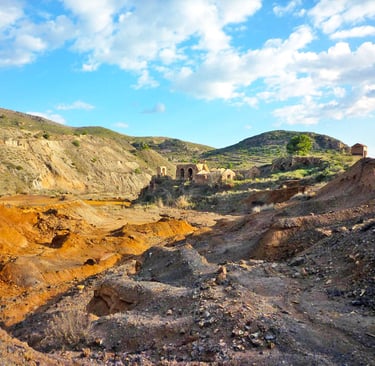
The Sierra Minera is an open air museum of shafts, spoil heaps, washing plants and workers’ settlements. These ruins tell the centuries-long story of metal extraction (lead, silver, zinc). Guided walks and interpretation centres (and the Mining Museum in La Unión) help visitors understand mining technology, labour history and the social impact of extraction.
La Manga Club Resort
At the eastern edge of the mining district, La Manga Club contrasts sharply with the raw Sierra Minera: luxury hotels, three championship golf courses, tennis and spa facilities. The resort is an excellent base for combining upscale comfort with day trips into Calblanque, the Sierra Minera trails and the Cartagena coast.
The so-called "Innocent Mine," dating from the 19th century, is one of the many abandoned mines found while hiking in the Sierra Minera. Photo by Nanosanchez.
Why Visit the Mining Mountains?
The Sierra Minera is one of the most emotionally powerful and visually striking areas of the Region of Murcia. Few places combine wild nature, Mediterranean beaches, industrial archaeology and social history so intensely within such a compact territory.
Visiting this area means understanding how mining shaped landscapes, communities and lives — and how nature slowly reclaims what industry once transformed. Whether through hiking, guided tours or quiet contemplation by the sea, the Mining Mountains offer a deep, authentic and unforgettable experience, especially when explored with knowledgeable local guides.