The Mar Menor and Cabo de Palos
A Unique Mediterranean World
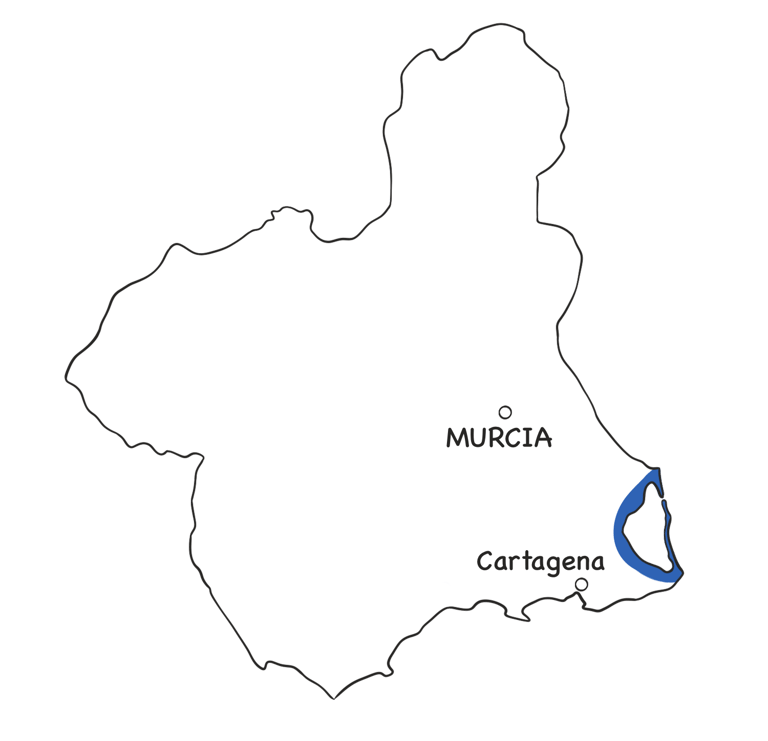
The Mar Menor and Cabo de Palos area is one of the most distinctive coastal regions in the Mediterranean. Located in southeastern Spain, this territory encompasses the municipalities of San Pedro del Pinatar, San Javier, Los Alcázares, and the northern coastal area of Cartagena, forming a landscape where calm lagoon waters, open sea, salt flats and volcanic headlands coexist within a short distance.
At the heart of the region lies the Mar Menor, the largest saltwater lagoon in Europe. Separated from the Mediterranean Sea by the narrow strip of land known as La Manga, the Mar Menor creates a shallow, warm and highly saline body of water unlike anywhere else on the continent. Its average depth rarely exceeds seven metres, which means its waters warm quickly and remain calm throughout most of the year.
From an environmental and recreational point of view, the Mar Menor is exceptional. Its gentle conditions make it ideal for snorkelling, sailing, paddleboarding, kayaking, windsurfing and kitesurfing, while its mineral-rich muds and waters have traditionally been associated with wellness and therapeutic benefits. Combined with over 300 days of sunshine per year and mild winters, this area offers year-round possibilities for active tourism and relaxation.
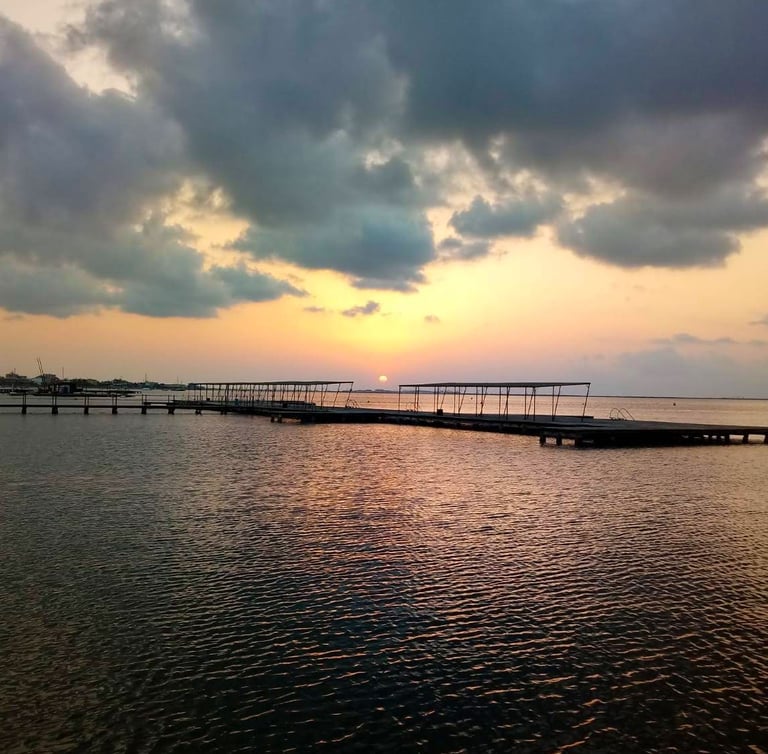
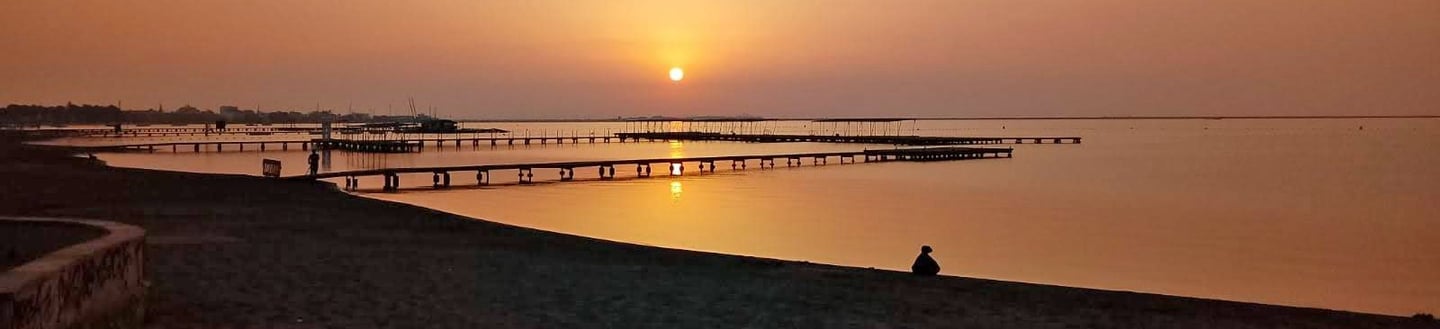
Dawn breaks in the coastal town of Santiago de la Ribera. Total calm usually reigns in the waters of the Mar Menor in the early hours of the day.
Lo Pagán (San Pedro del Pinatar)
Located at the northern end of the Mar Menor, Lo Pagán has around 6,000 residents and is internationally known for its natural mud baths. Historically linked to fishing and salt production, today it combines traditional character with health tourism. Visitors enjoy the promenade, beaches, mud flats and proximity to the Salinas of San Pedro Regional Park.
Santiago de la Ribera (San Javier)
This seaside town, with roughly 10,000 inhabitants, was one of the earliest holiday resorts on the Mar Menor. Founded in the late 19th century, it retains a nostalgic charm with its promenade, historic villas and maritime culture. It is ideal for sailing, beach walks and relaxed family tourism.
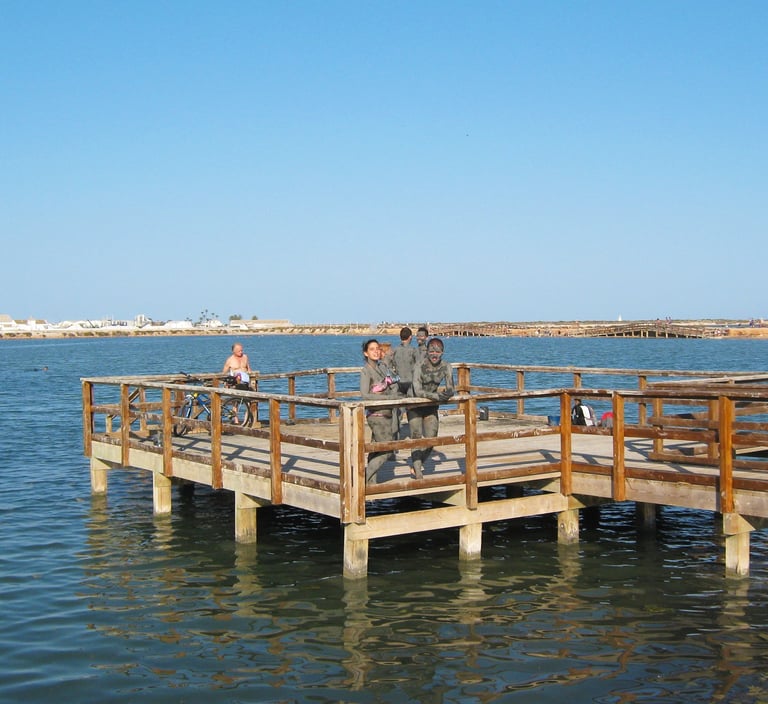
Between Lo Pagán and the San Pedro Salt Flats lies an area known for its medicinal waters and mud. Visitors are often found covered in this mud, which is believed to have great health benefits.
Towns and Coastal Villages of the Mar Menor
Los Narejos (Los Alcázares)
Los Narejos is a lively coastal area forming part of Los Alcázares, known for long sandy beaches and a wide promenade lined with cafés and restaurants. With a strong international community, it offers excellent conditions for water sports, cycling and seaside dining.
Los Alcázares
The historic core of the municipality, Los Alcázares developed around Roman baths (al-qasr, “the palace”). Today it is a well-established resort town with around 16,000 residents, combining cultural heritage, beaches, events and a strong tradition of spa and wellness tourism.
Los Urrutias (Cartagena)
This quiet coastal village lies on the eastern shore of the Mar Menor and has around 2,000 inhabitants. Traditionally a fishing settlement, it offers calm beaches, shallow waters and an authentic local atmosphere, ideal for visitors seeking tranquillity.
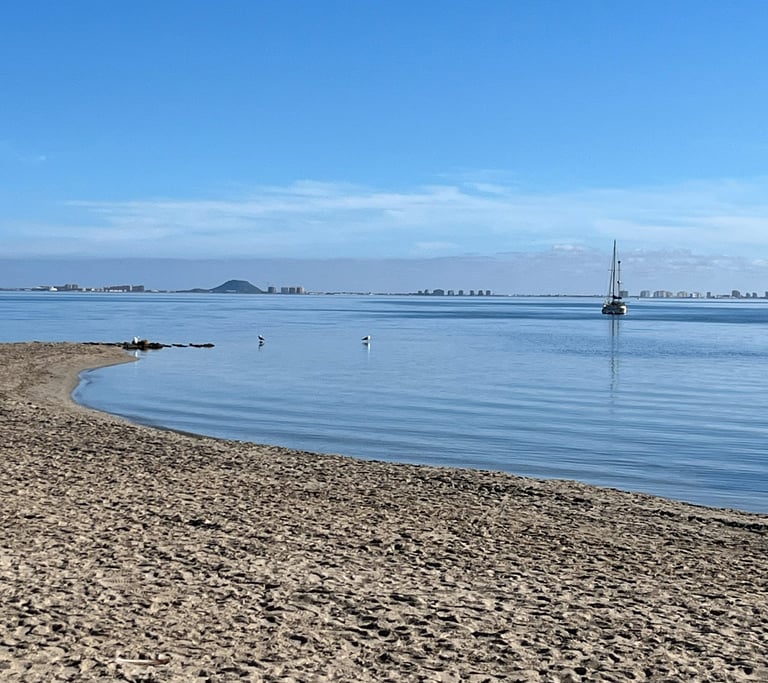
One of the beaches of Los Narejos. In the background you can see La Manga and, on the other side, Grossa Island.
Los Nietos (Cartagena)
One of the oldest villages on the Mar Menor, Los Nietos has Roman origins and a long maritime tradition. Its small harbour, railway connection and relaxed promenade make it popular with families and long-stay visitors.
Mar de Cristal – Playa Honda (Cartagena)
Modern seaside developments with excellent infrastructure, these areas offer wide beaches, clear shallow waters and a relaxed residential feel. They are popular for snorkelling, sailing and sunset walks.

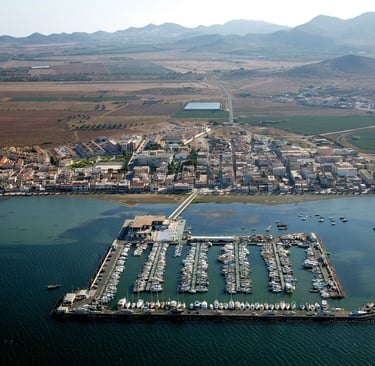
The marina and the village of Los Nietos. Photo by carm.es.
Cabo de Palos (Cartagena)
Perched on a small volcanic headland at the southeastern edge of the Mar Menor, Cabo de Palos is one of the most characterful coastal villages in the Region of Murcia. With a population of just over 1,000 permanent residents, it retains a strong fishing identity while being internationally recognised as one of Europe’s top diving destinations.
Historically, Cabo de Palos has been a strategic maritime point since Roman times, controlling the shipping routes along this treacherous stretch of coastline. Its most iconic landmark is the Cabo de Palos Lighthouse, built in 1865 on the remains of a 16th-century watchtower. Standing 51 meters tall, the lighthouse rises atop dramatic cliffs and offers panoramic views of the Mediterranean Sea, the Mar Menor, and the nearby Islas Hormigas Marine Reserve.
The surrounding waters have witnessed numerous historic shipwrecks, which partly explains the exceptional marine biodiversity found here today. The lighthouse environment is both scenic and symbolic: a meeting point of land and sea, history and nature. Within the village itself, visitors enjoy a lively harbour, excellent seafood restaurants, small coves, coastal paths and easy access to diving centres and boat excursions. Cabo de Palos combines authenticity, natural beauty and maritime heritage, making it a highlight of the Murcian coast.
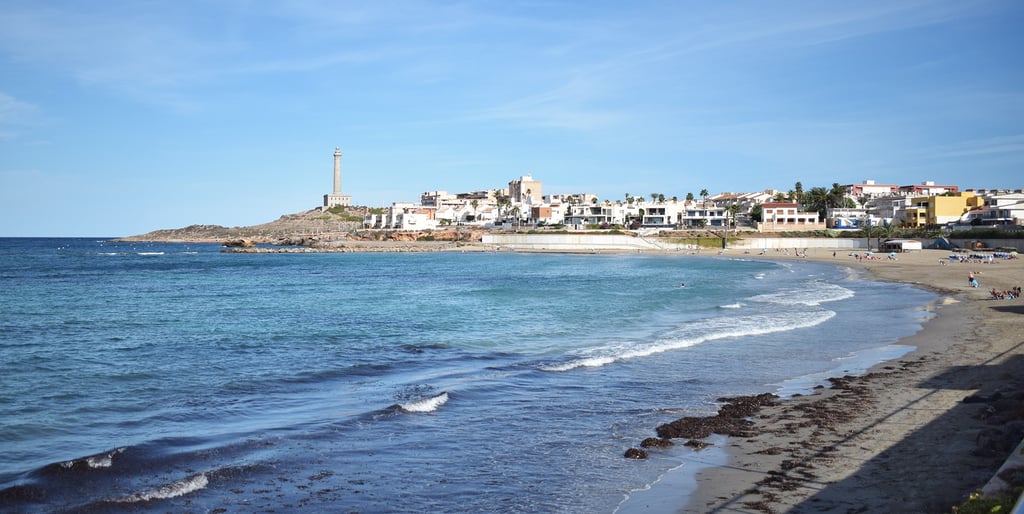
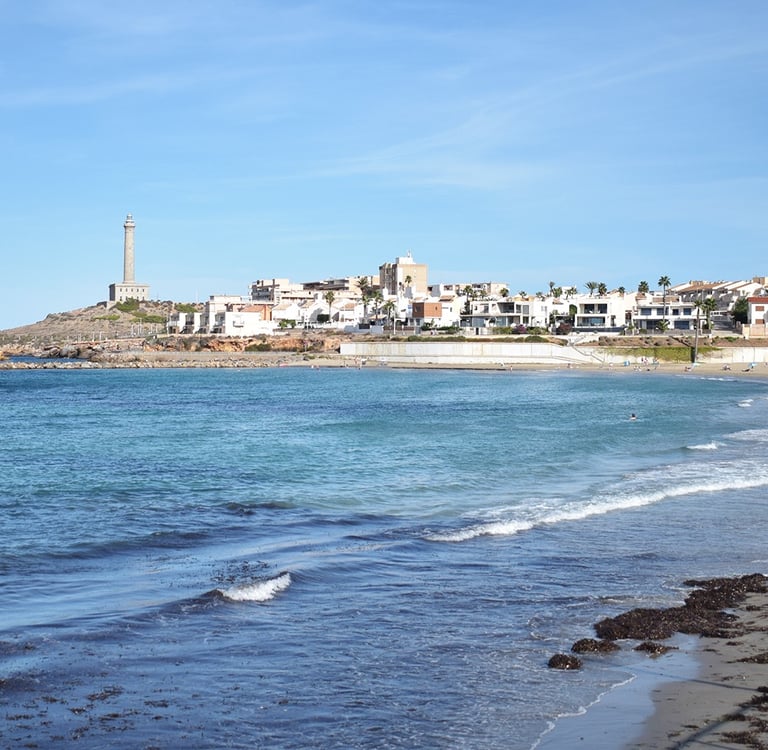
Playa de Levante (East Beach) in Cabo de Palos.
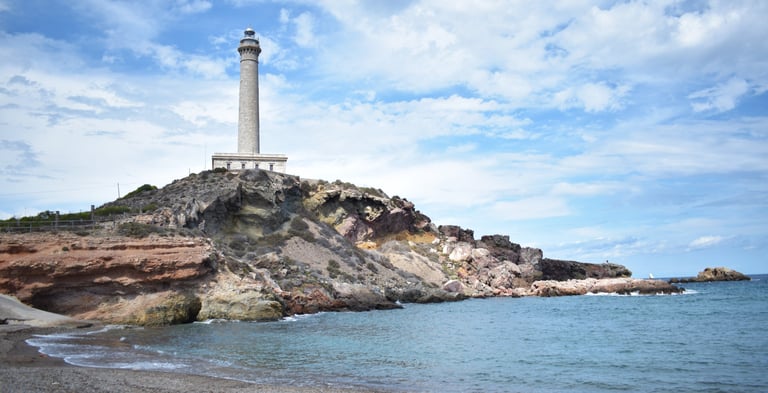
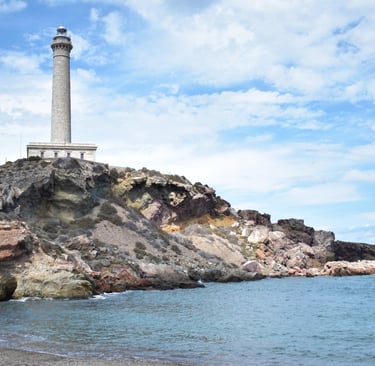
View of the Cabo de Palos lighthouse from Calafría beach.
La Manga del Mar Menor
(San Javier & Cartagena)
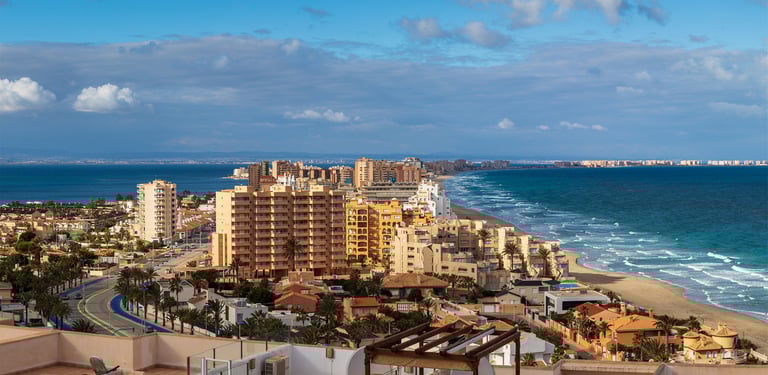
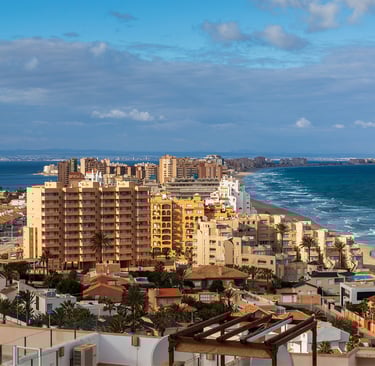
La Manga del Mar Menor is one of the most unusual coastal formations in Europe: a narrow strip of land stretching for over 20 kilometres, separating the calm waters of the Mar Menor from the open Mediterranean Sea. Developed mainly from the 1960s onwards, La Manga became a pioneering holiday destination and remains an iconic symbol of Mediterranean tourism.
What makes La Manga unique is the possibility of enjoying two seas in one place. On one side, the Mar Menor offers shallow, warm and wave-free waters, ideal for families, kayaking and paddleboarding. On the other, the Mediterranean provides open beaches, surf conditions and spectacular sunsets.
Today, La Manga offers marinas, long promenades, beaches on both sides, restaurants, hotels and water sports facilities. Despite its urban character, it also provides access to natural areas such as Marchamalo salt flats and nearby protected dunes, making it a versatile destination for relaxation, sport and coastal exploration.
View of La Manga where you can see the Mar Menor on the left and the Mediterranean Sea on the right. Photo by Ximonic.
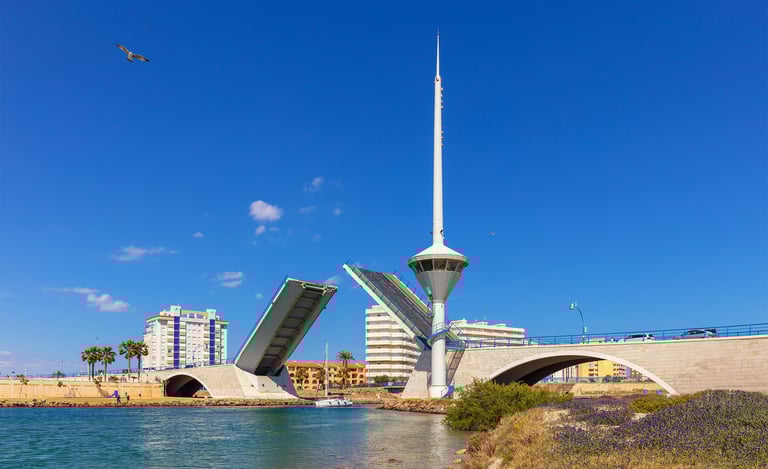
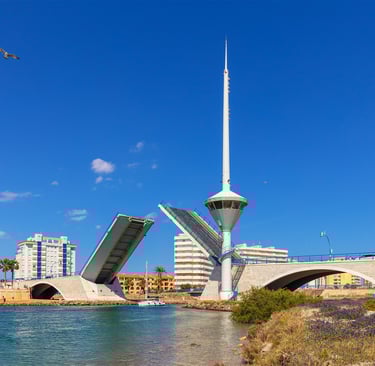
Drawbridge over the Estacio canal, one of the points where the waters of the Mar Menor and the Mediterranean Sea meet. Photo by Werner Wilmes.
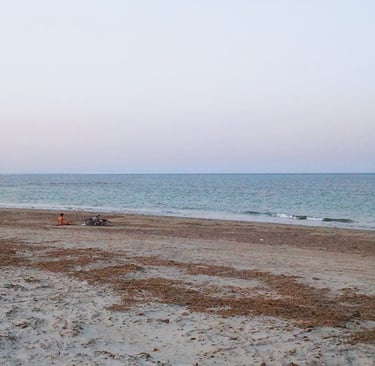
La Llana Beaches (San Pedro del Pinatar)
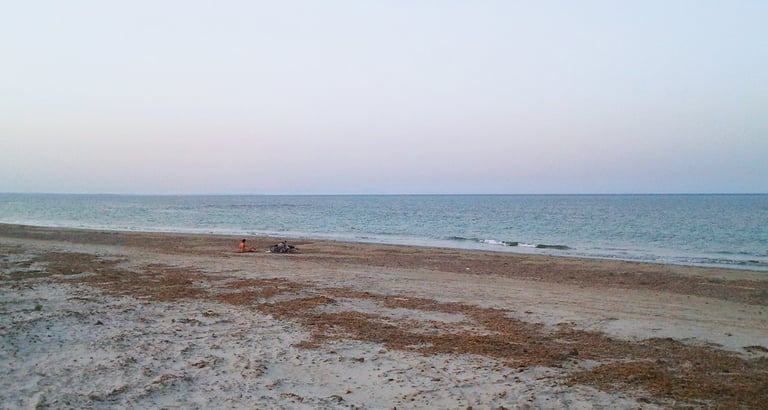
These wild beaches stretch along the Mediterranean side of San Pedro del Pinatar, backed by dunes and salt flats. Free from urban development, La Llana is ideal for long coastal walks, birdwatching and enjoying the natural rhythm of the sea. The area is especially valued for its tranquillity and ecological richness.
San Pedro del Pinatar Regional Park (Salt Flats and Wetlands)
One of the most important wetland ecosystems on Spain’s Mediterranean coast, this regional park combines salt production, lagoons and mudflats. It is home to flamingos and many migratory bird species. Visitors can explore it via walking and cycling paths, observation hides and interpretation panels.
Playa El Mojón (San Pedro del Pinatar)
Located on the Mediterranean side, at the northern end of the Mar Menor, El Mojón Beach marks the natural and administrative boundary between Murcia and the Valencian Community. Its calm waters and open horizon make it a peaceful place for swimming and seaside walks, often less crowded than the tourist beaches in the city center.
Playa de la Llana, one of the few "virgin" beaches remaining on the Spanish Mediterranean coast.
Natural and Cultural Highlights Beyond the Towns
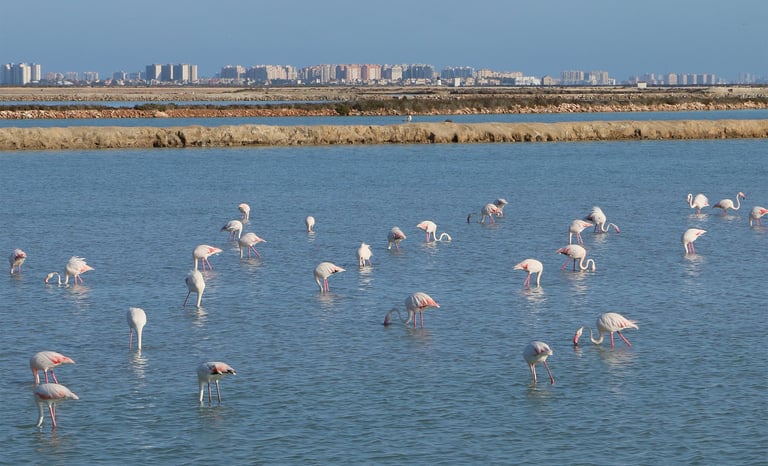

The calm waters of the salt flats are a common resting place for birds such as flamingos. Photo by Øyvind Holmstad.
Islands of the Mar Menor
The Mar Menor contains several small volcanic islands, including Isla Perdiguera, Isla del Barón and Isla del Ciervo. Though protected and not freely accessible, they form a distinctive visual feature of the lagoon and support unique ecosystems. Boat tours and guided excursions allow visitors to observe them respectfully.
Salinas de Marchamalo
Located at the southern end of La Manga, these historic salt flats illustrate the long relationship between humans and salt extraction in the area. Today they are a valuable ecological zone and a scenic landscape for walking, photography and understanding traditional coastal industries.
Las Amoladeras Coastal Area
This protected dune system near Cabo de Palos preserves one of the last stretches of undeveloped Mediterranean coastline in the area. Its paths cross sandy soils, low vegetation and fossil dunes, offering a clear example of natural coastal dynamics and a peaceful setting for short hikes.
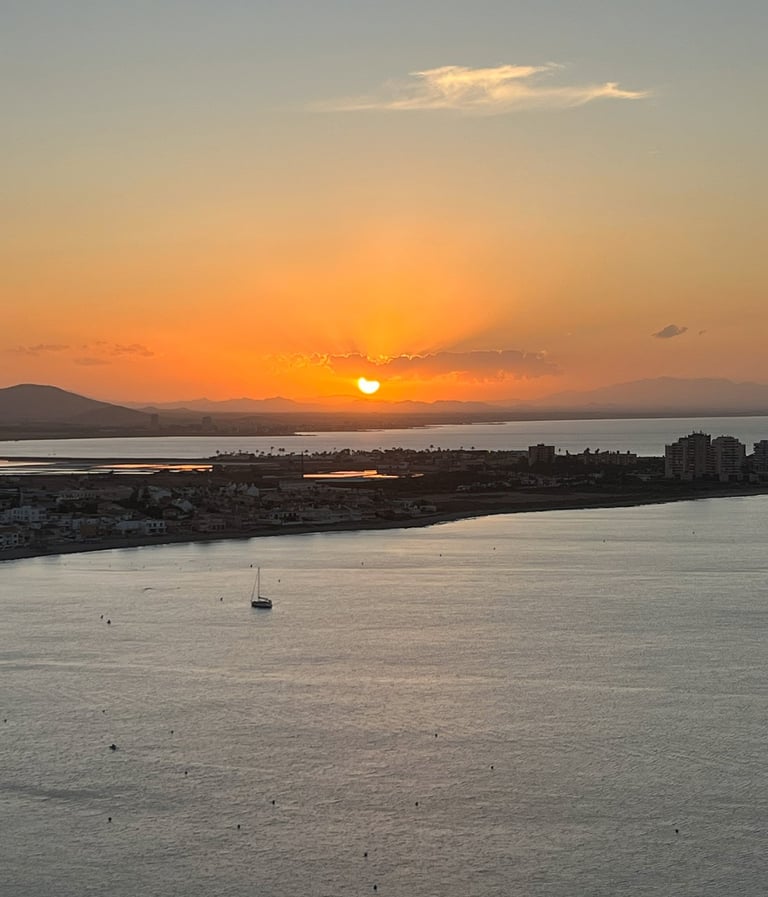
View of the sunset from the Cabo de Palos lighthouse where you can see the area occupied by the Marchamalo salt flats, right between the Mar Menor, in the background, and the Mediterranean Sea, in the foreground.
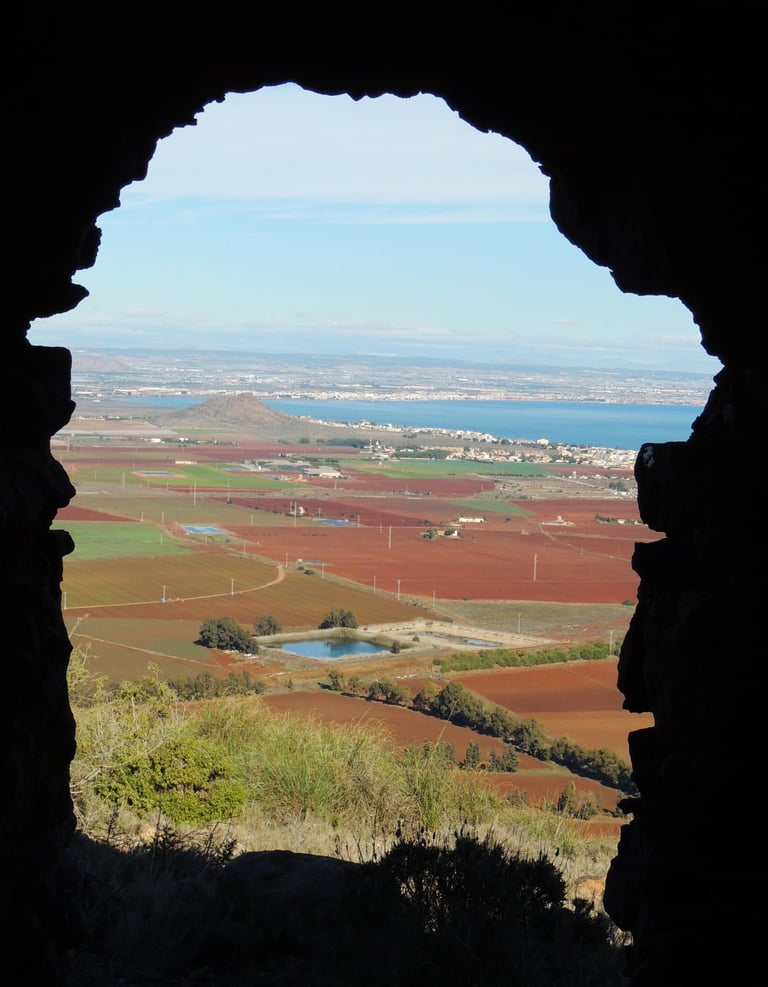

Ermitas of Monte Miral
Located on high ground overlooking the Mar Menor, these small hermitages combine devotion, landscape, and tranquility. Most were built between the 15th and 18th centuries and are now entirely in ruins. The area offers panoramic views and peaceful hiking trails, connecting religious tradition with the surrounding natural environment.
Monastery of San Ginés de la Jara
Located near Los Nietos, this historic monastic complex dates back to the Middle Ages and was an important pilgrimage site for sailors and coastal communities. Although partially ruined, it retains strong symbolic value and is currently undergoing restoration, making it a key cultural landmark.
Cabezo Gordo (Torre Pacheco)
Rising above the surrounding plain, Cabezo Gordo is a limestone hill of great archaeological importance. It hosts caves such as Sima de las Palomas, where Neanderthal remains were discovered. The site offers insight into prehistoric life and panoramic views over the Campo de Cartagena.
View of Los Urrutias, next to the Mar Menor, from one of the ruined hermitages of Monte Miral. Photo by Pablo Camps.
Why Visit the Mar Menor and Cabo de Palos?
The Mar Menor and Cabo de Palos offer one of the most unique coastal experiences in the Mediterranean. The Mar Menor, Europe’s largest saltwater lagoon, is renowned for its calm, shallow and warm waters, making it ideal for swimming, kayaking, sailing and snorkelling in a safe and relaxed environment. Just a few kilometres away, Cabo de Palos presents a striking contrast, with dramatic cliffs, wild coves and some of the best diving sites in Spain, thanks to its protected marine reserve.
This area perfectly combines beaches, nature and culture, from historic lighthouses and fishing traditions to wetlands, salt flats and coastal trails. Whether you are looking for family-friendly beaches, underwater adventure or unspoilt coastal landscapes, the Mar Menor and Cabo de Palos provide a diverse and unforgettable destination all year round.