Cartagena
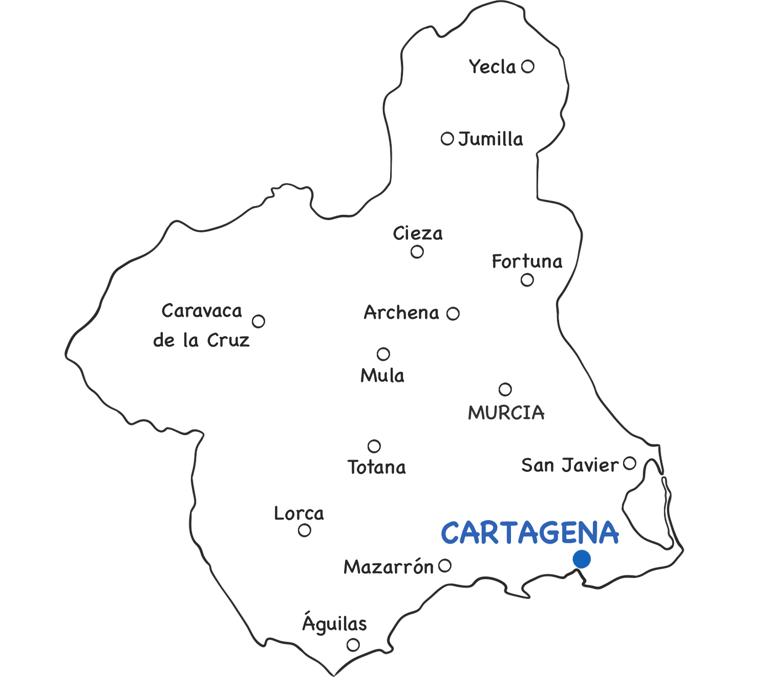
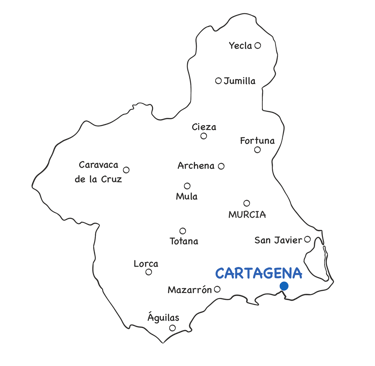
Cartagena is one of the most fascinating historic cities in southeastern Spain and a must-visit destination for anyone interested in culture, archaeology, and Mediterranean history. Located on the coast of the Region of Murcia, about 50 kilometers south of the city of Murcia, Cartagena enjoys a privileged position on a natural harbor along the Mediterranean Sea.
With a population of around 220,000 inhabitants, it is the second-largest city in the region and one of Spain’s most important port cities. Surrounded by hills, protected bays, and a rugged coastline, Cartagena combines dramatic natural scenery with more than two thousand years of history concentrated in a compact and walkable historic center—ideal for guided tours and cultural visits.
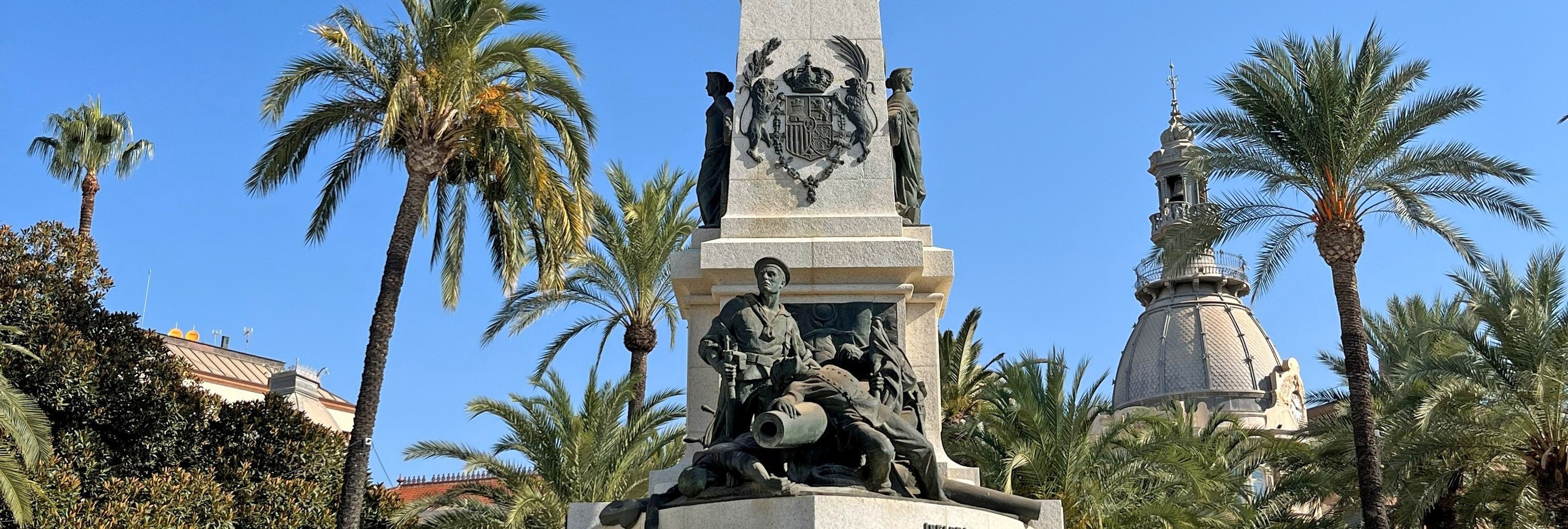
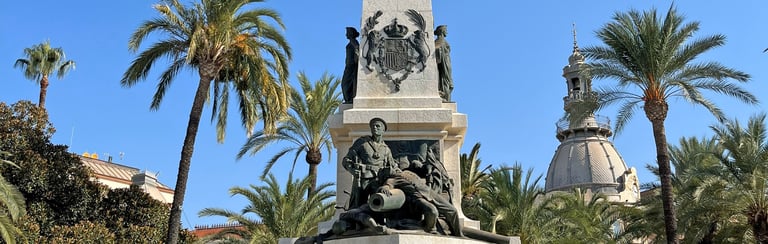
A Roman Port with 3,000 Years of History
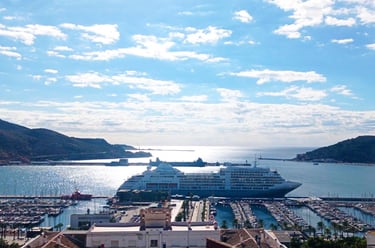

The city’s identity has always been closely linked to its port, one of the best natural harbors in the western Mediterranean. Throughout history, this port has made Cartagena a strategic enclave for trade, naval power, and military defense. From ancient times to the present day, the harbor has been a key factor in the city’s economic and political importance. Today, the Port of Cartagena remains one of the most active in Spain, handling commercial traffic, energy imports, and an increasing number of Mediterranean cruise ships, bringing visitors from all over the world who wish to discover the city through organized tours and excursions.
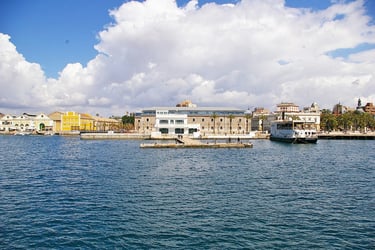
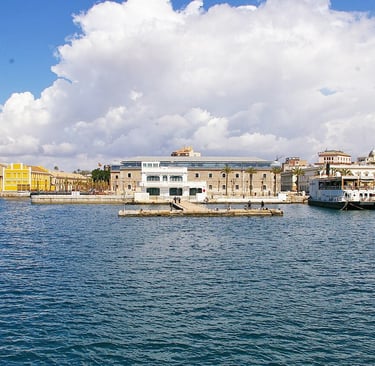
View of Cartagena from the port with the military zone (Arsenal) on the left and the city center on the right.
The port of Cartagena seen from the La Concepción viewpoint.
Cartagena’s role as a military base is equally significant. For centuries, the city has been one of Spain’s main naval strongholds. It is currently home to one of the country’s most important naval bases, a tradition that dates back to Roman times and was reinforced during the Bourbon reforms of the 18th century. This strong military presence has left a visible mark on the city’s urban landscape, with fortresses, arsenals, defensive walls, and historic buildings that form part of many guided tours in Cartagena today.
Popular Tours in Cartagena:
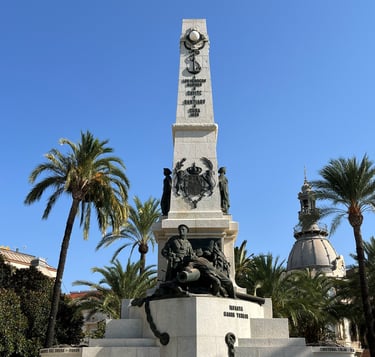
Cartagena Walking Tour: The Best of Cartagena
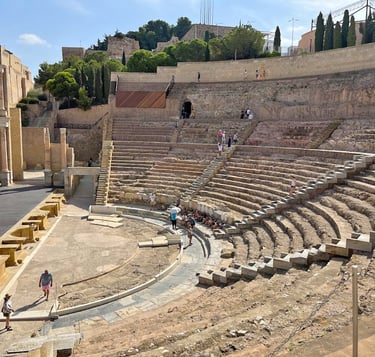
Cartagena: Walking Tour + Roman Theatre
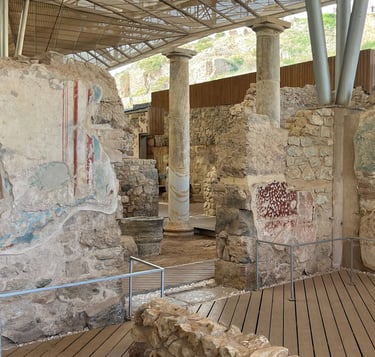
Cartagena: Roman Forum + Roman Theatre
The history of Cartagena is exceptionally rich and layered. The city was founded in 227 BC by the Carthaginian general Hasdrubal the Fair, who named it Qart Hadasht, or “New City.” Thanks to its strategic location and natural resources, it quickly became a key base for Carthaginian expansion in the Iberian Peninsula. In 209 BC, the city was conquered by the Romans under Scipio Africanus and renamed Carthago Nova. Under Roman rule, Cartagena flourished as one of the most important cities in Hispania, enjoying monumental urban development, including theaters, forums, baths, and ports.
After the decline of the Roman Empire, Cartagena remained relevant during the Byzantine period, when it became the capital of the province of Spania in the 6th century. Later, under Islamic rule, the city—known as Qartayanna al-Halfa—lost some of its prominence compared to other regional centers. Following the Christian conquest in the 13th century, Cartagena entered a long period of demographic and economic decline, largely due to insecurity, piracy, and the silting of the port.
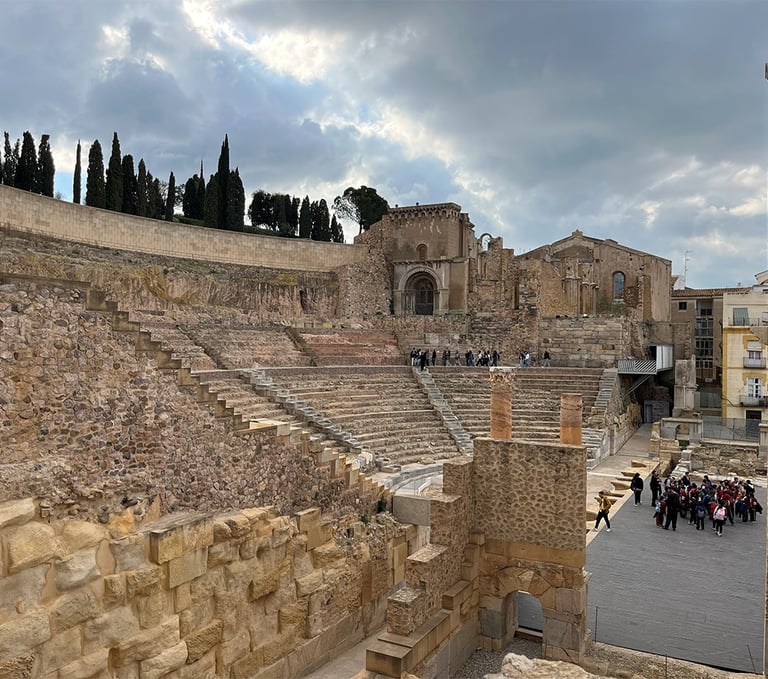
The Roman theatre of Cartagena, built in the 1st century, in the time of Augustus. In the background, the ruins of the old cathedral.
A major turning point came in the 18th century, when Cartagena was chosen as one of Spain’s main naval departments. This decision sparked urban renewal, population growth, and the construction of important military and civil buildings. From the 19th century onward, the city experienced a new economic boom linked to mining and industrial activity in the nearby Sierra Minera, attracting investment and shaping much of the modern city.
During the 20th century, Cartagena went through periods of crisis and recovery, including the impact of industrial decline. However, since the 1990s, the city has undergone a remarkable transformation, focusing on heritage conservation, cultural tourism, and urban regeneration. Today, Cartagena is recognized as a heritage and cultural city, as well as a major cruise destination in the western Mediterranean, making it an ideal stop for travelers interested in history-focused guided tours.
Cartagena’s artistic and cultural heritage is one of its greatest attractions. The city boasts an extraordinary concentration of archaeological sites, many of them integrated into the urban fabric. Highlights include the Roman Theatre, one of the most important Roman monuments in Spain; the Roman Forum District; the House of Fortune; and sections of ancient walls from different periods. These sites can be explored through well-organized museums such as the Roman Theatre Museum, which offers an immersive introduction to the city’s Roman past.
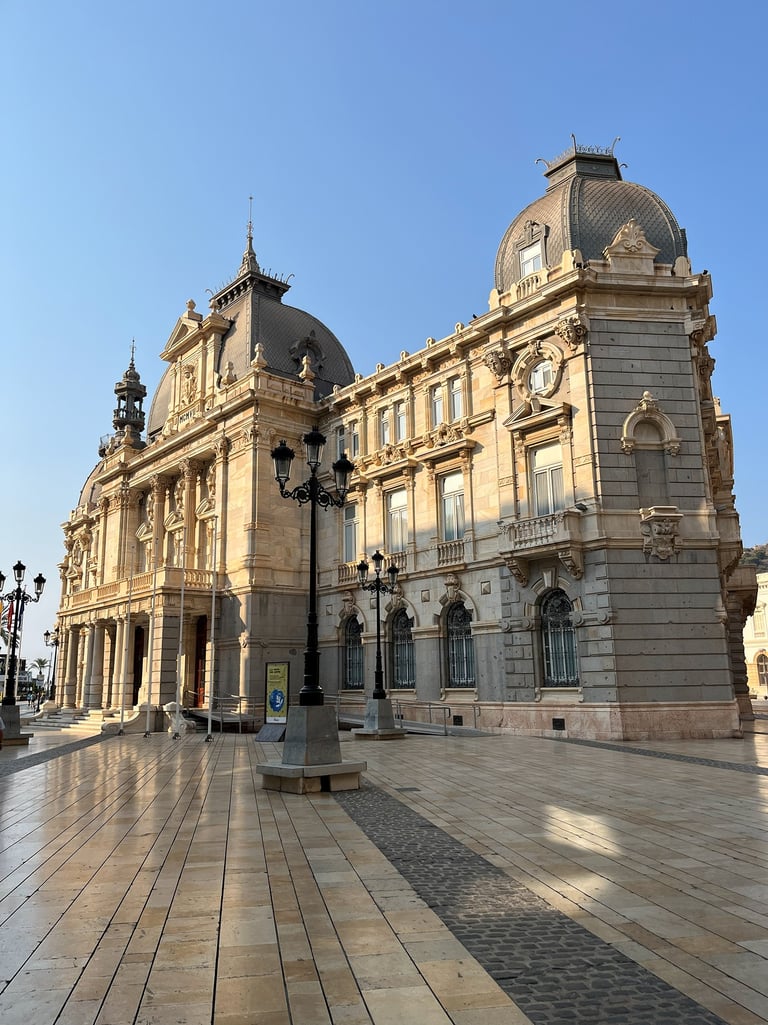
The City Hall building, completed in 1907, is one of the examples of the city's economic splendor at the beginning of the 20th century.
Other key museums include the National Museum of Underwater Archaeology (ARQVA), which showcases Spain’s maritime history and underwater heritage; the Muralla Púnica Interpretation Centre, dedicated to the Carthaginian period; and the Naval Museum, reflecting Cartagena’s long military tradition. Together, these sites make Cartagena an exceptional destination for archaeological and cultural tourism.
Festivals and traditions play a key role in Cartagena’s cultural life and are an added attraction for visitors planning a tour of the city. One of the most internationally renowned events is the Carthaginians and Romans Festival, held every September. This spectacular celebration recreates the city’s ancient past with historical reenactments, themed camps, parades, and performances that bring the founding of the city and the Roman conquest to life. It is one of the most popular historical festivals in Spain and a unique opportunity to experience Cartagena’s heritage in an immersive way.
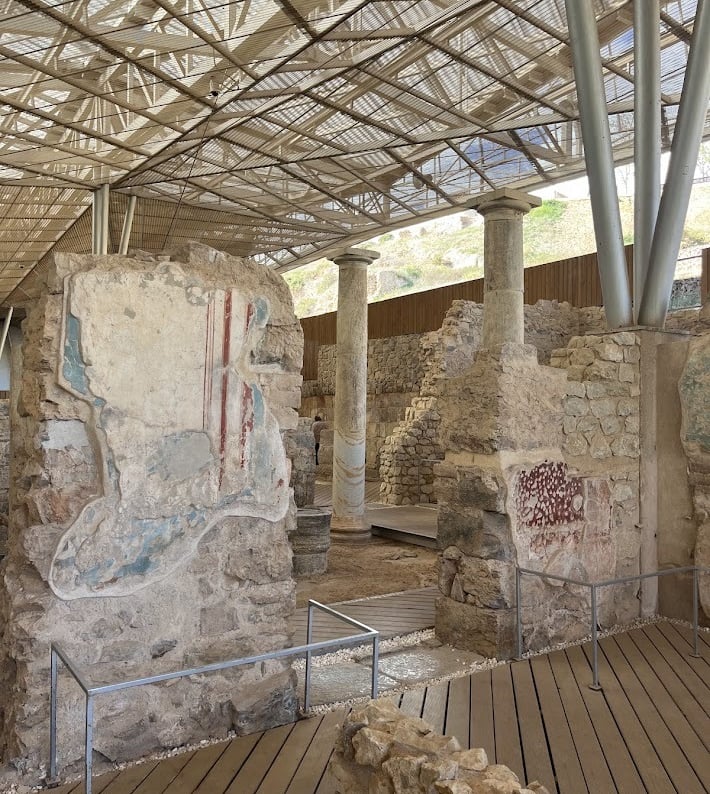
Interior of the Museum of the Roman Forum of Cartagena, which is part of the largest urban archaeological park in Spain.
Holy Week in Cartagena is another major highlight and is considered one of the most distinctive in Spain. Known for the solemnity, precision, and order of its processions, as well as the artistic value of its religious imagery, it attracts visitors interested in cultural and religious tourism every spring.
In addition to these traditional celebrations, Cartagena is also a vibrant cultural destination thanks to La Mar de Músicas, one of the most important world music festivals in Europe. Held every summer, this internationally acclaimed festival transforms the city into a meeting point for artists from around the globe, combining concerts in historic venues with cultural activities, gastronomy, and exhibitions. La Mar de Músicas reinforces Cartagena’s image as a modern, open, and creative city, making it especially appealing to travelers looking to combine sightseeing, guided tours, and cultural experiences.
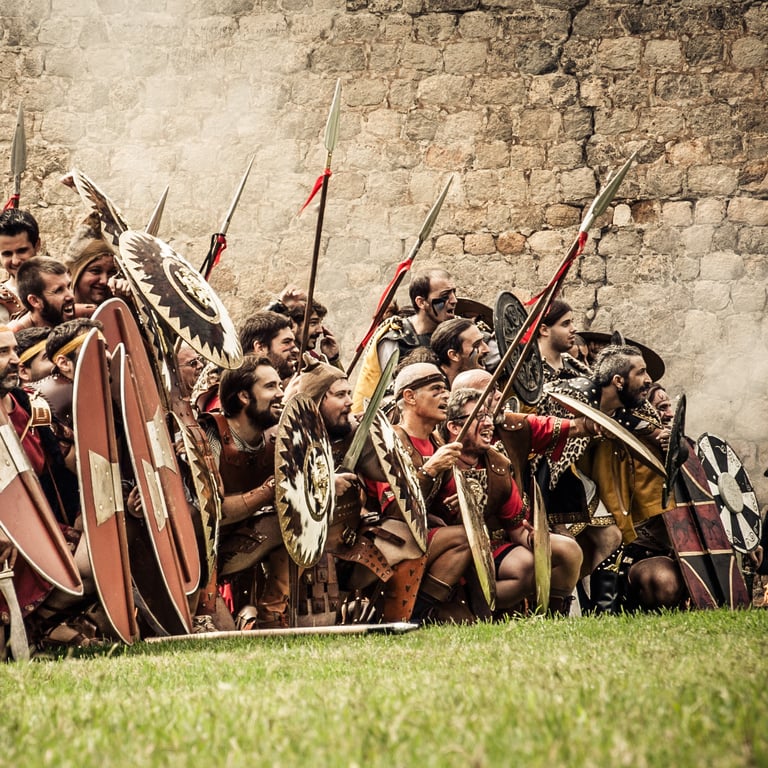
Reenactment of the Roman conquest of the city, as part of the "Carthaginians and Romans" festival, held every September in the city. Photo by Emilio Rubio Villanueva.
What truly makes Cartagena special is the way its history comes alive at every corner. Few cities in Spain offer such a visible and accessible journey through time, from Carthaginian foundations and Roman splendor to modern naval power and cultural renewal. Its manageable size, mild climate, seaside location, and wealth of monuments make it perfect for walking tours, private guided visits, and shore excursions. For visitors exploring the Region of Murcia, Cartagena stands out as an essential destination where history, culture, and the Mediterranean come together in a truly unforgettable experience.