Altiplano and Northeast


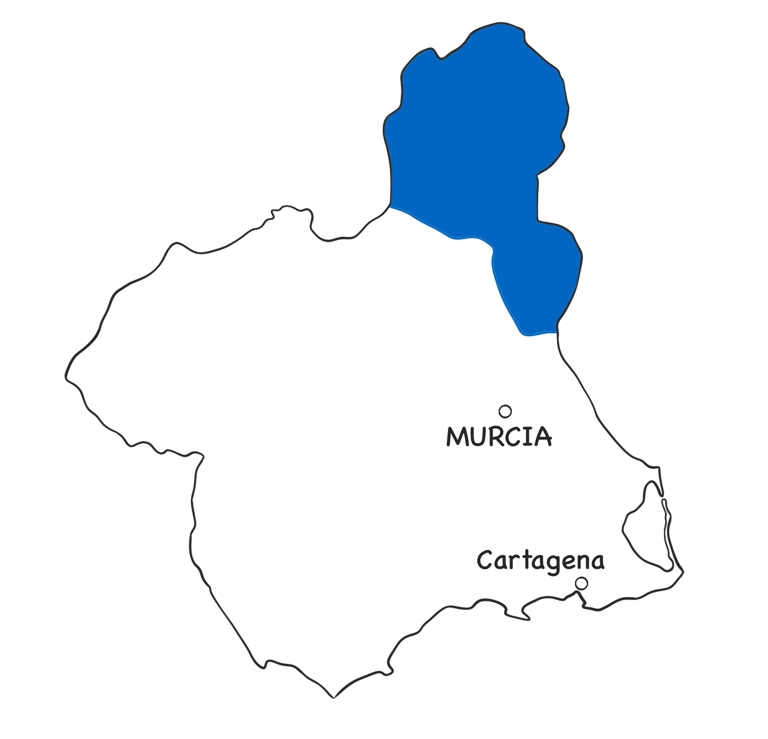
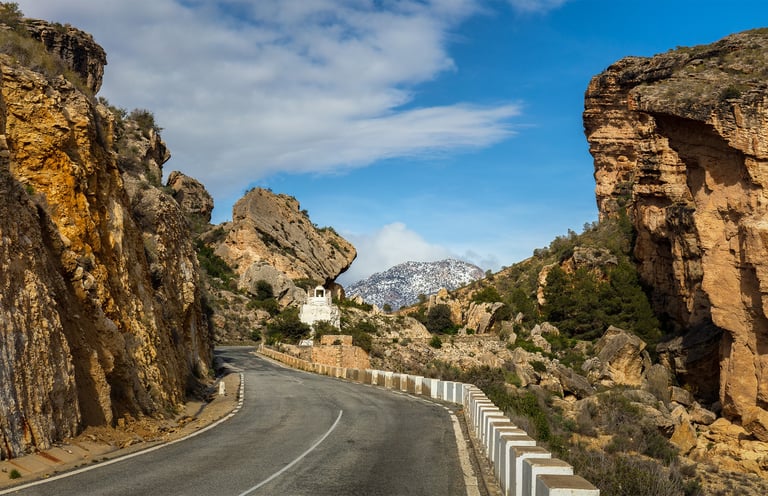
The Altiplano and Northeast of the Region of Murcia form a vast inland territory defined by high plateaus, mountain ranges, dry riverbeds and an intense relationship with the land. This area includes the municipalities of Yecla, Jumilla, Abanilla and Fortuna, and represents one of the most distinctive landscapes in southeastern Spain.
Geographically, the region lies at a higher altitude than the coastal and central areas of Murcia, creating an extreme continental Mediterranean climate: hot, dry summers, cold winters, wide temperature variations and crystal-clear skies. These conditions have shaped both the natural environment and human activity, giving rise to vineyards, almond groves, esparto grass landscapes and settlements deeply adapted to water scarcity.
This is a destination for travelers interested in wine tourism, nature, archaeology, wellness and authentic inland Spain, far from mass tourism.
Landscape of vineyards belonging to the "Casa Quemada" winery, in the municipality of Jumilla. Photo by Malegaetan.
Wine, Stone and Ancient Landscapes
Located in the far northeast of the Region of Murcia, close to the Valencian Community, Yecla is the most populated municipality of the area, with around 35,000 inhabitants. It sits on a high plateau surrounded by mountains and open countryside, giving it a strong rural and natural character.
Yecla has ancient origins, with evidence of Iberian and Roman settlement, but it flourished particularly during the medieval and modern periods. Today, it is internationally known for its furniture industry, wine production and nearby natural landmarks.
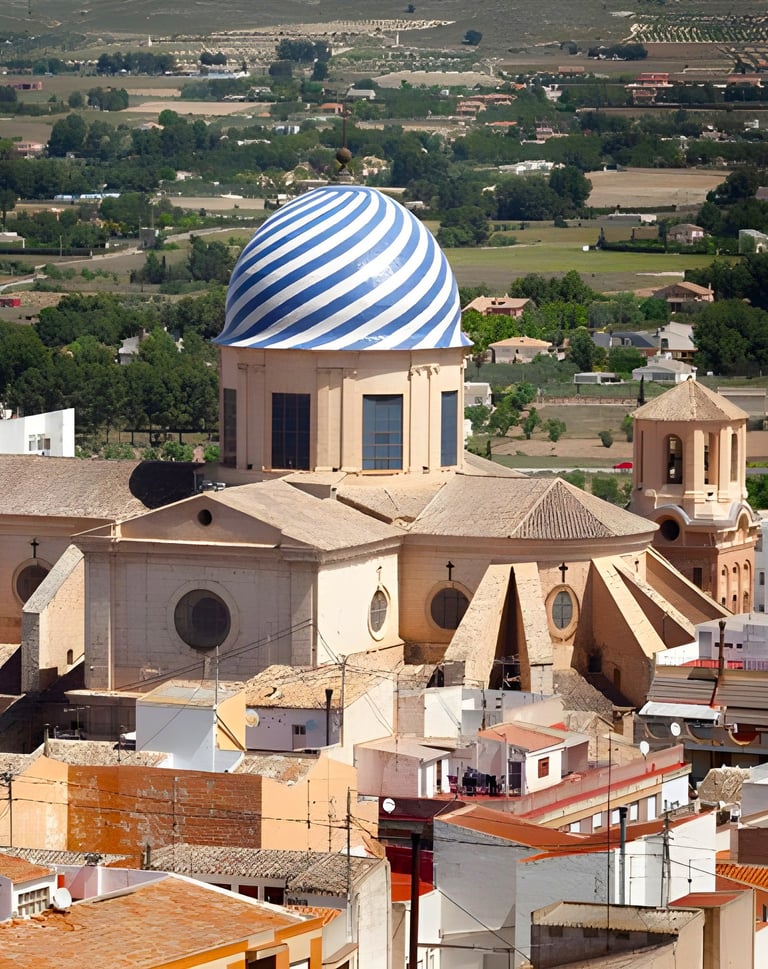
Within the town, visitors can explore the Basilica of La Purísima, a Baroque landmark dominating the skyline, and stroll through the historic centre with its traditional streets and squares. Overlooking the town from a prominent hill, the Castle of Yecla occupies a strategic position that has controlled the surrounding plateau for centuries. Although little of the original fortress remains today, archaeological evidence confirms its importance during the medieval period, particularly as a defensive outpost on the frontier between different kingdoms. On the same hill stands the Sanctuary of La Purísima, Yecla’s most iconic religious landmark, creating a powerful link between historical defence and spiritual devotion.
Just outside the urban area lies one of the most iconic sites in Murcia: Monte Arabí, a sacred mountain featuring prehistoric rock art (UNESCO World Heritage), strange geological formations and breathtaking views — a must-see for nature and archaeology lovers.
The dome of the Basilica of the Purísima, with its characteristic spiral ceramic decoration, is the most iconic element of the Yecla landscape.
Yecla
Jumilla
Southwest of Yecla lies Jumilla, a town of about 25,000 inhabitants, nestled among rolling vineyards and limestone hills. Jumilla is synonymous with wine, especially the Monastrell grape, which thrives in this dry, sunny climate and has earned it international acclaim.
Historically, Jumilla has been inhabited since prehistoric times, with Iberian, Roman, and medieval remains. Its imposing Jumilla Castle, one of the best-preserved fortresses in the region, overlooks the town and offers panoramic views of the surrounding vineyards.
The historic center is home to churches, traditional houses, and cultural spaces, while just outside the town is the Convent and Museum of Santa Ana del Monte, a Franciscan complex surrounded by vineyards and olive groves, deeply connected to the area's spiritual and agricultural history.
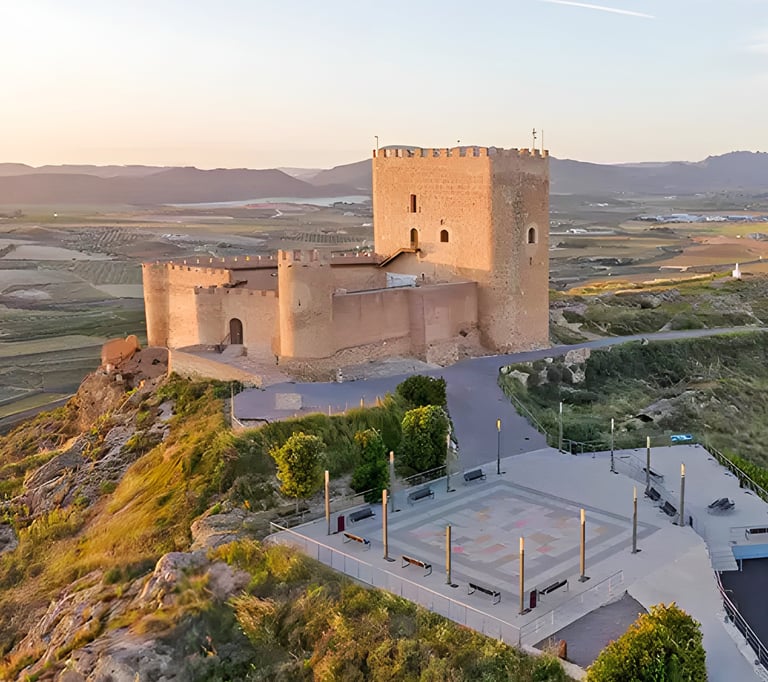
Jumilla Castle stands on the hill overlooking the town. It has medieval origins, with remains from both the Muslim and Christian periods, although it is known that there have been human settlements on this same hill since prehistoric times.
Abanilla
Located in the easternmost part of the Region of Murcia, bordering Alicante, Abanilla is a small town of about 6,000 inhabitants with a strong agricultural and border identity. Its landscape alternates between fertile orchards and arid mountain terrain, shaped by seasonal watercourses.
Within the town center, visitors can see the Church of San José, traditional houses, and small squares that reflect everyday rural life. Abanilla also serves as a gateway to natural areas such as the Chícamo River, one of the most unique river ecosystems in southeastern Spain.
Also in Abanilla is the Quibas Mountain Range Paleontological Site Interpretation Center. This center explains one of the most important Lower Pleistocene fossil sites in Europe. Excavations at Quibas have revealed remains of prehistoric animals and evidence of early human presence, offering valuable information about the evolution of climate and fauna more than a million years ago.
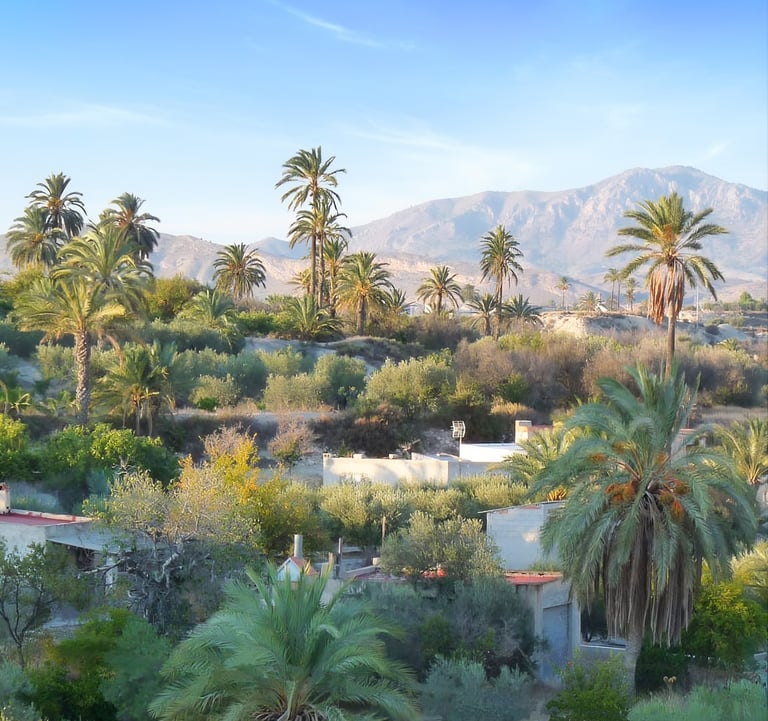
Typical landscape of the Abanilla area.
Fortuna
Fortuna, with around 10,000 inhabitants, lies southeast of Jumilla and is internationally known for its thermal springs. Surrounded by arid hills and dramatic landscapes, Fortuna combines wellness tourism with archaeology and nature.
The town’s history stretches back to Roman times, when the healing properties of its waters were already appreciated. This legacy continues today through the famous Baños de Fortuna.
In the town centre, visitors will find a relaxed atmosphere, traditional architecture and easy access to nearby cultural and natural landmarks, including ancient sanctuaries and geological formations.
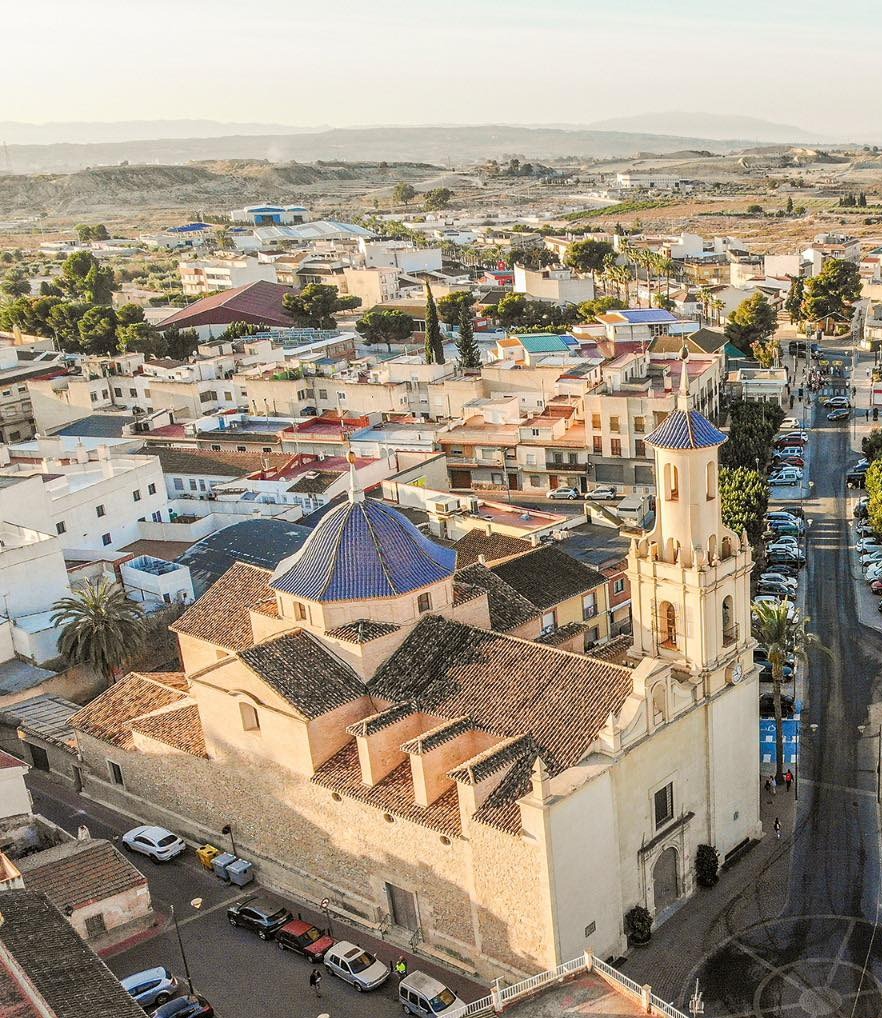
The Church of the Immaculate Conception is the main monument in the town center of Fortuna.
The Baños de Fortuna — Thermal Waters Through the Ages
The Baños de Fortuna are one of the most historic and renowned thermal complexes in Spain. Used since Roman times, these mineral-rich waters emerge at a constant temperature of around 38°C and have traditionally been associated with therapeutic and relaxation benefits.
Over the centuries, the baths have evolved into a modern wellness destination while preserving their historic essence. Today, visitors can enjoy thermal pools, spa treatments, hydrotherapy circuits and wellness programmes, all set in a tranquil natural environment.
Several accommodation options allow visitors to fully enjoy the experience, including:
Balneario de Fortuna-Leana, combining historic pools and modern spa facilities.
Hotel Victoria and Hotel Jardines de la Paz, offering comfort and direct access to thermal services.
The Baños de Fortuna are ideal for combining relaxation, health tourism and cultural discovery.
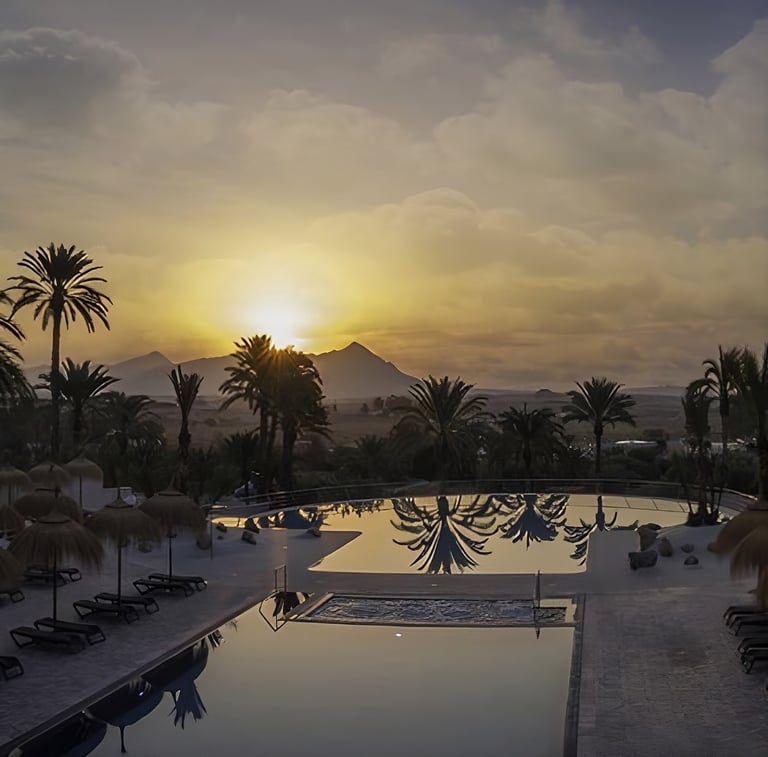
Sunset at one of the pools of the "Balneario de Leana" in Fortuna.
Natural and Cultural Highlights Beyond the Towns
Beyond its towns and villages, the Altiplano and Northeast of Murcia reveal a powerful landscape shaped by geology, water scarcity, ancient beliefs and centuries of human adaptation. Mountains, gorges, sanctuaries and fossil sites create a territory ideal for nature lovers, cultural travelers and those seeking experiences far from conventional tourism.
Monte Arabí (Yecla)
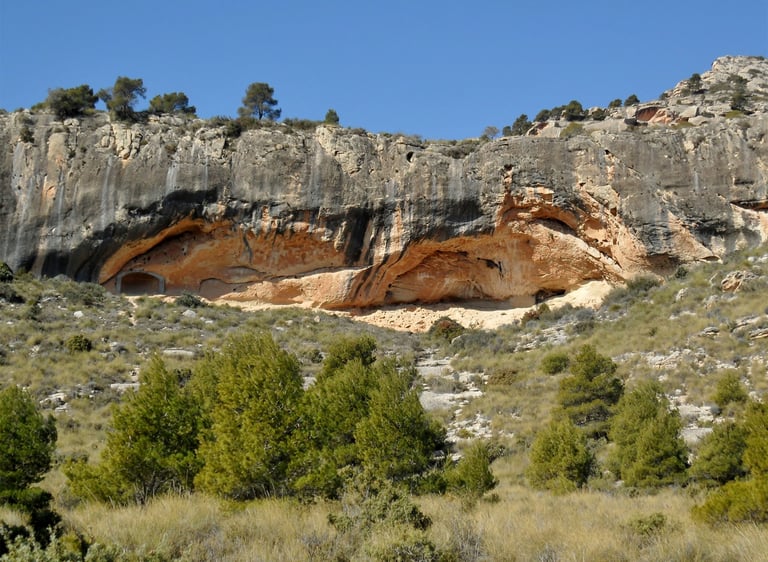
Monte Arabí is one of the most iconic natural and cultural landmarks in the Region of Murcia. Declared a Natural Monument, it is famous for its prehistoric rock art, recognised as UNESCO World Heritage, as well as its caves, strange rock formations and panoramic views. It has been considered a sacred mountain since prehistoric times.
Sierra del Carche (Jumilla)
The Sierra del Carche is the highest mountain range in the Region of Murcia, rising above vineyards and dry plateaus. Its protected natural park offers well-marked hiking trails, pine forests and impressive viewpoints. The contrast between high-altitude landscapes and surrounding wine-growing areas makes it especially attractive for walkers and photographers.
Convent and Museum of Santa Ana del Monte (Jumilla)
Set among vineyards and olive groves just outside Jumilla, this Franciscan convent is both a spiritual and cultural landmark. Founded in the 16th century, it played a key role in the religious and agricultural life of the area. Today it houses a museum and offers a peaceful, contemplative atmosphere.
Mount Arabí is one of the most magical and special places in the Region of Murcia. The photo shows the so-called "Cueva del Mediodía" or South Cave. Photo by Enrique Íñiguez Rodríguez.
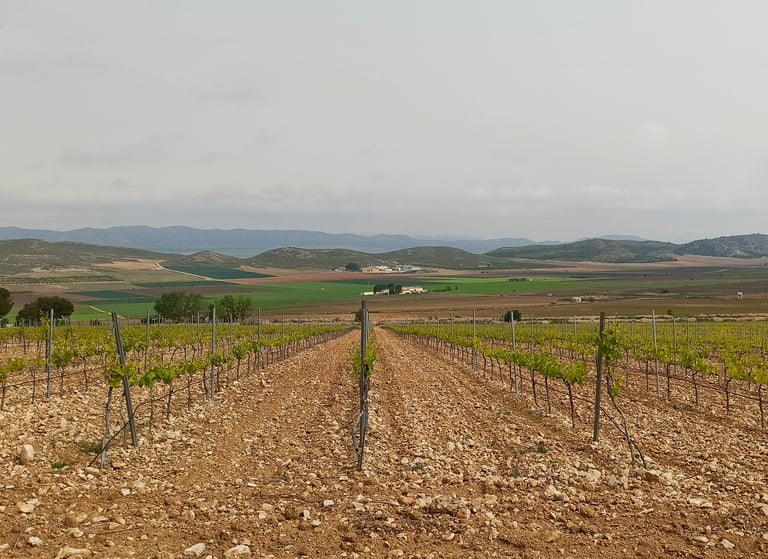
Vineyard of one of the wineries that can be visited in the Sierra del Carche, one of the areas where wine from the Jumilla Designation of Origin is produced.
Sierra de Salinas
Located on the border between Murcia and the Valencian Community, the Sierra de Salinas is a mountainous natural area characterised by forests, rocky ridges and rich biodiversity. It is ideal for hiking, birdwatching and nature observation, offering a quieter alternative to more frequented mountain parks.
Sierra de la Pila
This protected natural park stretches between Fortuna and central Murcia and is defined by dramatic limestone formations, ravines and Mediterranean forest. The area offers numerous hiking routes and panoramic viewpoints, as well as archaeological remains that testify to human presence since prehistoric times.
Río Chícamo (Abanilla)
The Río Chícamo is one of the most surprising natural spaces in southeastern Spain. Despite flowing through a semi-arid landscape, it maintains a permanent stream, creating a lush oasis with reeds, palm trees and unique wildlife. Walking along its banks offers a striking contrast between desert and water.
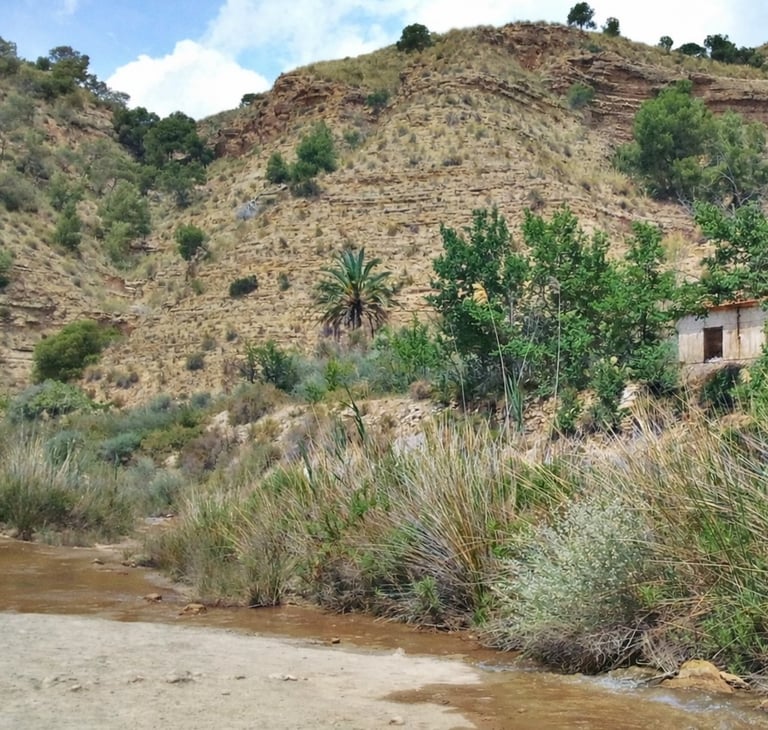
Landscape at the beginning of the Chicamo River gorge. This area in the municipality of Abanilla offers the possibility of taking one of the most picturesque hiking routes in the Region.
Rambla de Tobarrillas
This dry riverbed landscape illustrates the power of erosion and seasonal water flows in shaping the Altiplano. Its geological formations and open scenery make it ideal for nature walks, photography and understanding the hydrological dynamics of inland Murcia.
Cortao de las Peñas (Fortuna)
The Cortao de las Peñas is a dramatic gorge carved by water over thousands of years. Its steep walls and narrow passages create an impressive natural corridor, perfect for scenic walks and geological observation. The site reflects the intense interaction between water and rock in this arid region.
Cueva Negra Roman Sanctuary (Fortuna)
Hidden within a rocky ravine near Fortuna, the Cueva Negra was an important Roman sanctuary dedicated to water deities. Archaeological findings include inscriptions and offerings, revealing the sacred role of natural springs in Roman religion. It highlights the continuity of spiritual practices linked to water in the area.
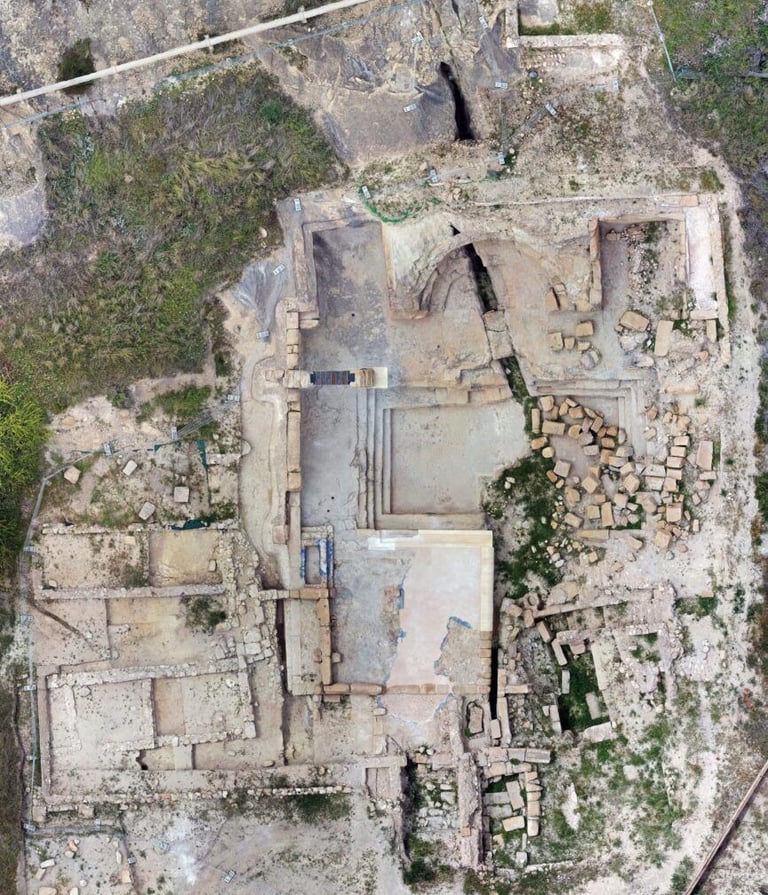
A Roman sanctuary built around a thermal spring, demonstrating the use of these medicinal waters for at least two thousand years. The site is located about two kilometers from the Cueva Negra archaeological site. Photo from descubrefortuna.es.
Why Visit the Altiplano and Northeast of Murcia?
The Altiplano and Northeast offer a raw, authentic and deeply rooted Murcia, where nature, wine, archaeology and wellness converge. From prehistoric rock art and Roman sanctuaries to vineyards and thermal waters, this region reveals a slower, more contemplative side of southeastern Spain.
For travelers seeking landscapes with character, cultural depth and genuine local experiences, this area is an essential part of the Region of Murcia — especially when explored with a local guide who can uncover its hidden stories and timeless traditions.